
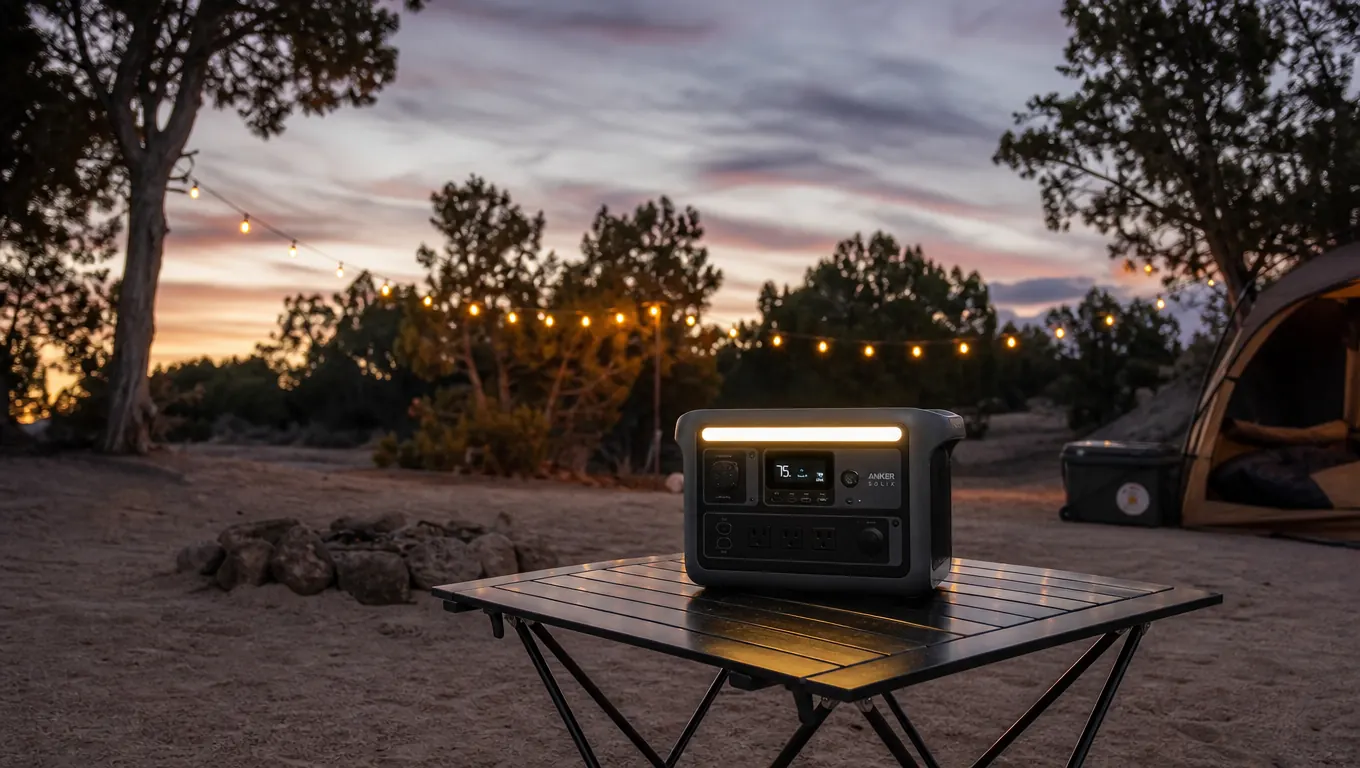
Weekend trips out of the 4Runner, a six-person tent, plastic bins in the back, and a running list of things that should be easy by now. That is where most of our camping happens. Two seasons ago I traded a noisy little generator for the Jackery Explorer 300, and it has lived in the bins ever since, right next to the camp chairs and the bag of firewood. It has never once failed us. So when the Anker SOLIX C300 arrived for a fair comparison, the question was simple: had I been carrying the wrong box this whole time?
Short answer: for the way we camp, no. The Jackery Explorer 300 is still the one I reach for, mostly because it is lighter, it recharges faster, and I am 54 with a right knee that objects to hauling dead weight from the tailgate to the tent. But the Anker SOLIX C300 is a genuinely better box for someone whose trips run on laptops, tablets, and a wall of gadgets, and it wins enough rows in the table below that you should not pick a power station on brand name alone. Here is the honest breakdown, and where each unit earns its spot in a different trip.
How I Tested These Two
Both units spent a season and a half on the same jobs: keeping two phones topped up over a long weekend, recharging camera batteries after a day of hiking, running a small fan on warm nights in southern Utah, and powering a laptop during the longer fall trip into the Sierra. I charged both from the wall at home before we left, kept them in the same plastic bin, and ran the same loads through each one so the differences would show up in real use rather than on a spec sheet.
The first difference is the one you feel before you plug anything in. The Jackery is lighter to carry from the car to the tent, and that matters more every season for me. The Anker sits heavier in the hand and takes up more room in a bin already full of chairs, food boxes, and a bag of firewood. An extra pound or two does not sound like much until you are walking across gravel with a bad knee at the end of a long day, and it is the kind of cost that adds up across fifteen weekends a year.
I also recharged both at the same wall outlet to compare time honestly, because a power station that takes all evening to fill is a power station I will forget to fill. The Jackery was ready in about two hours. The Anker needed about three. That single number changed my weekly routine more than any other spec on the box.
The Comparison at a Glance
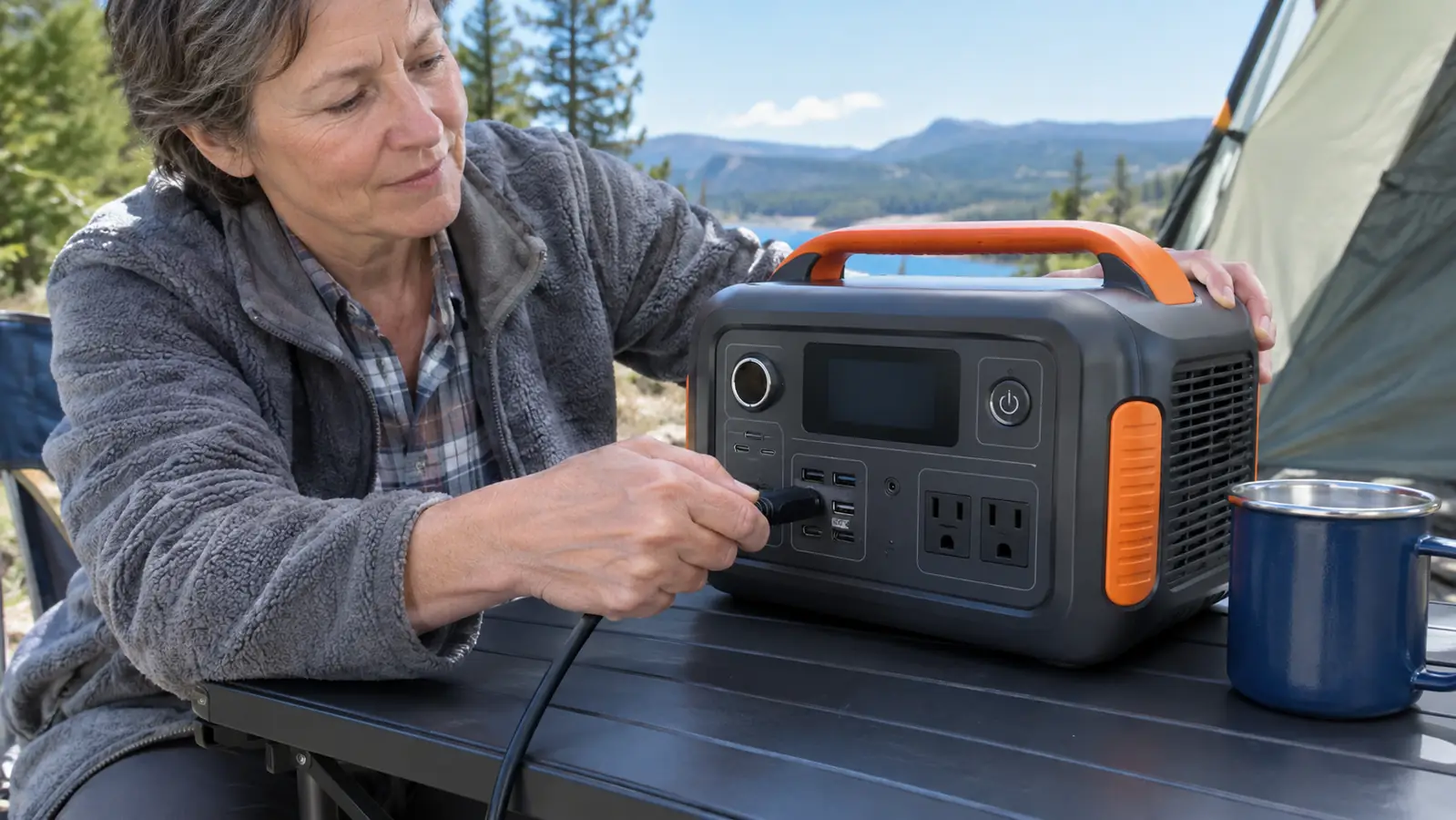
Here is how the two stack up on the numbers that matter at a campsite, with the honest winner called out in each row.
| Jackery Explorer 300 | Anker SOLIX C300 | |
|---|---|---|
| Weight | About 7 lb, easy to carry one-handed | About 9 lb, noticeably heavier |
| AC outlets | One outlet, fine for a single device | Two outlets, runs two at once |
| USB-C output | 60W, charges a phone fast, slower on a laptop | 100W, charges most laptops at full speed |
| USB-A ports | One port | Two ports |
| Wireless charging | None | Built-in pad on top |
| Built-in light | None | Bright LED lamp on the side |
| Wall recharge | Roughly 2 hours to full | Roughly 3 hours to full |
| Capacity | 292Wh | 288Wh |
| Best for | Simple, light weekend loads | Gadget-heavy trips with laptops |
Where the Jackery Explorer 300 Wins
The Jackery wins the category that decides it for me: weight. At around 7 pounds it is the only one of the two I will carry from the tailgate to the tent without thinking about my knee first. The Anker is not exactly heavy, but an extra two pounds on a walk across gravel at the end of a hiking day is exactly the kind of small cost that shows up every single weekend. Light wins, and light wins consistently.
It also refills faster, which quietly became my favorite feature. Plugged into the wall, the Jackery hits full in about two hours, where the Anker needs closer to three. That matters more than it sounds because the usual routine is to get home on Sunday, plug the unit in, and forget about it until Friday. Two hours versus three is the difference between a box that is ready before dinner and one you are still waiting on when you want to head out early.
There is also something to be said for a unit that does less. The Jackery has one AC outlet and one USB-A port, which sounds like a downside until you are setting up in the dark and you do not have to decide which of five ports gets which cable. Fewer options means fewer mistakes, and for the loads we actually carry, I have never once needed a second AC outlet at the same time. That simplicity is a feature, not a shortcut.
Where the Anker SOLIX C300 Wins
The Anker is the better box for anyone whose campsite runs on more than a phone. It has two AC outlets where the Jackery has one, so you can run a small fan and charge a camera at the same time without juggling cables. The 100W USB-C port is the bigger deal on the fall trip, because it charges a laptop at full speed. On the Jackery, a laptop charges, but slowly, and you notice the difference by mid-afternoon.
Then there are the extras. The built-in wireless charging pad on top means one less cable to dig out of a bin, and the LED light on the side is genuinely useful when you are unpacking after dark. The second USB-A port means two phones and a camera can charge at once without a hub. None of these are reasons to buy a power station by themselves, but together they make the Anker feel like it was designed for someone who camps with a small electronics kit.
The Anker also runs two small appliances at once, which is the difference between a site where the fan stops when the camera charges and a site where both just keep running. If you camp with a teenager, a laptop, or any gear that needs its own power, that headroom is the whole argument. It is a heavier, slower-recharging box, but it does more work per trip, and I would rather admit that than pretend otherwise.
The Anker feels like it was designed for someone who camps with a small electronics kit. Most weekends, that person is not me.
Still the lightest way to bring power to camp
After two seasons of real use, the Jackery Explorer 300 is the box I grab first. It is lighter, recharges faster, and handles everything a normal car-camping weekend throws at it. If your trips look anything like mine, this is the one that makes it into the bins every time.
Amazon Check Today's Price on Amazon →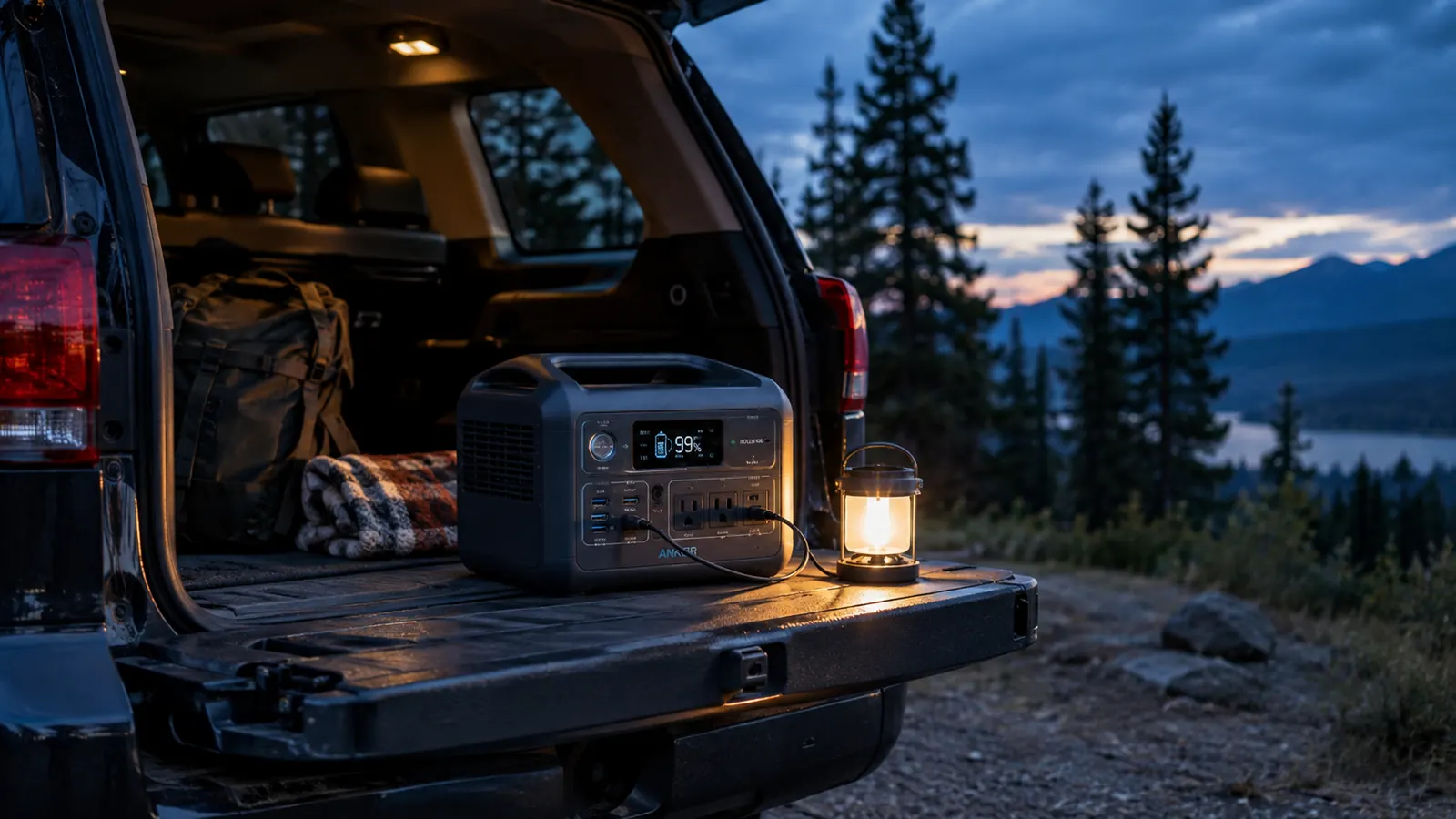
Three Nights in the Eastern Sierra
The clearest test came on a three-night trip into the eastern Sierra last fall. Day one was phones and a camera. Day two was an hour of laptop work in the morning, the same camera batteries, and a small fan at night because the tent held the heat. By day three I was down to one bar of charge on the Jackery, which was exactly enough to get home with a charged phone for the drive.
I ran the same routine through the Anker on the return leg of the same trip. The laptop charged faster, and the second AC outlet meant the fan did not have to fight the camera for a port. It got through the three days with more charge left over, and I will not pretend that did not register. For a trip that runs on a laptop, the Anker is the stronger unit, no question about it.
But the moment I carried it across the gravel from the tailgate to the tent with my knee complaining, I remembered why the Jackery wins the regular weekends. Most of our trips are not laptop trips. They are phone, camera, and fan trips, and for those, the lighter box that recharges in two hours is the one I keep reaching for, trip after trip.
Who Should Buy Which
Buy the Jackery Explorer 300 if your campsite is basically a phone, a camera, and maybe a small fan. You get the lightest box here, the fastest wall recharge, and fewer things to think about when you are setting up in the dark. It is also the better value at today's price, which matters when you are not sure how much use a power station will really get. I have no complaints about the Anker, but I would not want to carry it every weekend.
Buy the Anker SOLIX C300 if your trip runs on a laptop, a tablet, two phones, and a camera that all need charging at the same time. The second AC outlet, the faster USB-C port, and the wireless pad are worth the extra pound. If you work a few hours from the campsite, or you camp with a teenager who burns through a phone battery by lunch, the Anker is the smarter box. It just costs more in weight and recharge time to get there.
If you are torn, think about the one trip that keeps failing you. For me it was always the walk from the car to the tent, so the lighter unit won. If your recurring complaint is a dead laptop or a fan that keeps stopping, the Anker is the fix. Neither answer is wrong, and both are honest.
What the Spec Sheets Do Not Tell You
Two seasons taught me a few things no spec sheet covers. First, a power station is only useful if it is charged when you leave, and both of these units hold their charge well between trips. Second, the numbers on the box are for ideal conditions; a fan running on a warm night pulls more than the label suggests, and both units handle that fine, just with less headroom than the marketing implies. Third, you will recharge it far more often than you think, which is exactly why the recharge speed on the Jackery quietly became my favorite feature.
Neither unit has let me down. Neither has gotten hot, made a fuss, or refused to start on cold mornings up at altitude. I have not babied either one, and both still read their charge levels accurately after a season and a half. That is the real test for gear at my age: not whether it impresses on day one, but whether it still just works on day forty, and both of these pass that test.
One more thing worth knowing: neither of these units is a generator replacement for heavy loads. If you want to run a heater or a big inverter appliance, you need a much larger station. But for the jobs most car campers actually do, keeping phones, cameras, fans, and the occasional laptop alive for a long weekend, both of these are more than enough, and the difference between them comes down to how you pack, not what they can do.
The one I keep packing
Two seasons in, the Jackery Explorer 300 is still the power station that makes it into the bins on every single trip. If you want a light, simple, fast-recharging box for a normal car-camping weekend, this is the one I would buy again. It is the honest pick for how most of us actually camp.
Amazon Check Today's Price on Amazon →