
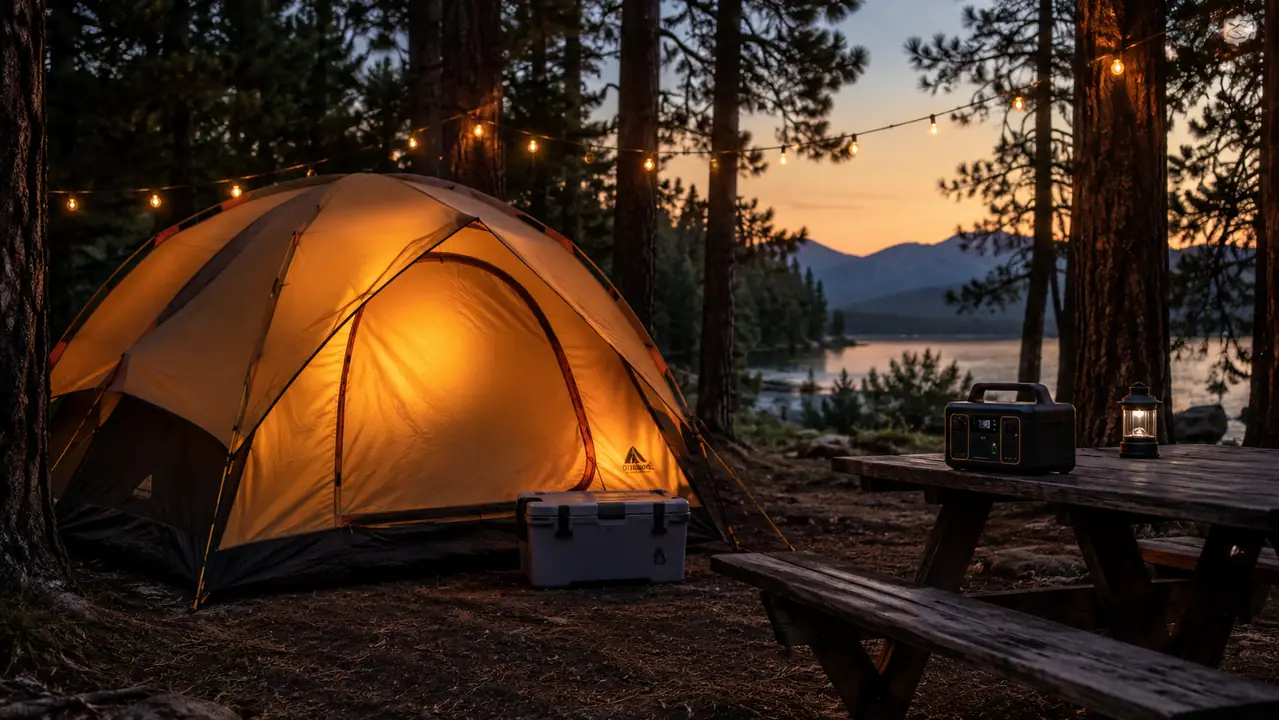
We camped the first weekend of June last year, up on the Mogollon Rim. The forecast said high seventies, so I packed the cooler the way I always had: ice on the bottom, drinks on one side, the chicken and the ground beef on the other, a towel over the top. By Saturday afternoon the ice was floating in four inches of water and the chicken was sitting in it. We threw it out. That night we ate peanut butter sandwiches and instant oatmeal, and I sat there doing the math on what a bad cooler had just cost us.
It wasn't just the food. The phone died by Saturday night because I'd been using it for photos and the map app. Ray's phone went into battery saver at noon. We had a jump pack for the 4Runner, but nothing that would charge a phone more than once. I'd heard of Jackery before, but I'd always figured it was for people with vans and solar panels, not for us. The campsite had no hookups, and the nearest store was forty minutes down a dirt road. We made it work, the way you do, but I came home and told Ray I was done packing ice and crossing my fingers.
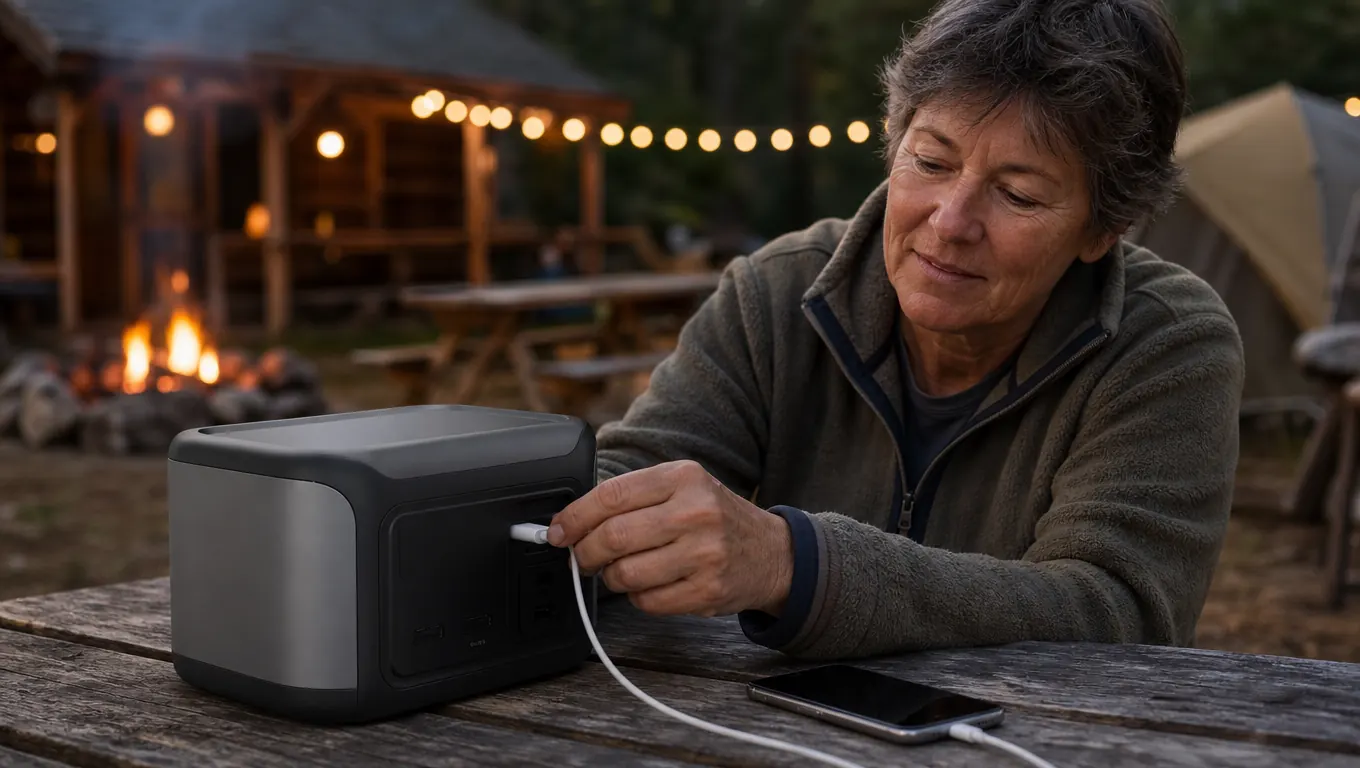
I spent two weeks reading about power stations. Most of it was either too technical or too breathless, so I fell back on what I know: figure out what you actually need to run, then buy the thing that does that without a fuss. Our list was short. Phones, two of them. A string of LED lights for the tent. A small clip-on fan for warm nights, because August nights stay warm. That's it. We don't need a generator, we don't need to run a coffee maker, and I have no interest in hauling a fifty-pound battery around.
The Jackery Explorer 300 was the one that kept coming up. It's not the biggest Jackery they make, and it's not the smallest. It's the one that fits in the space between a cooler and a camp chair, which is exactly where our problem lived. I ordered it on a Tuesday and it showed up Thursday. I charged it to full, set it on the kitchen counter, and left it for a week. Ninety-something percent after seven days. That was the first thing that impressed me, that it wasn't going to be dead every time we reached for it.
The test came in July, four nights in the eastern Sierra. Same cooler, same ice, but this time the chicken never touched the water because I'd frozen it solid and packed it in a separate bag. The Jackery sat on the picnic table. Phones charged every night. The fan ran through the warm nights, and in the morning the display still showed more than half. The LED lights ran off it. I stopped thinking about power entirely, which is the whole point. You don't buy one of these to think about it. You buy it so power stops being a thing you manage.
You don't buy one of these to think about it. You buy it so power stops being a thing you manage.
The Jackery Explorer 300 is the one we keep in the back of the 4Runner
Four nights in the Sierra, phones charged every night, the fan running through warm nights, and more than half the battery left in the morning. It lives in a bin with the camp lights, so it never gets left behind. Check today's price on Amazon and see if it fits your camp setup.
Amazon Check Today's Price on Amazon →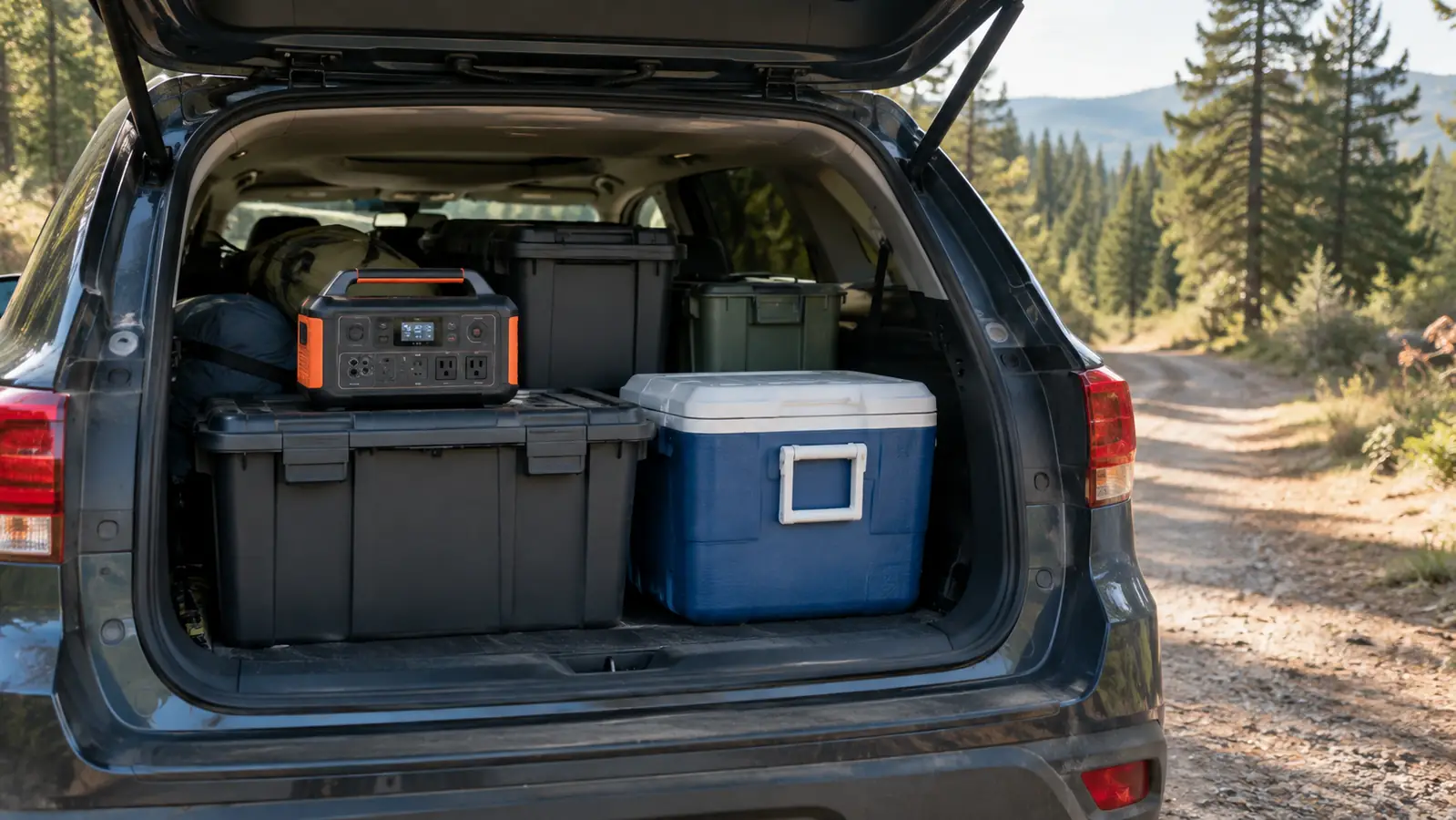
We've had the Jackery for a full season now, through the kind of abuse that only shows up in real use. It has bounced around in the back of the 4Runner for nine months. It has been rained on once, when the sky opened up over the picnic table. It has been knocked off the tailgate onto gravel. The case has a scuff on one corner and the rubber flap over the ports still closes tight. The battery still charges to full and holds it the same way it did the first week.
The numbers that matter to me, a year in: I have recharged it maybe twenty times. Each full charge runs the fan for two or three warm nights, or charges both phones four or five times, or runs the string of LED lights for a whole weekend. I have never once needed the solar panel, because we are never in one place long enough for it to matter, and I have never once wished I'd bought the bigger one. The bigger one weighs more, and weight is the thing my right knee notices first. This one is close enough to twelve pounds that I don't think about it, and that matters more than any spec sheet.
What it has not done is also worth saying. It will not run a mini fridge, not for long. It will not run a space heater. It will not cook anything. I read reviews from people who bought it expecting those things. The marketing makes it easy to over-buy. But our cooler keeps working, we cook over a camp stove or a fire, and the Jackery was never meant to replace any of that. It was meant to replace the part of camping that made us feel cut off. That part is gone.
What I'd Tell You If We Were Sitting at My Kitchen Table
If you were sitting at my kitchen table asking whether to buy one, here's what I'd say. First, write down what you actually need to run before you buy anything. Phones, a fan, and some lights is a very different list from a fridge and a heater, and the right answer is different for each. Second, don't buy more than you need. The Explorer 300 does what we need, and it's small enough to live in the bin, not the garage. Third, buy it before the trip, not after. I spent a whole weekend eating peanut butter sandwiches because I thought I could get by with a cooler and a jump pack. I could not. The Jackery cost less than that trip cost us in wasted food and frustration, and it has been in the 4Runner every weekend since.
Same weekend, different outcome
The cooler still works and the ice still melts, but now the phones stay charged, the fan runs through warm nights, and nothing gets thrown out. The Jackery Explorer 300 is the reason. Check today's price on Amazon.
Amazon Check Today's Price on Amazon →