
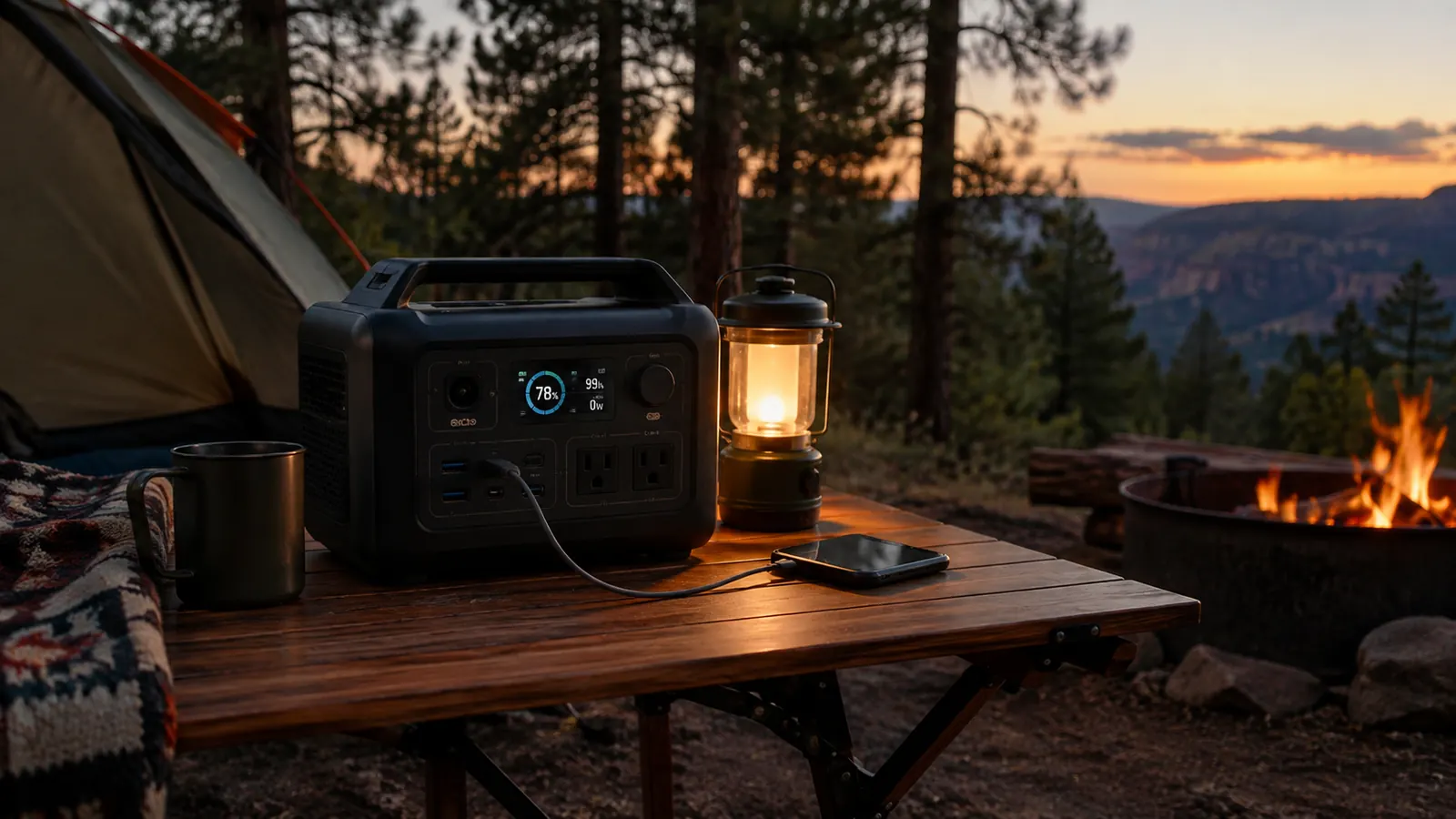
I bought the Jackery Explorer 300 last April, before our first real camping trip of the season. Ray and I had spent the winter talking about how tired we were of watching phone batteries die by Saturday afternoon, and how the old power bank we kept in the glove box could barely charge one phone, let alone two. I ordered the Jackery, charged it fully the night before we left, and threw it in the back of the 4Runner with the rest of the plastic bins. Eight months later, it has been on every trip we took, and it is the first thing I pack after the tent.
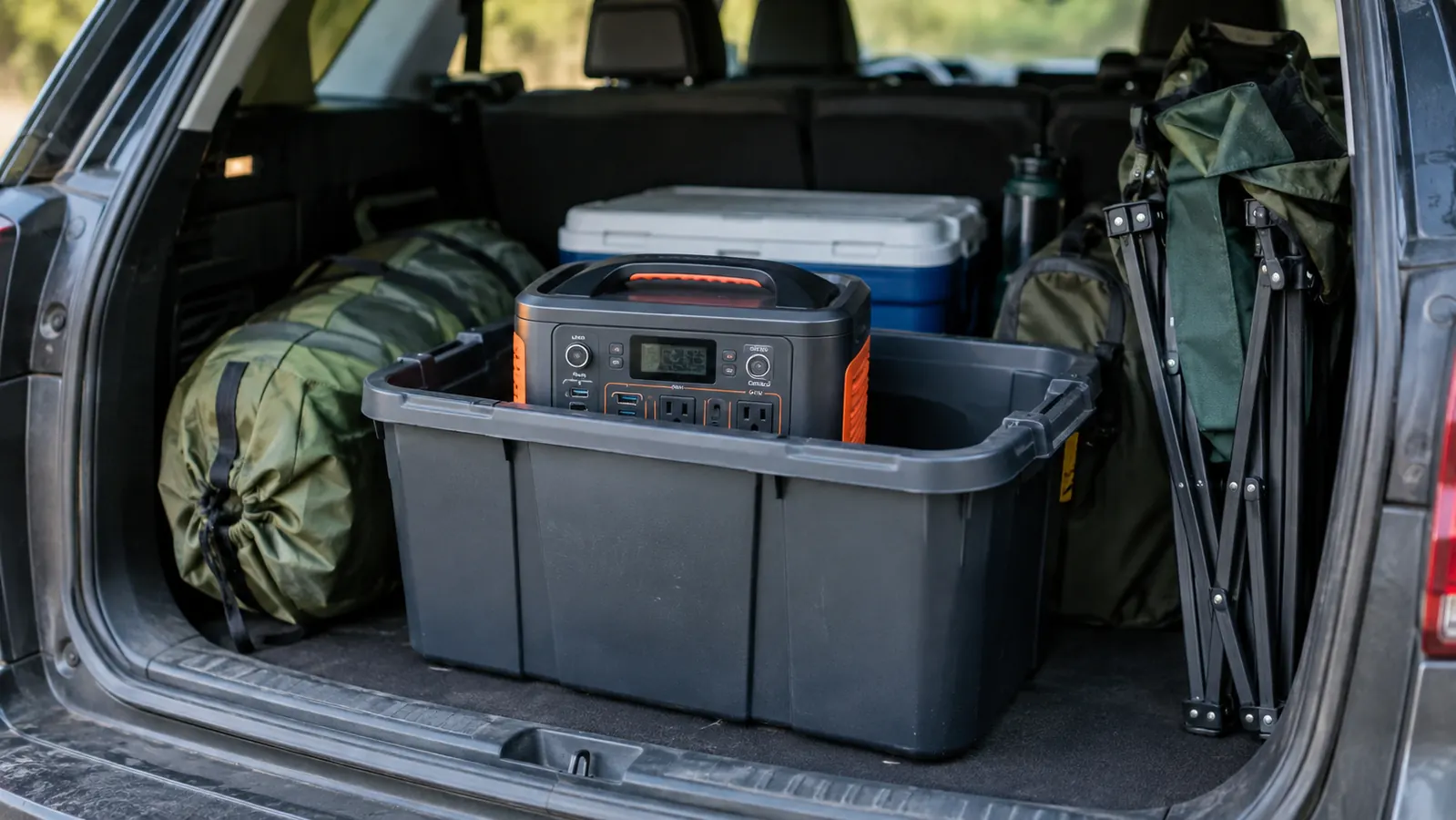
That matters more than it sounds. My right knee, the one I landed on coming down Kachina Trail a few years ago, means I am the person who packs light and complains about anything heavy. The Jackery is not light. It is roughly the size of a thick lunchbox and heavy enough that I notice it every time I lift it. But because we camp out of the back of the 4Runner, heavy is not the same as inconvenient. It sits in a bin, rides in the cargo area, and gets carried twenty feet to the picnic table. That is a distance my knee can handle.
The Quick Verdict
The Jackery Explorer 300 is the rare piece of camping gear that earns its spot in the bin every single trip. It charges two phones, a camera battery, and a small fan for a weekend, recharges overnight from a wall outlet, and has not lost any noticeable capacity in eight months. It is not the cheapest way to keep devices alive, and it will not run a hair dryer or a small fridge for long. But for the way we camp, it is the right size, and I would buy it again.
Amazon Check Today's Price →The Jackery Explorer 300 handles everything a weekend camp trip throws at it
Check today's price on Amazon and see if it's the right size for your camp setup.
Amazon Check Today's Price on Amazon →How I've Used It
The first trip was a three-night stay in the eastern Sierra in May. We set up the six-person dome tent, which takes me about twenty minutes because of the knee, and then I put the Jackery on the camp table. That first weekend I plugged in two phones every night, a small camera battery after each day of hiking, and a string of LED lights that Ray insists on bringing. By Sunday morning the display showed 47 percent left. I had expected to be rationing power by the end. I was not.
Since then, it has been on roughly fifteen trips, from a single overnight in the desert near Flagstaff to a week in southern Utah in the fall. The routine is the same every time. Phones go on the Jackery at night, not on the car. The camera battery charges while we eat dinner. On warm nights, a small clip-on fan runs off the USB port for a few hours. The Jackery sits on the table or on the floor of the tent, and I do not think about it until I need it.
The only time I had to think about it was a trip in July when we forgot to charge it before we left. It showed 62 percent when we pulled in. I plugged it into the car's 12V outlet for the drive home and it gained a little, but not a lot. That is the one habit I have changed: charge it the night before, the same as I charge my phone.
The one trip that stands out was a rainy weekend in August near the Grand Canyon. The forecast said clear, so we had not planned for power beyond the phones. It rained for two days, we stayed in the tent more than we expected, and the Jackery kept the phones, the tablet, and the little fan going for the whole time. By the time we packed up, it still showed 18 percent. That was the moment I stopped thinking of it as a gadget and started thinking of it as part of the camp setup.
What It Actually Powers
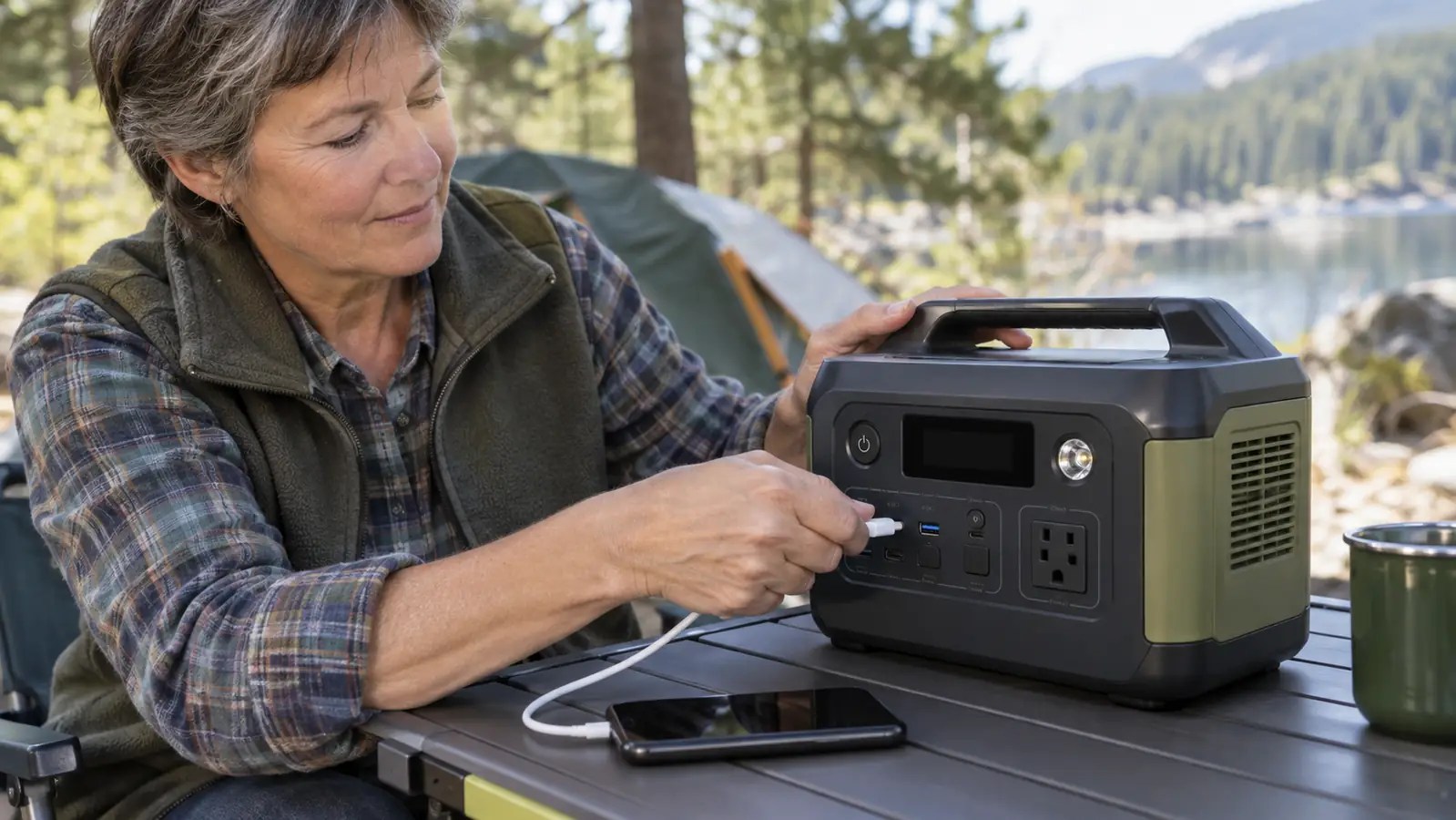
The Explorer 300 is a 292 watt-hour battery. What that means in camp is simple: it powers the small things that make a trip comfortable, and it will not touch the big things. In eight months I have run two phones, a tablet, a camera battery, a small fan, a string of LED lights, and once a small electric blanket on a cold night in October. The blanket drained it faster than anything else, but it got us through the night.
It has a standard AC outlet and USB ports. That is the combination that matters. The AC outlet means I can plug in a camera charger or a small fan that does not have a USB cord. The USB ports cover everything else. I have never needed more than one AC outlet at a time, so the single outlet has not been a problem.
What it cannot do is run anything with a heating element. A hair dryer, a space heater, a kettle, a portable fridge for more than a few hours, those are beyond this size. We do not camp with any of those, so that has not bothered us. But if your idea of camping includes a fridge that stays cold for a week, you need a bigger station, and you should know that before you buy.
I should be clear about the electric blanket, because it is the edge case. It is a small throw rated around 60 watts, not a full-size blanket. It ran for about three hours on the coldest night, and it took the Jackery from 100 to 40 percent. That is not a number I want to rely on every night, but it is nice to know it can do it in a pinch.
How Long It Lasts
The honest answer is that it depends on what you plug in. With two phones and a camera battery a night, it has gone three nights and still showed 30 percent. With the fan running most of the night, it drops faster, but we have never run out. The display shows the percentage, and it seems accurate, which is more than I can say for the old power bank.
I have also tested it at home a few times, just to see. I charged my phone, ran a small lamp for a few hours, and checked the percentage the next morning. It holds a charge sitting in the bin. After a month of no use, it still showed 98 percent. That matters because we go a month sometimes between trips.
Eight months in, I have not noticed any loss in capacity. It still charges the same devices in the same amount of time as it did in May. That is the reassurance I was hoping for, because the whole reason I bought a power station instead of a cheaper power bank was to have something that would still work in three years.
One thing I have learned is that the percentage is not a straight line. The first 50 percent seems to last longer than the last 50 percent, which is true of most batteries. I do not plan around it. I just check the display in the morning, and I have never been surprised.
Where It Falls Short
The biggest shortcoming is the recharge time. From empty, it takes several hours on a wall outlet. Overnight is fine, but if you forget to charge it and you are already at camp, you are out of luck. There is no fast charging. I also tried charging it from the 4Runner's 12V outlet once, and it was slow enough that I stopped bothering.
The second shortcoming is the size. It is not something you would carry far. With my knee, I would not want to carry it more than fifty yards. It lives in the car and moves to the picnic table. If you are a backpacker, this is not for you.
The third is that the AC outlet is only 300 watts. That is plenty for small electronics, but it means you have to check the wattage of anything you plug in. I have a small electric blanket that pulls just under 300 watts, and it works, but I can hear the fan on the Jackery spin up when the blanket cycles. It is fine, but it is a reminder that this is a small station, not a generator.
The other thing is the cord. It comes with an AC adapter for charging, and the adapter is fine, but the cable is short. I have to put the Jackery near the outlet, which on the kitchen counter means it takes up more space than I would like. It is a small thing, but it is the kind of small thing that shows up over eight months of use.
How I Charge It
The charging routine is the same as my phone: plug it in the night before we leave. It sits on the kitchen counter with the cord running to the wall outlet, and by morning the display reads 100 percent. I have never timed it from empty because I have never had to. Overnight is the answer.
Jackery sells solar panels to go with it, but I have not bought one. We are almost always at a campground with power available, or we are driving the next day, so the wall outlet is enough. If you camp off-grid for a week at a time, a solar panel would make sense. For our weekends, it would just be another thing to store in the bin.
I have also learned to charge it after every trip, not right before. If I charge it when we get home, it is ready the next time we pack. That simple habit has saved me from the one time I forgot.
Alternatives I Considered
Before I settled on the Jackery, I looked at a bigger model from the same brand. The larger ones have more capacity, but they are also bigger and heavier, and they cost more. For the way we camp, the Explorer 300 is the right size. It fits in the bin, it does not dominate the picnic table, and it runs everything we need.
I also looked at the Anker Solix line. If you are trying to decide between the Jackery Explorer 300 and an Anker Solix, my comparison of the two covers the differences in more detail. The short version is that both are good, and the choice comes down to which one you find on sale and which layout you prefer.
And yes, I considered a gas generator. I have used them before at campgrounds, and they are loud and smelly. For our trips, a generator would be overkill. I wrote a piece on why a power station beats a generator for most campers, and eight months with the Jackery has only confirmed that.
The other thing I considered was just using a bigger power bank. I already owned one that could charge a phone a few times, but it could not run the camera battery charger or the fan. The Jackery is not just a bigger power bank. It is a different category because of the AC outlet. That is the reason it stays in the bin.
What I Liked
- Charges two phones, a camera battery, and a small fan for a full weekend
- Holds its charge for weeks between trips, which is rare for a battery this size
- The display is clear and the percentage has been accurate in my use
- The AC outlet and USB ports cover everything we need at camp
- Compact enough to live in a plastic storage bin in the back of the 4Runner
Where It Falls Short
- Recharges slowly, several hours from a wall outlet, and slower from the car
- Too heavy to carry far, which matters if your campsite is a long walk from the car
- The 300 watt AC limit rules out hair dryers, space heaters, kettles, and long-running fridges
- The charging cable is short, so the station has to sit close to an outlet
Two phones and a camera battery a night, it went three nights and still showed 30 percent.
Who This Is For
This is for the person who camps out of a car, a truck, or an SUV, spends weekends at developed campgrounds, and is tired of juggling chargers and watching batteries die. It is for the person who wants one thing that will charge everything small for a weekend and will still be working in three years. If that sounds like you, the Jackery Explorer 300 is the right size.
Who Should Skip It
Skip it if you are a backpacker, because it is too heavy. Skip it if you want to run a fridge, a hair dryer, or any appliance with a heating element, because 300 watts is not enough. Skip it if you camp off-grid for weeks at a time, because you will want a larger capacity and probably a solar panel. And skip it if you are looking for the absolute cheapest way to charge a phone, because a power bank is lighter and cheaper. This is for comfort, not for ultralight.
The Jackery Explorer 300 has earned its spot in our camp bin
See today's price on Amazon and decide if it fits the way you camp.
Amazon Check Today's Price on Amazon →