
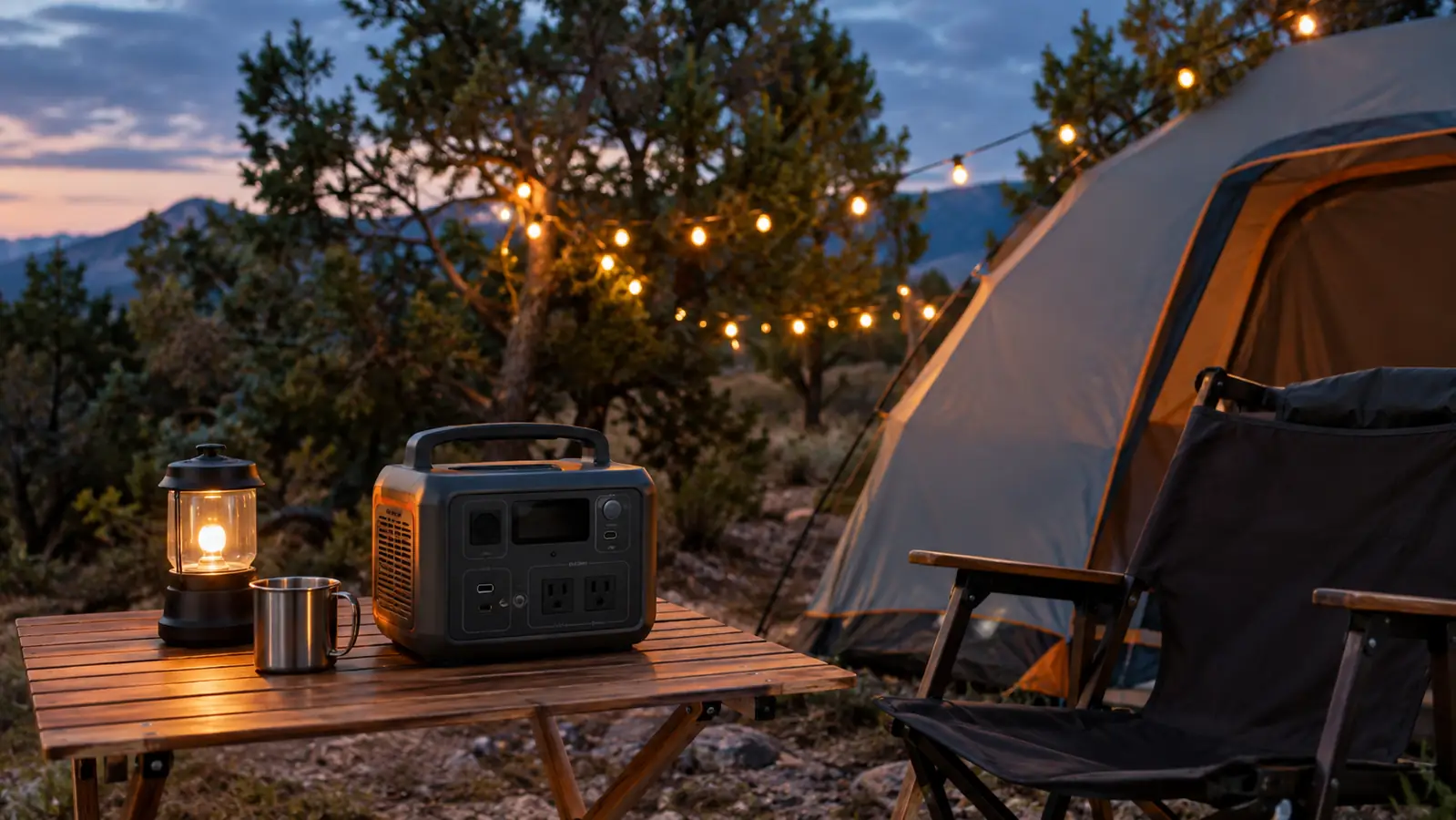
I bought the Jackery Explorer 300 for a simple reason: I was tired of digging through the bottom of a plastic bin for the one power bank that still held a charge. That was two seasons ago. Since then it has ridden in the back of our 2016 4Runner for about thirty weekends of camping and day hiking across northern Arizona, southern Utah and the eastern Sierra. It has been rained on, bounced down a dirt road, left in the truck overnight at below freezing, and dropped once on the way to the tent. It still works. But it is not the thing the marketing makes it sound like, and the sooner you know that, the happier you will be with it. The listing photos show it glowing next to a full camp setup, as if one small box is going to power your whole weekend. It is not. It is going to power the things that matter, and that is a different and better story.
Most reviews of the Jackery Explorer 300 are written by people who used it for one weekend and then copied the spec sheet. This one is written after two full seasons of car camping, which is a different thing. I am not going to tell you it will run your whole camp, because it will not. I am going to tell you exactly what it does, what it does not do, and what I would change if I were the engineer. If you are a weekend car camper who just wants your phone, camera and CPAP to stay alive, this is the review I wish I had read before I bought mine. I am also going to tell you which trips it stayed in the bin, because a review that only talks about the trips where the gear worked is not an honest review.
The Quick Verdict
A genuinely useful power bank for car campers who know what 292 watt hours can and cannot do. Buy it for phones, cameras, laptops and a CPAP. Skip it if you expect it to replace shore power for a weekend.
Amazon Check Today's Price →The right tool for the right job
For charging phones, cameras, headlamps and a laptop on a car camping weekend, the Jackery Explorer 300 is the one I reach for every time. It is not a whole-camp power plant. It is the thing that keeps your stuff alive so the trip keeps working.
Amazon Check Today's Price on Amazon →How I've Used It
I do not have a test lab. I have a six-person dome tent that has seen four seasons, a husband named Ray who is excellent at starting fires and terrible at remembering to charge his phone before we leave, and a right knee that has been bad since I came down wrong on the Kachina Trail two years ago. The knee matters more than you would think for a review like this, because it means I care a lot about how far I have to carry things from the truck to the tent.
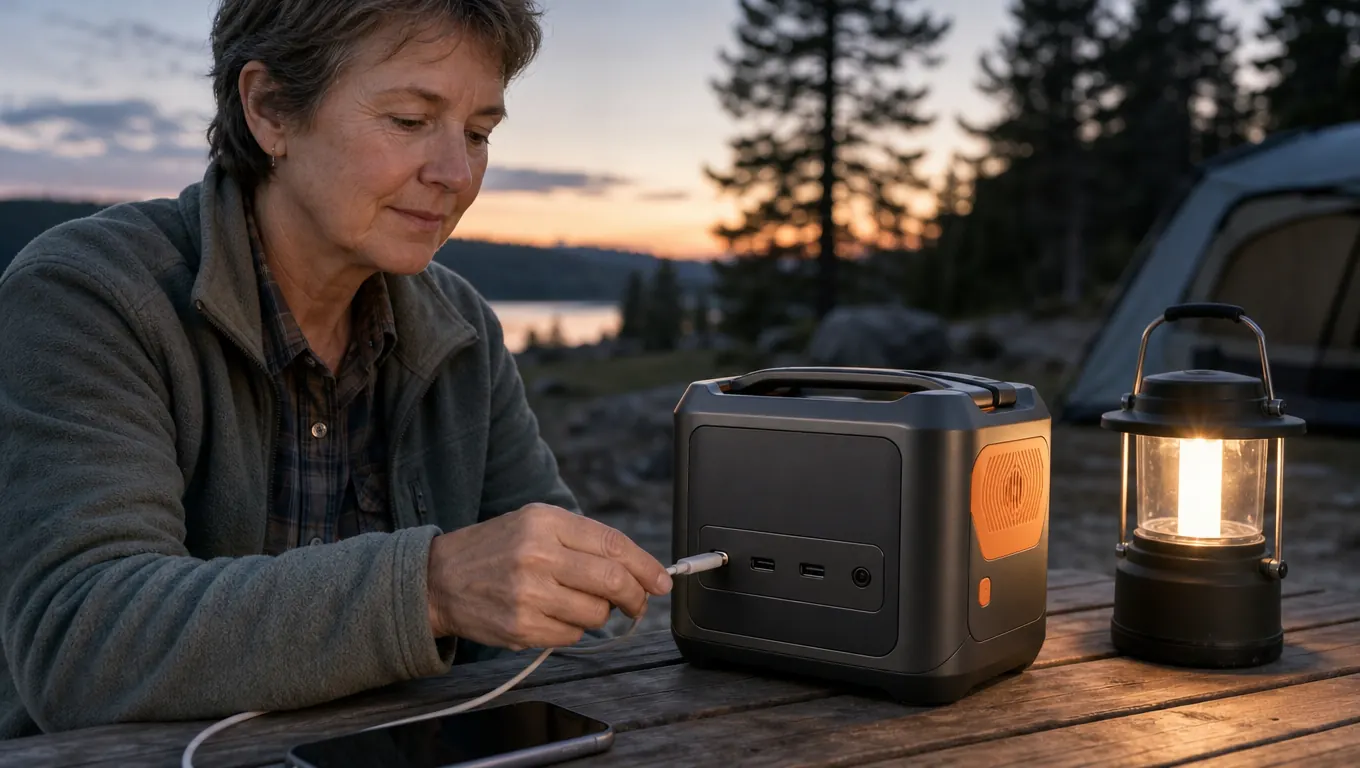
The Jackery has been on every trip for two seasons. It lives in the back of the 4Runner between trips, and I plug it in about once a month to top it up. On a typical weekend it charges two phones, two camera batteries, a pair of headlamps and Ray's tablet, and it does all of that without dropping below 60 percent. On the longer fall trip, it also runs my CPAP at night, which is the whole reason I bought it in the first place.
One detail worth knowing: the unit holds its charge for a long time. I have pulled it out of the garage after six weeks and it still showed 80 percent. That matters for someone like me who camps fifteen weekends a year and forgets the gear exists between trips. A power bank that drains itself sitting in a bin is useless, and this one does not. The trip that sold me was a three-night stay in the eastern Sierra last October. The forecast said 40 degrees at night, and I brought the electric blanket on a whim. I ran it on low for about an hour each night, and the Jackery still had 45 percent left on the morning we packed up. That is the kind of detail that does not make it into the marketing, and it is the kind of detail that actually tells you what a product is for.
What Nobody Tells You About 292 Watt Hours
Here is the sentence that should be in every review of the Jackery Explorer 300: 292 watt hours is a battery, not a generator. It will not run your camp for a weekend. It will run the things you actually need charged, and if you are honest about that, it is excellent. The gap between those two sentences is where most of the disappointment comes from, because the marketing lets you believe the first sentence is not true.
The math is simple and nobody puts it in the listing. A modern compressor fridge draws about 30 to 40 watts on average, which means the Explorer 300 runs one for roughly seven to nine hours, not three days. A space heater draws 1,500 watts, which is five times what the AC outlet can deliver, so that is not a thing. A kettle, a hair dryer, a toaster, all out. I know this because I tried the kettle once and the unit shut itself off cleanly. That clean shutdown is actually the behavior you want, but it is still a no.
Here is what the watt hours actually do for you. Two phones charge about ten times before the Jackery is empty. My CPAP draws about 12 watts, so it runs for roughly twenty hours, which is two full nights and then some. A laptop charges five or six times. A string of LED lights runs for days. That is the honest envelope of the Explorer 300, and it is a very useful envelope. The problem is not the envelope. The problem is that nobody tells you the envelope exists.
What It Actually Runs, and What It Won't
Let me give you the list from my actual trips, because this is the part that separates the honest reviews from the ones that just read the box. Runs without complaint: phones, tablets, camera batteries, headlamps, a laptop, a small fan on a hot night in Utah, a string of LED lights, and an electric blanket on low for about four hours. That last one is a luxury, but it is a real one, and on a cold night near the Grand Canyon it made the difference between a good trip and a miserable one.
Does not run, and will never run: anything with a heating element over about 200 watts, a full-size compressor fridge for a weekend, a microwave, a coffee maker, an electric kettle. The AC outlet is rated for 300 watts continuous and 500 watts peak. I have pushed it past the limit once, and the unit shut down without drama and came right back when I unplugged the offending appliance. That is the behavior you want from a battery, and it is worth knowing it exists before you test it yourself.
The one surprise that nobody mentions is the USB-C port. It charges my phone fast, and it charges the Jackery itself off the wall in about four hours. That single port has been worth more to me than the AC outlet, because it is the one I use every single trip. If you are comparing this to other power stations, pay attention to the ports, not just the watt hours. The ports are what you touch at 10 p.m. in a dark tent.
The Explorer 300 will not run your camp for a weekend. It will run the things you actually need charged, and if you are honest about that, it is excellent.
Recharging: The Part the Marketing Skips
Here is what nobody tells you about recharging the Jackery Explorer 300, and it is the closest thing this unit has to a real weakness. The wall charger is fine. From empty, it takes about four hours, which means you can top it off the morning of a trip while you load the truck. That is the method I use 90 percent of the time, and it works. The problem is the other two methods.
Charging from the car's 12-volt outlet is slow. I have done it on the drive from Flagstaff to the Grand Canyon, which is about an hour and a half, and it adds maybe 20 percent. You are not going to recover a drained battery on a day trip. You need an overnight drive or a long afternoon to do that. For someone who camps out of a 4Runner, this is the gap in the system, and I wish the car charging were faster.
Solar is the one that gets oversold. The Explorer 300 does not come with a panel, and the panels are sold separately. With a 60-watt panel in full sun, a full recharge takes about five to six hours. In the partial shade of a juniper, which is where you actually camp in Arizona, it takes longer than a day. I carry a 100-watt panel on the longer trips, and even that needs a full day of moving it around to chase the sun. The honest advice: treat the wall charger as your primary, the car as a top-up, and solar as a slow drip that only works if you are parked in the open all day.
I remember one trip near Escalante where I tried to do it right. I parked the truck in the open, laid the panel on the hood, and angled it south. Six hours later I had gained about 40 percent. The next day was overcast and I gained almost nothing. That is the reality of solar in the desert southwest, which is supposedly the best place in the country for it. If you are planning to rely on the sun, plan to be patient.
What I'd Change After Two Seasons
After about thirty nights with the Jackery Explorer 300, here is what I would change if I were the engineer. First, the display. It shows input and output watts and a battery percentage, which is genuinely useful, but the percentage lies a little in the last twenty percent. It drops faster than it should, and I have had it go from 12 percent to dead in about twenty minutes under load. You learn to treat 20 percent as empty, but you should not have to learn that.
Second, the AC outlet placement. It is on the side with the other ports, which means the unit has to be oriented a specific way for the cable to reach. It is a small thing, but on a dark night in a tent, cable management is everything. Third, and this is the real one, I wish the car charging were faster. The 12-volt input is the weak link in the whole system. A faster car charge would make the Explorer 300 a genuinely different product for people who camp out of a vehicle.
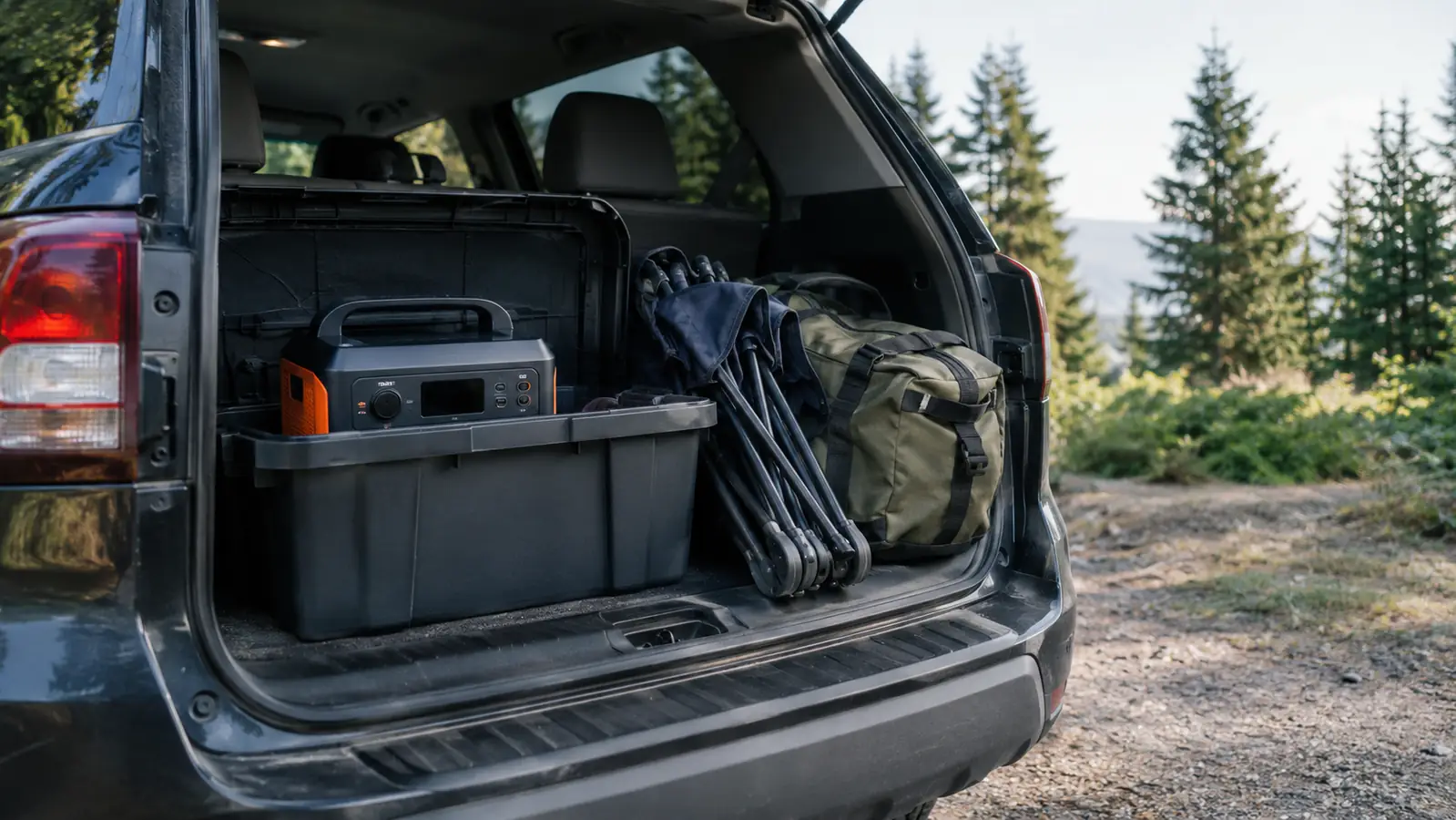
There is also the matter of the seven pounds. The Explorer 300 weighs just over seven pounds, which is not heavy until you are carrying it from the back of the 4Runner to the tent with a bad knee. The handle is a single strip across the top, and it is fine for a short carry. What I have learned is to pack it in the bin that ends up closest to the tent. That sounds like a small thing, but it is the difference between a ten-second carry and a hundred-yard stumble. On the trips where I forgot, I paid for it.
One more thing about alternatives. I looked at bigger units before I bought this one, including the Anker Solix and the larger Jackery models. They have more watt hours, and if you need to run a fridge for a weekend, one of those is the honest answer. But they are heavier, which matters when you are carrying gear from the truck to the tent, and they cost more. For the way I camp, the Explorer 300 is the size that makes sense.
What I Liked
- Holds a charge for weeks between trips; I have pulled it out after six weeks in the garage and it still showed 80 percent
- USB-C port charges a phone fast and recharges the unit in about four hours off the wall
- Runs a CPAP for two nights, which is the whole reason I bought it
- Shuts down cleanly when you push past the 300-watt limit, no damage, no drama
- Small enough to live in a plastic bin in the back of the 4Runner all season
Where It Falls Short
- 292 watt hours is a battery, not a weekend power plant; a compressor fridge eats it in about eight hours
- Car charging is slow, roughly 20 percent per hour and a half of driving
- Solar panel sold separately, and a full solar recharge takes most of a day in open sun
- Battery percentage drops faster in the last 20 percent, so treat 20 as empty
- Seven pounds is fine until you carry it a hundred yards with a bad knee
Who This Is For
This is for the person who camps out of a vehicle, charges two phones and a camera on a weekend, and wants one box that does it without drama. It is for the person who wants to know the unit will still hold a charge in June after sitting in the garage since October. It is for the CPAP user, the person who wants a fan on a hot night, the person who likes a string of lights around the tent door. If that is you, the Jackery Explorer 300 is the right size. Not too big to carry, not too small to matter.
It is also for the person who is tired of carrying three separate power banks because none of them can be trusted to hold a charge. One box, one place in the bin, one thing to remember. That simplicity is worth more than the spec sheet suggests.
Who Should Skip It
Skip it if you are expecting to run a fridge for a long weekend, because you need three times the watt hours and a much bigger battery. Skip it if you want to charge from the sun in a shaded campsite, because you will be disappointed. Skip it if your trips are all drive-in with full hookups, because you do not need it at all. And skip it if you want one unit to power lights and appliances for a whole camp, because that is a different product at a different price. The Explorer 300 is honest about what it is, but only if you are honest with yourself first.
One more group should skip it: people who want to run a heated blanket all night, every night. I got four hours on low out of mine, which was perfect for taking the chill off before sleep. If you want it running until sunrise, you need a bigger battery.
Two seasons in, I still reach for it every trip
The Jackery Explorer 300 is the power bank I grab first, for the simple reason that it does what I need and nothing I do not. If your weekend is phones, cameras, a laptop and a CPAP, this is the size that makes sense.
Amazon Check Today's Price on Amazon →