
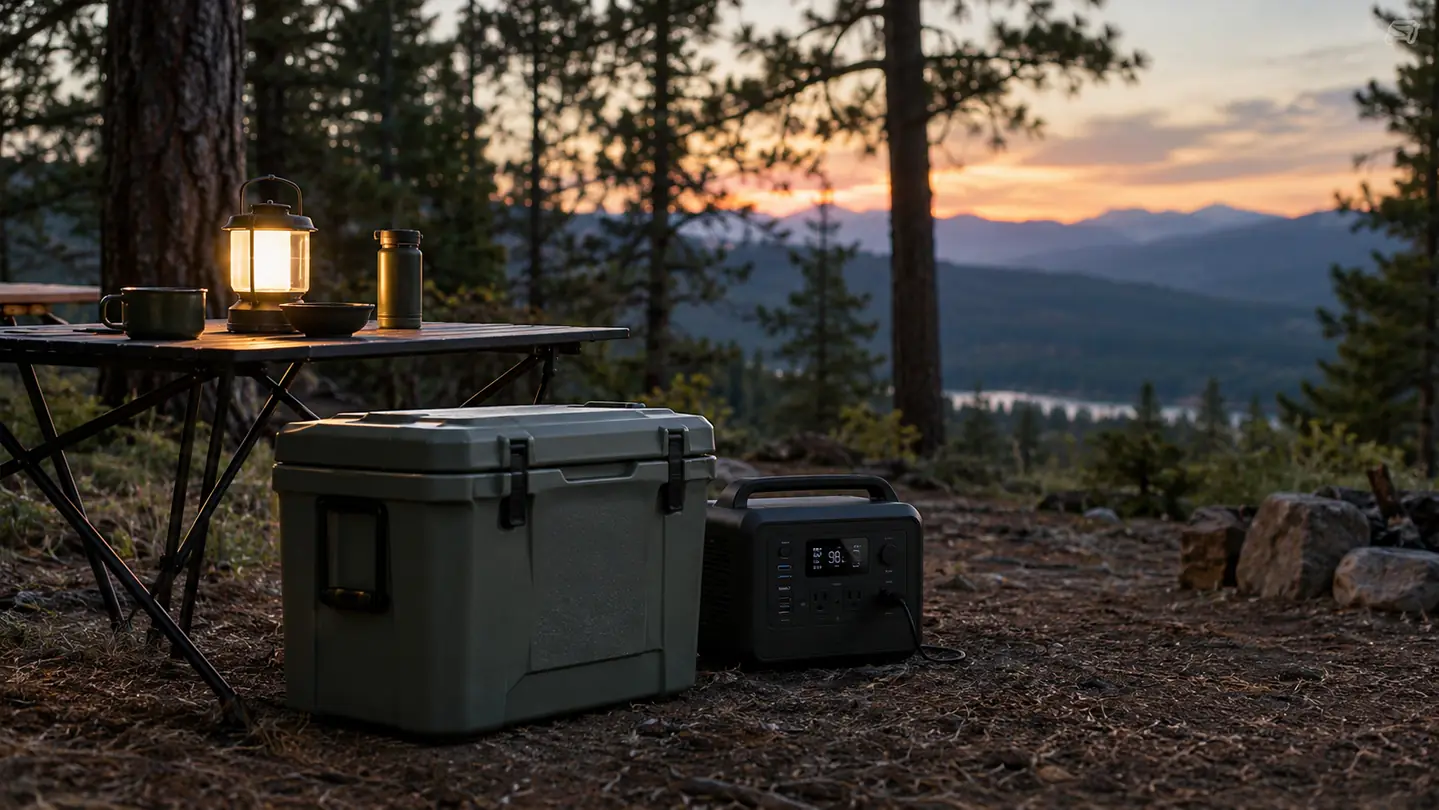
I have a confession: I used to be the person who bought a bag of ice every morning on a camping trip. By Saturday afternoon the cooler was half water, the milk was floating, and the chicken I planned for dinner was sitting in lukewarm melt. Then I switched to a fridge-style cooler powered by a Jackery Explorer 300, and the whole trip changed.
This guide is the exact routine I use now. It is not complicated. You need a 12V compressor cooler, a portable power station like the Jackery Explorer 300, and about an hour of setup before you leave. Do it once and you will stop planning meals around ice.
Keep food cold all weekend without a single bag of ice.
The Jackery Explorer 300 has 292 watt-hours of capacity, which is enough to run a 12V fridge-style cooler for a full weekend in mild weather. Pair it with a small solar panel and you can stay out longer. See the current details on Amazon.
Amazon See It on Amazon →What You Need
The whole setup comes down to three pieces: a 12V compressor cooler, a portable power station with enough watt-hours, and a way to recharge if you are out for more than two nights. You probably already have the car. The cooler and the power station are the two things you need to buy.
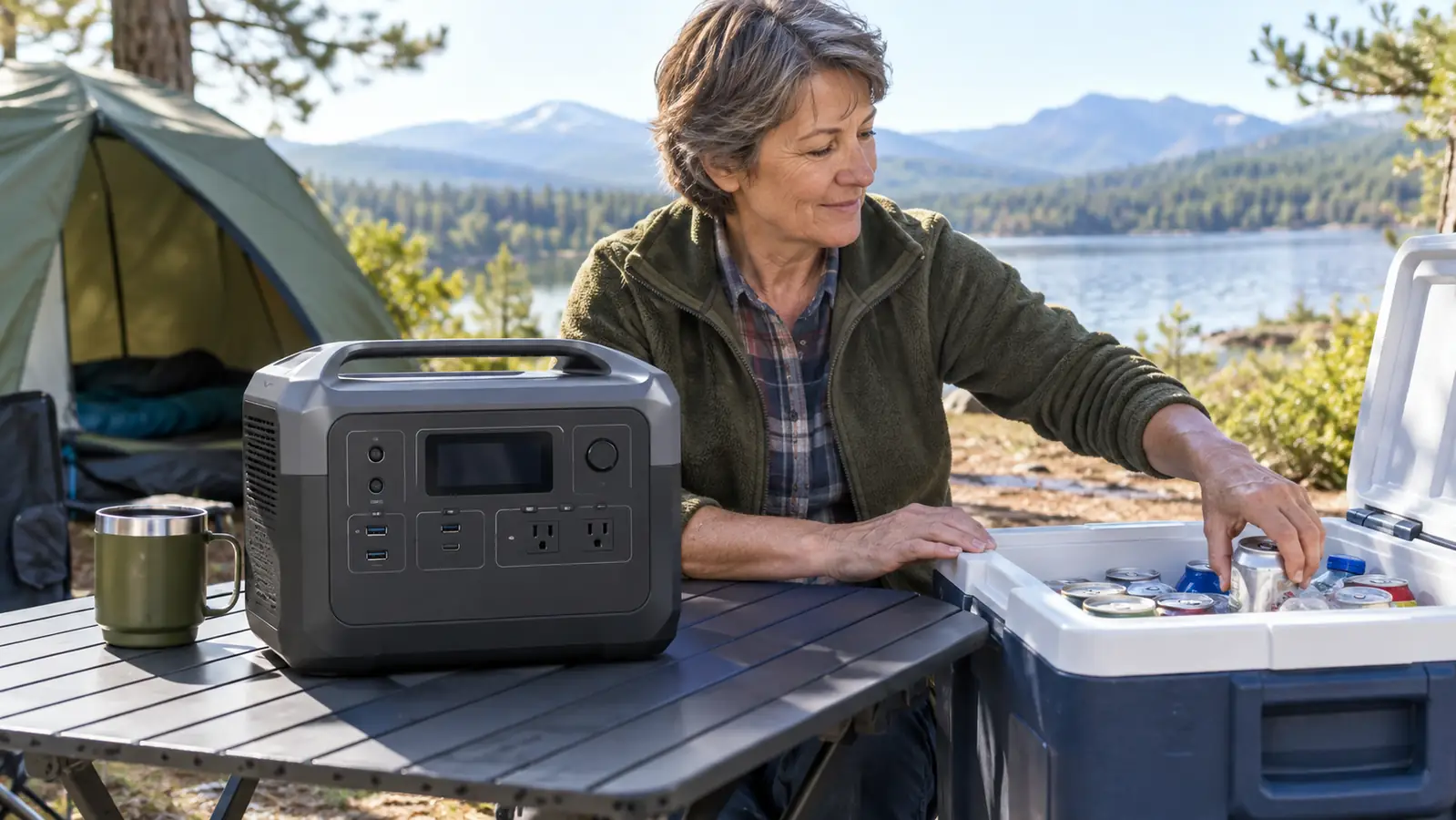
I chose the Jackery Explorer 300 because it is small enough to sit on the camp table, light enough to carry with one hand, and simple enough that my husband Ray can use it without asking me how. It has a 12V outlet, a couple of USB ports, and a screen that shows the remaining charge. That is all I need.
If you already own a different power station, the same routine works. The important number is watt-hours. A 300 watt-hour station is the minimum I would use for a weekend cooler. A 500 watt-hour station gives you more margin and lets you charge phones and run a small fan at night.
Step 1: Choose a 12V compressor cooler
An ordinary ice chest will never get you a full weekend. Ice melts, water sloshes, and the temperature swings every time you open the lid. A compressor cooler works like the fridge in your kitchen. It has a thermostat, it runs on 12V power, and it keeps food at a steady temperature as long as it has electricity.
I use a 40-quart compressor cooler. That size fits a weekend of food for two people, plus drinks, without taking up the whole back of the 4Runner. If you camp with a family, a 50 to 60 quart model gives you more room. Look for one with a 12V car plug and a low power draw. Most modern compressor coolers draw around 40 watts when the compressor is running and much less on average.
One thing I learned the hard way: do not buy a thermoelectric cooler. They are cheaper, but they only cool to about 20 degrees below the air around them. On a warm day, that is not cold enough for raw meat or milk. A compressor cooler is the only type that will keep food safe all weekend.
A compressor cooler costs more than an ice chest, but it pays for itself in the first summer if you camp often. No more ice runs, no more wet cardboard, no more guessing whether the chicken is still safe to eat.
Step 2: Pre-cool the cooler before you leave
A compressor cooler needs time to pull the temperature down. Plug it in at home the night before your trip and set it to about 34 degrees. By morning, the interior is cold and the walls are cold. That stored cold matters because it means the cooler does not have to work as hard once you are at camp.
Put only cold food into a cold cooler. If you pack a warm soda or a container of just-made pasta salad, the cooler has to spend energy chilling it. I put everything in the fridge at home the night before, including the drinks. The morning of the trip, I move it all from the kitchen fridge straight into the cooler.
Frozen water bottles help too. I keep two or three in the freezer and drop them in the cooler before we leave. They act like ice packs without the mess, and they keep the temperature steady while the compressor cycles.
If your cooler has a battery protection setting, set it to high before you connect it to the Jackery. That setting stops the cooler from draining the battery too low, which protects both the cooler and the power station.
Step 3: Pack food cold and keep the lid closed
Packing order matters more than you would think. I put items I will not need until Sunday at the bottom, and things I grab all day, like drinks and lunch fixings, at the top. That way I am not digging through the whole cooler every time I want a soda.
Fill the empty space. A cooler that is only half full loses cold air every time you open it. I use extra water bottles and bags of trail mix to take up space. The fuller the cooler, the slower the temperature changes.
Keep the lid closed. Every time you open a compressor cooler, warm air rushes in and the compressor has to run longer. I take out everything I need for a meal at once, then close the lid. It sounds small, but it is the difference between the battery lasting the whole weekend and needing a recharge by Sunday morning.
I also keep a small cooler bag for drinks we grab while hiking. That way the main cooler stays closed during the day and the compressor does not have to work as hard.
Step 4: Connect the power station and size your runtime
The Jackery Explorer 300 is the piece that makes this setup work. It holds 292 watt-hours, which is enough to run a small compressor cooler for about a day and a half in mild weather. The exact number depends on the outside temperature, how often you open the lid, and what temperature you set the cooler to.
To connect it, plug the cooler's 12V car cord into the 12V outlet on the front of the Jackery. The Jackery shows you the remaining charge on its screen, so you can see exactly how much power you have left. I check it in the morning and again before dinner. On a typical weekend trip, I start with a full charge on Friday afternoon and still have about 20 percent left on Sunday morning.
Do the math before you go. A small compressor cooler in mild weather averages around 6 to 8 watts, not the 40 watts it draws when the compressor is running. Over 36 hours, that is roughly 250 watt-hours, which is close to what the Jackery holds. In July, expect more. In October, expect less.
The Jackery screen is the part I trust most. It shows the remaining percentage, so I can decide whether to recharge at lunch or wait until we get back to camp. No guessing, no surprise shutdowns.
Step 5: Recharge with solar or the car while you are out
Even with a full charge, I like a backup. The Jackery Explorer 300 can be recharged from a solar panel or from the 12V outlet in my 4Runner. When we drive to a trailhead or into town for supplies, I plug the Jackery into the car and it gains charge while we drive.
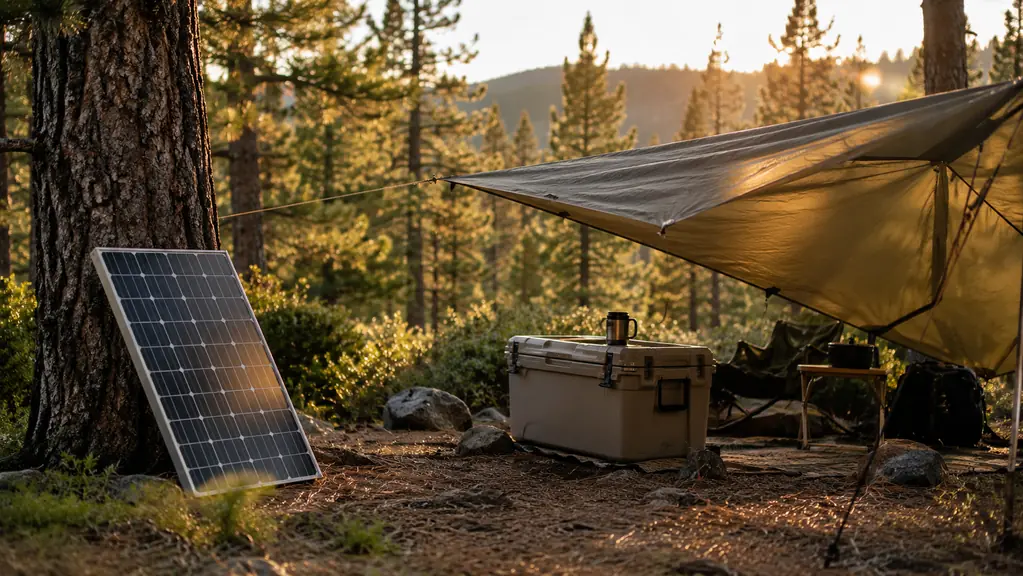
If you want a solar panel, a 100-watt panel works well with the Explorer 300. In full sun, it can add a meaningful amount of charge over a day. I set the panel up in the morning, angle it toward the south, and let it trickle charge while we are out hiking. By the time we get back, the Jackery is higher than when we left.
One warning: do not wait until the battery is empty to recharge. The cooler will keep running until the Jackery shuts off, and then your food starts warming up. I recharge when the charge drops below 40 percent, even if I think we have enough. That habit has saved more than one weekend.
One more tip: keep the solar panel off the ground. A panel lying flat catches less sun and can get dusty. I lean it against a log or tie it to a tree at an angle. It looks like a small thing, but it makes a real difference in how much charge you get back.
The Two Mistakes I See People Make
The first mistake is buying a thermoelectric cooler because it is cheaper. I already covered why that fails. The second mistake is underestimating how much power a warm day costs. When the outside temperature goes from 70 to 90, the cooler runs twice as often, and your battery life drops by a third or more.
The fix is simple: plan for the worst weather you might see, not the best. If you are camping in July, assume the cooler will run more and bring a solar panel or plan a drive that recharges the Jackery. If you are camping in October, you can relax.
What Else Helps
A few small habits make the whole setup more reliable. Keep the cooler in the shade, even if the shade is just a tarp tied to a tree. Put a thermometer inside so you know the actual temperature instead of guessing. And pre-freeze a few water bottles to fill the empty space. None of these things are hard, but together they are the difference between a cooler that works and a cooler that turns everything into soup.
If you camp in a place with no shade, a reflective windshield shade over the cooler helps. I cut a piece of reflectix to fit the top of my cooler and it keeps the sun off the lid. It is not fancy, but it works.
The First Weekend I Tried It
The first weekend I tried this was a trip to the eastern Sierra in October. Nighttime temperatures dropped into the 30s, daytime into the 60s. I set the cooler to 34, packed it the night before, and ran it off the Jackery. By Monday morning the milk was still cold and the battery still showed 18 percent.
The trip was not a test. It was just a normal weekend of hiking and cooking breakfast at camp. The cooler sat under the shade tarp, the Jackery sat on the camp table, and neither one needed any attention. That is the whole point. Once the setup is right, you stop thinking about it.
I have done this on at least ten trips since then. The routine has not changed. The only variable is how much sun we get for the solar panel, and even on cloudy trips the Jackery has never let the food get warm.
The first weekend I ran the cooler off the Jackery, the milk was still cold on Monday morning and I never bought a single bag of ice.
The Bottom Line
A portable power station will not make sense for every camper. If you only camp one night at a time and you are happy with a good ice chest, keep your money. But if you camp all weekend, if you like cold drinks without a morning ice run, or if you have ever thrown away food that got too warm, this setup is worth the switch. The Jackery Explorer 300 is the piece I would buy first.
Ready to stop buying ice?
The Jackery Explorer 300 is the power station I reach for every weekend. It is small enough to sit on the camp table, simple enough to use without a manual, and strong enough to keep a cooler running all weekend. Check the current details on Amazon and see if it fits your setup.
Amazon See It on Amazon →