
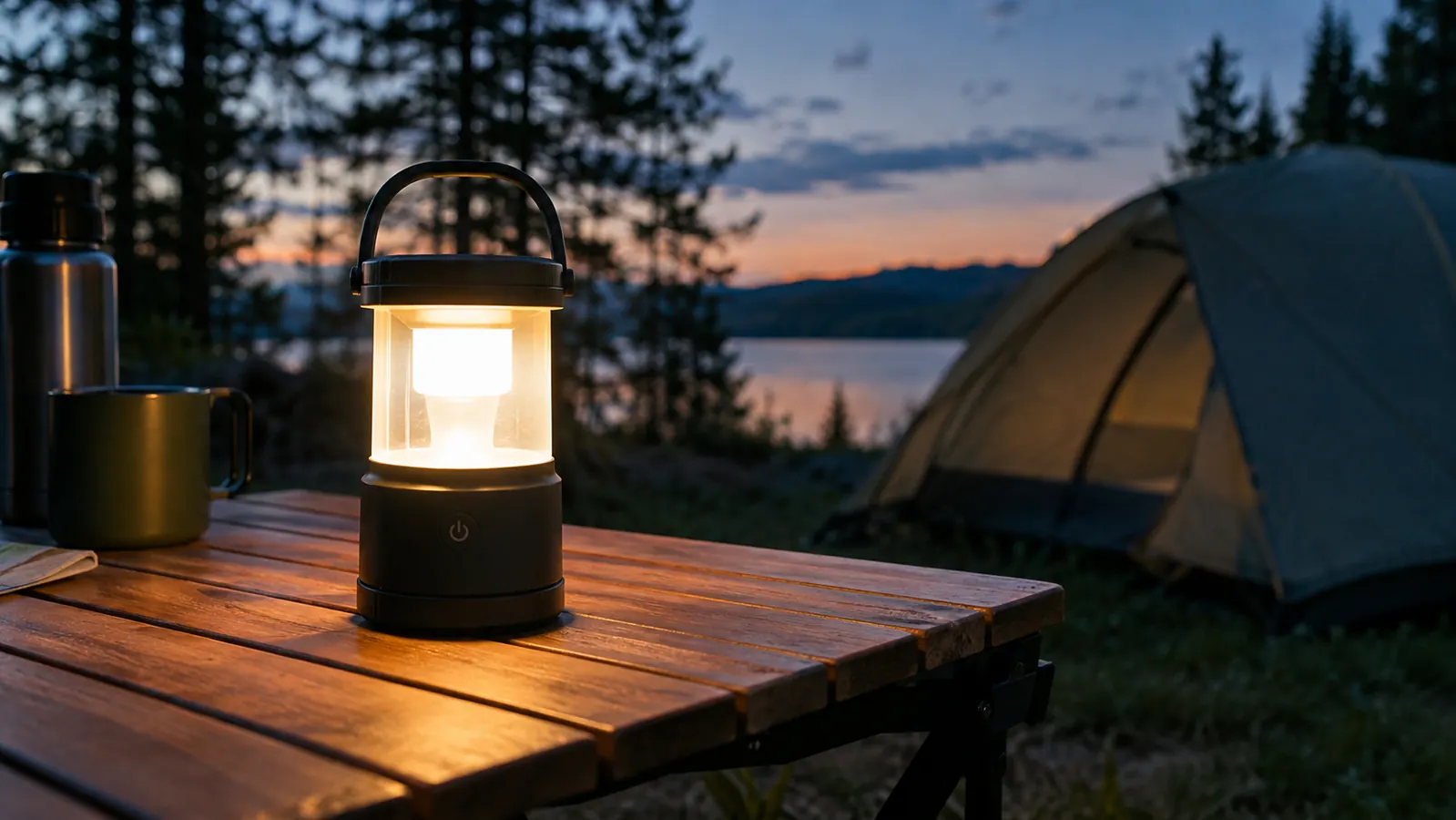
I will tell you the honest thing about the Lepro 1000LM lantern before I tell you anything else: it is not the light you will use the most on a camping trip. It is the light you will reach for when you actually need light, which turns out to be a different thing entirely. Most of my evenings in camp are lit by a headlamp and a small task light. The lantern is for the moments in between, when the whole site needs to be bright and I do not want to hold anything. That is a narrower job than the box makes it sound, and it is worth understanding before you buy.
I am Maureen. I live in Flagstaff, and my husband Ray and I camp about fifteen weekends a year, mostly northern Arizona, southern Utah and the eastern Sierra, with one longer trip every fall. I am the one who packs the bins in the back of our 2016 4Runner, which means I am also the one who gets blamed when something is missing. The Lepro lantern has lived in one of those bins for two seasons, about thirty nights of actual use, and this review is what I have learned that the product page does not tell you.
The Quick Verdict
A bright, dependable rechargeable lantern that does one job well: turning a dark campsite into a lit one. Ignore the headline lumen number and plan your charging, and you will be happy with it for years.
Amazon Check Today's Price →The lantern I grab first when the sun goes down
After thirty nights with it, this one hangs, stands, charges from a power bank, and has outlasted two cheaper lanterns that shared the same bin.
Amazon Check Today's Price on Amazon →How I've Used It
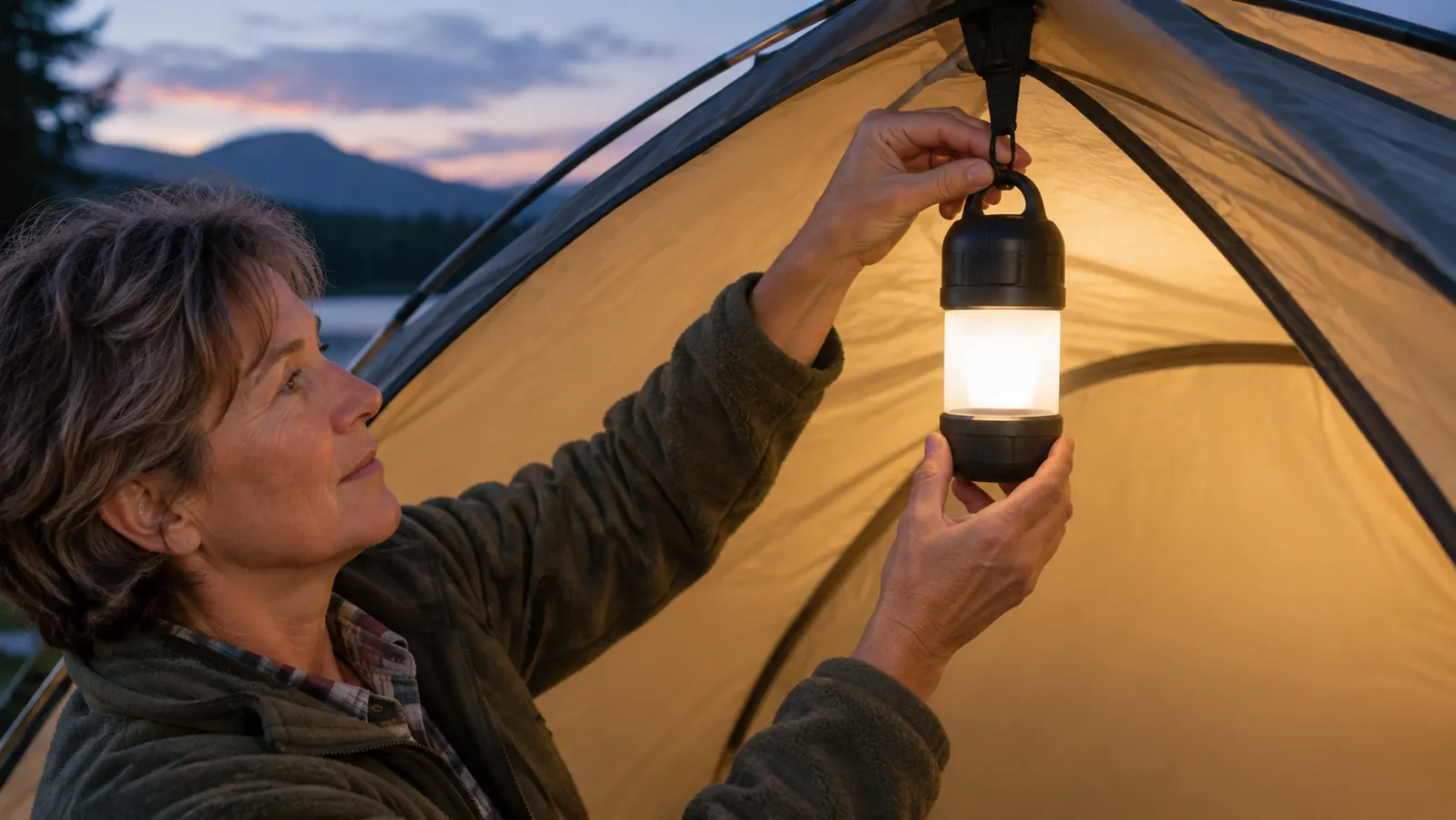
The first thing to know is that the Lepro lantern spends most of its time hanging. There is a loop on top that clips onto the ridge line inside our six-person dome tent, and that is where it lives on most nights. Hanging it from the peak means the light fills the whole tent evenly instead of sitting on the floor and shining sideways. I can read in bed, find a water bottle, and repack a bin without pulling out a headlamp. That single placement decision made more difference to my camping comfort than any other lantern feature.
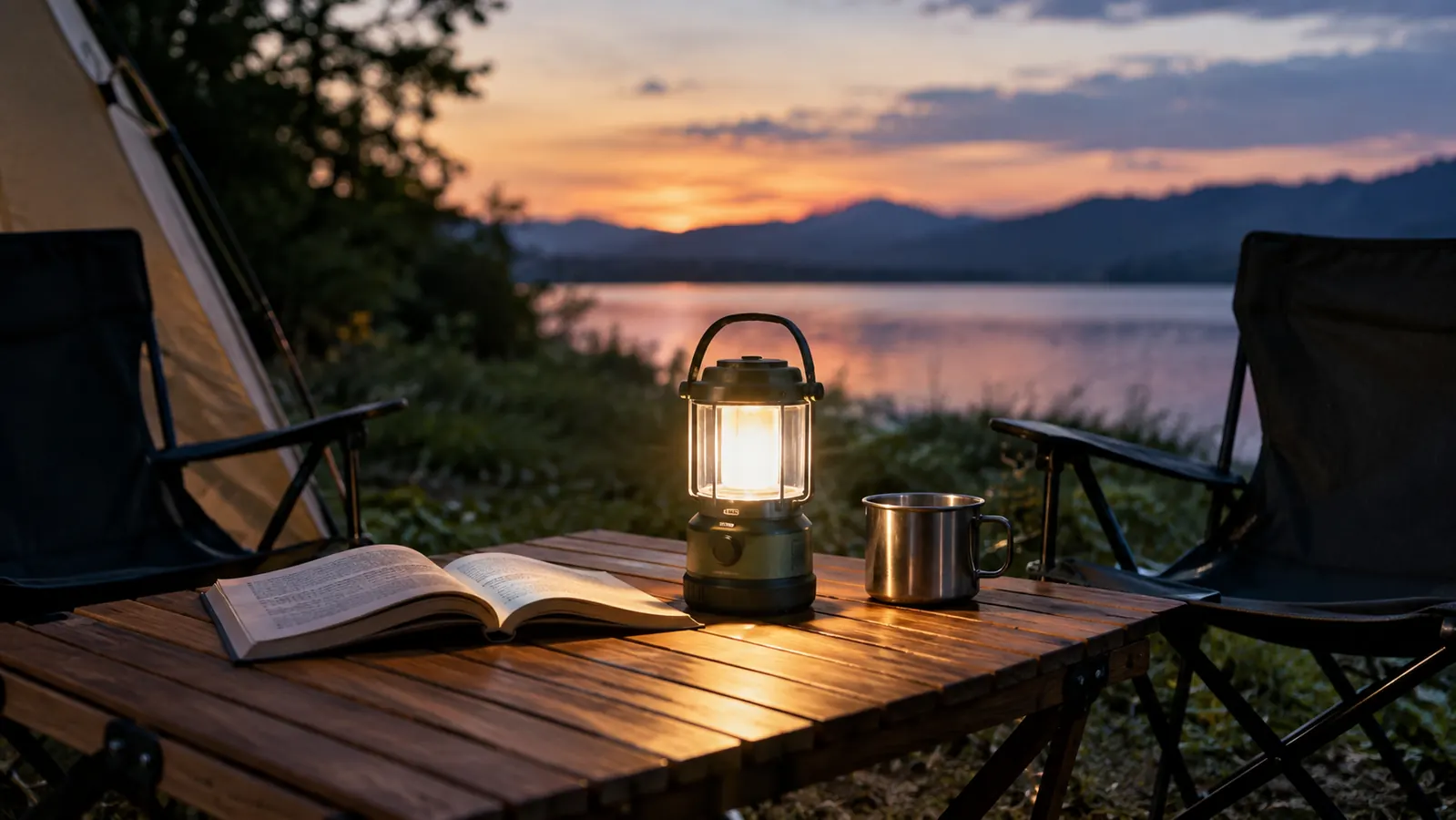
It also stands on its own, which I use when we eat outside. The base is flat and wide enough that it does not tip over on the camp table, even when Ray is reaching across for the salt. On cooking nights I set it at the edge of the table so the light falls on the stove, and it throws enough light for two people to cook and plate dinner without anyone holding a flashlight. It is not a subtle pool of light. It is a whole-site glow, and that is the point.
My right knee, from an old fall on the Kachina Trail, means I am careful about how much I carry from the car to the tent. The lantern weighs about what a large water bottle does, so I can hang it from the tent loop one-handed and it does not add to the bin-carrying chore. That matters more to me than it used to. If a lantern made me haul extra gear or balance it on a chair, it would stay in the garage, and this one does not.
The First Night I Almost Didn't Have It
The first trip I took it on, I almost left it at home. I had charged it the night before, and then it sat on the kitchen counter while I packed the bins, and I only remembered it when Ray asked where the lantern was. That is the honest pattern with rechargeable gear. It has to become part of the leaving checklist, not something you toss in the bin and hope. Once I made it part of the routine, it stopped being a problem. But I would rather tell you that than have you learn it the way I did, standing in a dark tent on the first night of a trip.
That first trip, a three-nighter in southern Utah, I ran it on medium at the table for a few hours each night and on low in the tent after that, and it never dropped below a useful level. By the third night it was still going strong, which is when I stopped worrying about the battery and started just using the lantern. I have never had to learn whether it runs out mid-trip, because it has not happened in two seasons.
What Nobody Tells You About the Brightness
The box says 1000 lumens, and the lantern will absolutely do that. What nobody tells you is that you will almost never use it at that setting. On high, the Lepro lantern turns a campsite into a construction site. It is genuinely bright, bright enough to light the whole table and the chairs and a good chunk of the ground around them, and bright enough to blind you if you look at it from across the table. I use high mode maybe ten minutes a night, usually when someone drops something in the dark and we all need to see the ground at once.
The four light modes are the real story. There is the high setting I just described, a medium that is honestly the most useful, a low that is perfect for hanging inside the tent, and I have never once needed the fourth mode for anything. On medium, the lantern lights a full camp table for four people comfortably and the battery lasts much longer. On low, it is the right amount of light for reading in bed without waking Ray. If you buy this lantern expecting to live on high, you will be disappointed by the battery. If you live on medium and low, you will be thrilled.
The other thing nobody tells you is that the light runs cool and white, not warm. That is fine for cooking and finding gear, and I actually prefer it for those jobs. But when we sit around after dinner, it is not cozy the way a flame is. We end up turning it to low and letting the fire do the atmosphere work. If you want a lantern that doubles as mood lighting, this is not that lantern. It is a work light that happens to look nice on a table.
The Battery Truth
Here is the part the reviews do not shout about: this is a rechargeable lantern, which means the battery is the product. When it is charged, it is wonderful. When it is dead, it is a paperweight until you can plug it in. There is no fallback of buying batteries at the gas station on the way to camp. You have to plan, and planning is the whole job.
My routine is simple and I recommend it. I charge the Lepro lantern the night before we leave, from the same outlet as my phone, and I charge it again the moment we get home. I never assume it held charge from the last trip. On a normal weekend, two or three nights, I have never once had it die on me, and I am not gentle with the settings. I run it on medium at the table for a couple of hours each evening and on low in the tent, and it has made it through every trip without needing a mid-trip charge.
For the longer fall trip, the one that runs a week, I carry a small power bank anyway for my phone, and the lantern charges from it fine. It takes a while, a few hours from a power bank, so I plug it in during the day when we are out hiking and it is ready by evening. In cold weather, and we camp through shoulder seasons in the Sierra, rechargeables lose capacity, so I start those trips with a full charge and keep it on low more than medium. None of this is a flaw in the lantern. It is just the reality of rechargeable gear, and nobody tells you to plan for it before the first night out.
Hang It, Set It, the Practical Stuff
The loop on top is the feature I would not want to give up. It clips onto the tent ridge line in seconds, and it also hangs from a tree branch when we eat outside. The clip is solid, the kind that takes deliberate pressure to open, so I have never had it pop loose in the wind. Hanging the lantern is a one-handed job, which matters when the other hand is holding the tent door open.
The button is on the side and cycles through the modes with a click. It is easy enough to find in the dark, though I will admit I have hit it once or twice by accident when grabbing the lantern to move it. That is a minor gripe. The base is flat and wide, so it stands steady on the table and on the floor of the tent. It does not roll, which I cannot say for every lantern I have owned. The charge port is covered by a small rubber flap, and the included cable is short, so I just use my phone cable instead.
One more honest note. The lantern throws light in every direction, which is what you want for a campsite and exactly the wrong thing for finding a specific item in a bin. When I need to find a headlamp at the bottom of a tote, I still reach for the headlamp I am about to look for. The lantern is ambient light, not a spotlight. Buy it for the ambient job and you will love it. Expect it to replace a flashlight and you will be annoyed. That is the honest division of labor.
What Two Seasons Have Done to It
The honest durability report: the lantern has been dropped, because I have dropped it, twice, once onto the floor of the tent and once onto a slab of rock at a site in the eastern Sierra. It survived both falls with nothing more than a scuff on the edge of the base, and it still charges and lights the same as the day it arrived. I did not baby it, and it has not complained.
It has also been through rain, though not a full storm. A light drizzle at a site near the Mogollon Rim left it sitting out on the table for a while and it was fine, and I have since made a habit of moving it under cover when the weather turns. I will not tell you it is fully weatherproof, because I have not tested it in a downpour and the product page does not promise that. It has survived everything a normal car camping weekend has thrown at it, and that is the standard that matters to me.
The only wear I can point to after two seasons is the rubber flap over the charge port, which still closes snugly but does not sit as flat as it did on day one. It has never let moisture in, as far as I can tell, and it has not affected the charging. If I were being picky, that is the one place I would watch. Everything else, the loop, the button, the base, the battery, is exactly where it started.
What Else I Considered
I am not someone who buys gear on impulse, so before the Lepro lantern settled into the bin, I ran it against the other options I had lying around and the ones people kept recommending. There was a cheap battery lantern that took four D cells, and it still lives in the garage because it was heavy, dim, and always seemed to have dead batteries in it when I grabbed it. The Lepro lantern is lighter, brighter, and I never have to remember whether the batteries were fresh.
I also considered going without a lantern entirely and just using headlamps, which is what we did for a few trips. It works, but it means everyone is lit up in their own little cone of light and the table stays dark. The lantern changes the whole dynamic of an evening in camp. It turns a dark site into a room, and that is worth the space it takes in the bin. The tradeoff, and I will be plain about it, is that the Lepro lantern is not the lightest or the smallest option out there. It is not heavy, but if your whole trip is about shaving ounces, this is not the lantern for you.
What I Liked
- Hangs from the tent ridge line and lights the whole interior evenly
- Four modes, and the medium and low settings are the ones you will actually live in
- Charges from a standard USB cable and a power bank
- Stands steady on a table and does not roll
- Two seasons and about thirty nights without a single failure
Where It Falls Short
- The 1000 lumen high mode is overkill and drains the battery fast
- Rechargeable only, so you have to plan charging before every trip
- Cool white light is not cozy for sitting around in the evening
- Ambient light only, not a spotlight for finding things in a bin
- The included cable is short and the button is easy to hit by accident
Two seasons, about thirty nights, and I have never once had the Lepro lantern die on me mid-trip. That is the whole review in one sentence.
Who This Is For
Buy the Lepro lantern if you car camp the way we do: out of bins in the back of a vehicle, at a site with a table, with a tent that has a ridge line to hang it from. If you want one light that turns the whole camp into a usable space for eating, reading, and finding your way at night, this is it. It is also right for people who are tired of lanterns that take four batteries and die at the worst moment. Charge it the night before you leave and it will simply work, trip after trip. That is the reassurance most of us are actually buying.
Who Should Skip It
Skip it if you are a backpacker counting grams, because the weight and the charging routine do not make sense for a pack. Skip it if you want warm, cozy light for long evenings around a fire, because this light is cool and workmanlike. And skip it if you refuse to plan ahead, because a dead rechargeable lantern is just a heavy object. If your whole camping style is 'grab the bin and go,' you want something that takes batteries you can buy anywhere. For everyone else, for the fifteen-weekend car camper, this is a lantern that earns its spot in the bin.
The one lantern I would replace with the same one tomorrow
If the bin caught fire and I had to rebuild the kit from scratch, the Lepro lantern would be on the list without a second thought. Two seasons in, it has done every job I asked of it.
Amazon Check Today's Price on Amazon →