
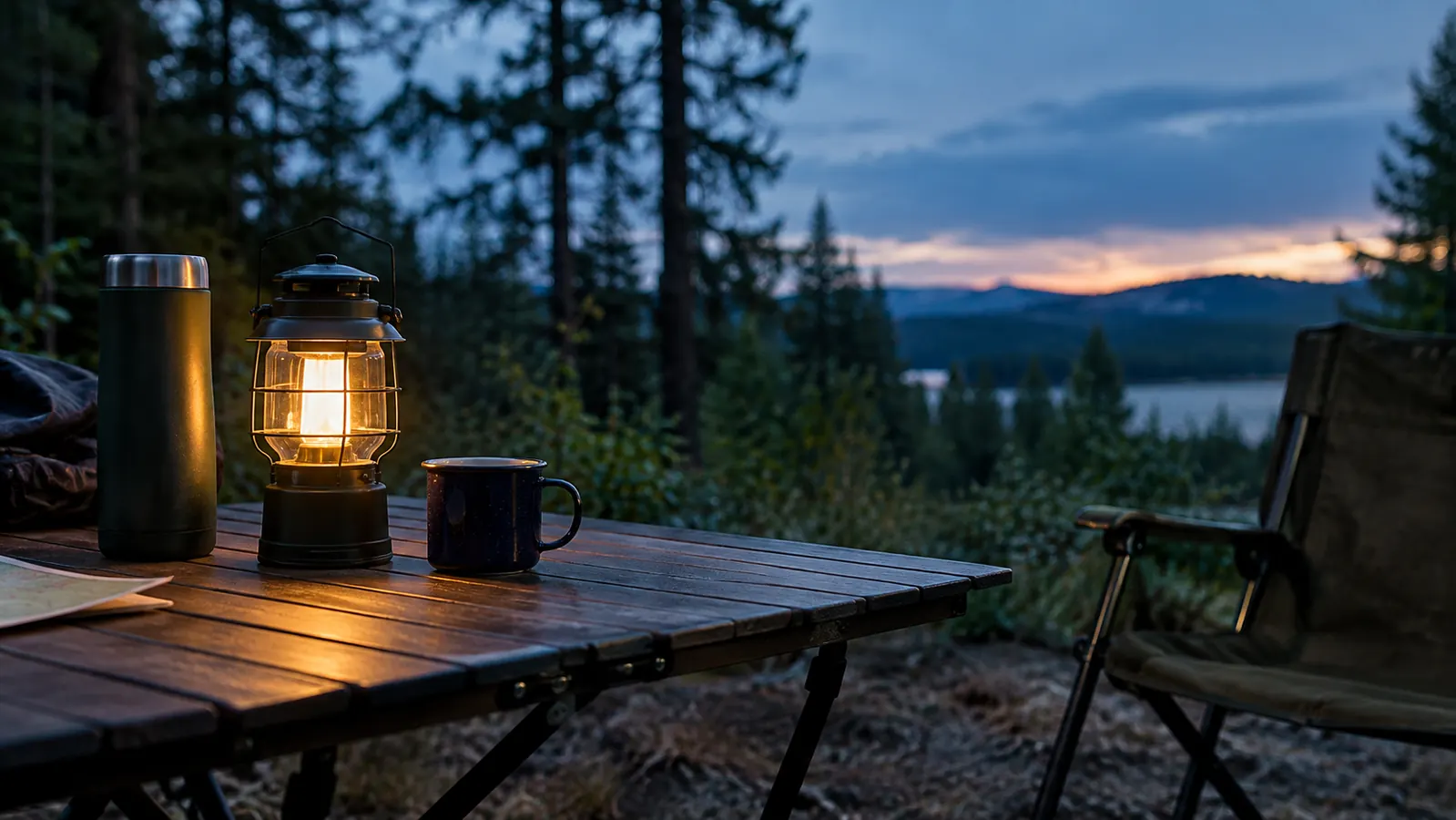
I have a confession to make. For years our camp bin held seven flashlights, and every one of them was either dead, flickering, or pointed at someone's face at the wrong moment. On a cold October night near the eastern Sierra, I finally counted what that cost us: four trips back to the car in the dark, one squinting husband, and a headlamp that rolled under the tent and stayed there. The next week I pulled all seven flashlights out of the bin and put in a single rechargeable lantern from Lepro. It changed how we spend evenings at camp.
This is not written for people who hike thirty miles with everything on their back. It is for people like me, who camp out of plastic storage bins in the back of a 2016 4Runner and want setup to take ten minutes, not a lesson in electronics. If you are tired of a flashlight graveyard in the garage, here are ten reasons one lantern beats the whole pile.
One lantern instead of seven flashlights
The Lepro 1000LM rechargeable lantern has been in our bin for a full season, and it has not let us down once. See today's price on Amazon and check the current deals.
Amazon Check Today's Price on Amazon →It lights the whole table, not one spot
A flashlight makes a small bright circle and leaves everything else dark. Our dinner setup is a folding table, two camp chairs, and a cutting board, and a single lantern sitting at one corner lit the whole surface well enough to see what I was slicing. We set it on the left corner and I could read a recipe card from the other side of the table. We ate dinner without anyone holding a light, which sounds small until you have done it. The light spreads instead of stabbing, so you can see the table, the food, and the faces across from you all at once.
No more digging for fresh batteries at 9 PM
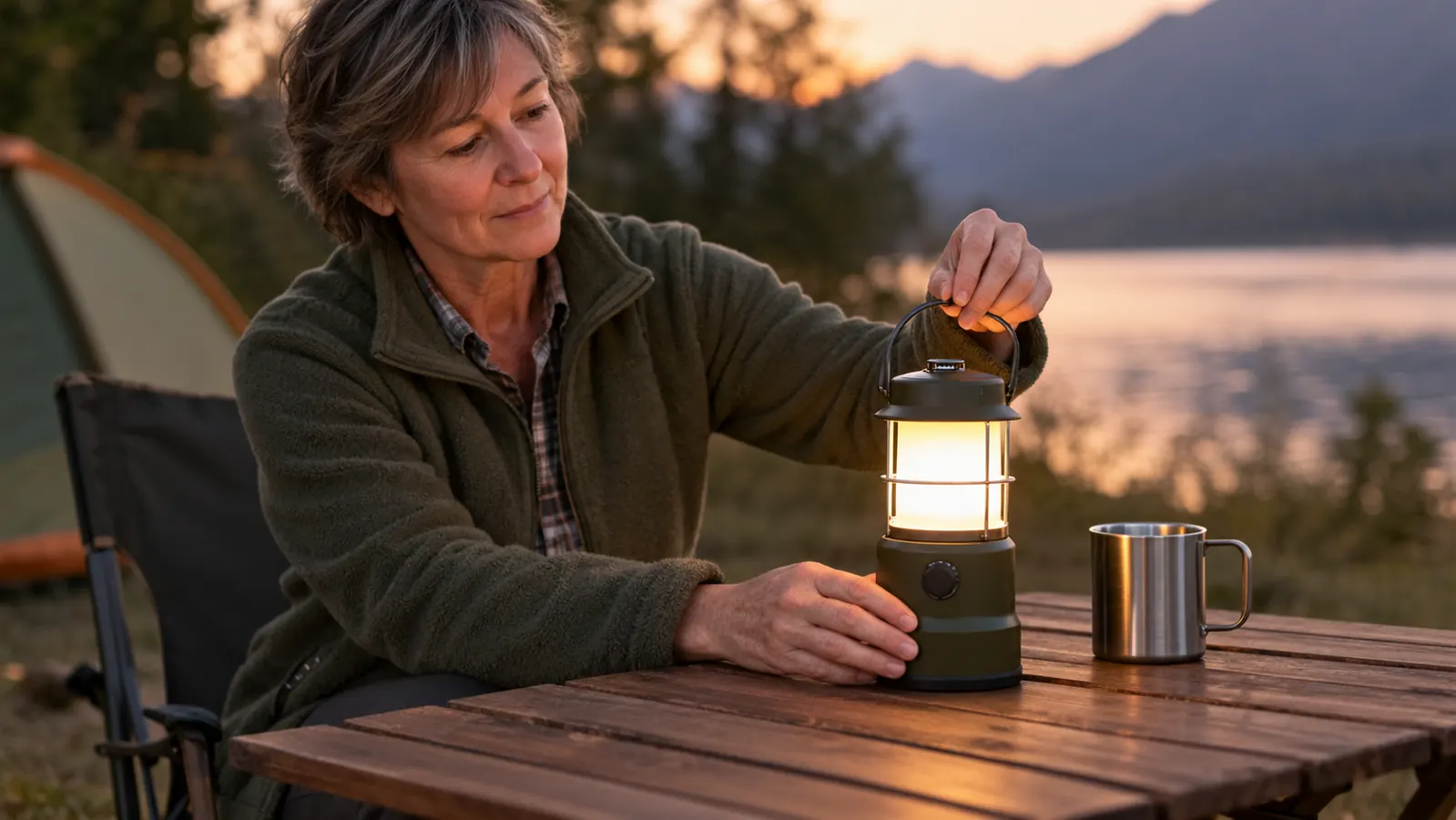
Every flashlight in our bin eventually died, and the spare batteries were never where I remembered leaving them. One Saturday in southern Utah I stood in the dark with a cold flashlight and a handful of AA batteries that turned out to be dead too. The next morning I found the corroded battery compartment on one old light, green crust on the spring, and I threw it out without a second thought. The lantern ends that whole ritual. It charges from the wall at home, so I know exactly where the power is before I leave, and I have not bought a battery for camp gear in a year.
It sits on a table, so both hands stay free
With my right knee, I carry the cooler with both hands and I do not want to juggle a flashlight on top of that. A lantern lives on the table or hangs from a hook, and my hands are free for the job in front of me. I have a bad right knee from a fall on the Kachina Trail years back, and any trip that means extra trips between the car and the tent is a trip I feel in the morning. That matters most when I am packing up in the dark with the tent half down and every hand already full. Set the lantern on the tailgate and the whole packing zone stays lit while you work.
Four light modes match the moment
The Lepro lantern has four modes, and I use every one of them. The dimmest setting is perfect for reading in the tent without waking Ray. The brightest one turns the whole camp kitchen into a working surface. There is a middle setting for dinner, and a fourth mode I keep for hanging the lantern inside the tent while we change clothes. Fumbling with three flashlights to get the same range of light was the old way.
One charge carried us through a three-day trip
Before a trip to the eastern Sierra, I charged the lantern on the kitchen counter and left it. We ran it two hours the first night, three the second, and two the third, and the light never dimmed once. On the last morning it was still bright enough to pack the tent by. I do not carry a spare for it, and I have not needed one. For a weekend trip it is effectively a set-and-forget piece of gear, which is the whole point.
It hangs, it stands, and it stays where you put it
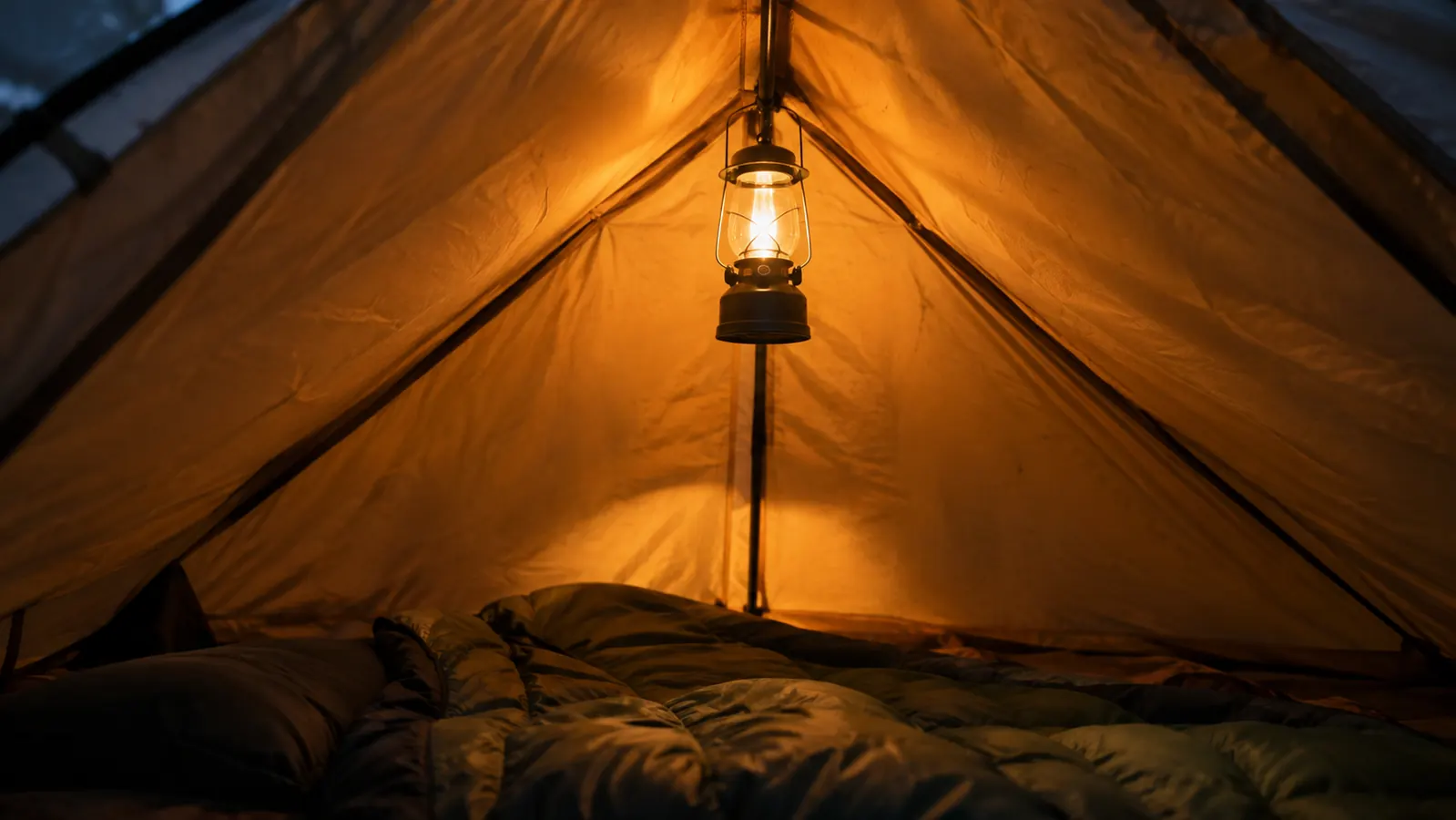
Flashlights roll. A lantern has a flat base, so it sits still on a picnic table, a camp chair arm, or the rock beside the fire pit. When I need light from above, I clip it to the tent ridge or hang it from a branch and it stays put. The base is wide enough that it does not tip when I brush past the table, which happened constantly with the old lights. On a windy night at the Grand Canyon, the lantern sat on the table while every loose item in camp blew past it. That stability is something you only appreciate after years of chasing rolling flashlights.
One thing to pack instead of seven
I am the one who packs the camp bins, and I am the one who gets blamed when something is missing. Keeping track of seven flashlights meant seven chances to forget one. Now the bin holds one lantern, one charging cable, and nothing else to think about. The packing list got shorter, the back of the 4Runner got a little emptier, and I stopped doing the pre-trip flashlight inventory that used to take me ten minutes.
No last-minute gas station battery runs
There was a stretch of trips where I would realize at the trailhead that the spare batteries were still in the kitchen drawer at home. That meant a detour to a gas station or a night of rationing light. The lantern erased that worry entirely. I charge it before we leave, and the backup plan is the phone charger in the car. One less errand on departure day is worth a lot when you are trying to get out of Flagstaff before the traffic.
Soft light is easier on tired eyes
A flashlight beam is a hard cone that makes you squint and leaves shadows everywhere. The lantern gives off a soft, even glow that fills the tent or the table without a single harsh spot. Reading a map at dusk, sorting gear, or just sitting and talking after a long hike all feel different in that light. Ray reads a paperback by it in the tent for half an hour most nights, and he never complained about the light once. My eyes are not what they were at thirty, and I noticed the difference the first night.
It still works the morning after, season after season
The test of any camp gear is the fourth season, not the first weekend. The Lepro lantern has been through a full year of trips, including one rain-soaked night in Utah where it sat out under a tarp while the wind blew. It came back with us, charged up again, and has not missed a beat. It has been recharged maybe a dozen times in that year, which is the whole point of a rechargeable. The flashlights it replaced were on their third and fourth lives, held together with tape and hope. I would rather own one lantern I trust than a bin of ones I do not.
What I'd Skip
Here is the honest part. If you are a solo backpacker who counts every ounce, a lantern is not for you, and this review is not aimed at you either. I would also skip it if you want a light for long power outages at home, because a lantern and a good headlamp serve different jobs there. And if you refuse to charge anything before a trip, a battery-powered lantern that takes AAs is the more forgiving choice. That last one is a real filter. If your gear lives in the car and gets used once a month, the rechargeable habit is easy. If it lives in a drawer for six months between uses, a battery light that still works when you find it is worth more. Know your own habits before you buy.
One lantern I trust beats a bin of flashlights I do not. The fourth season is the real test, and it passed.
Retire the flashlight graveyard
After a full season of trips, the Lepro 1000LM lantern is the one piece of camp lighting we actually reach for. Check today's price on Amazon and see why it replaced seven flashlights in our bin.
Amazon Check Today's Price on Amazon →