
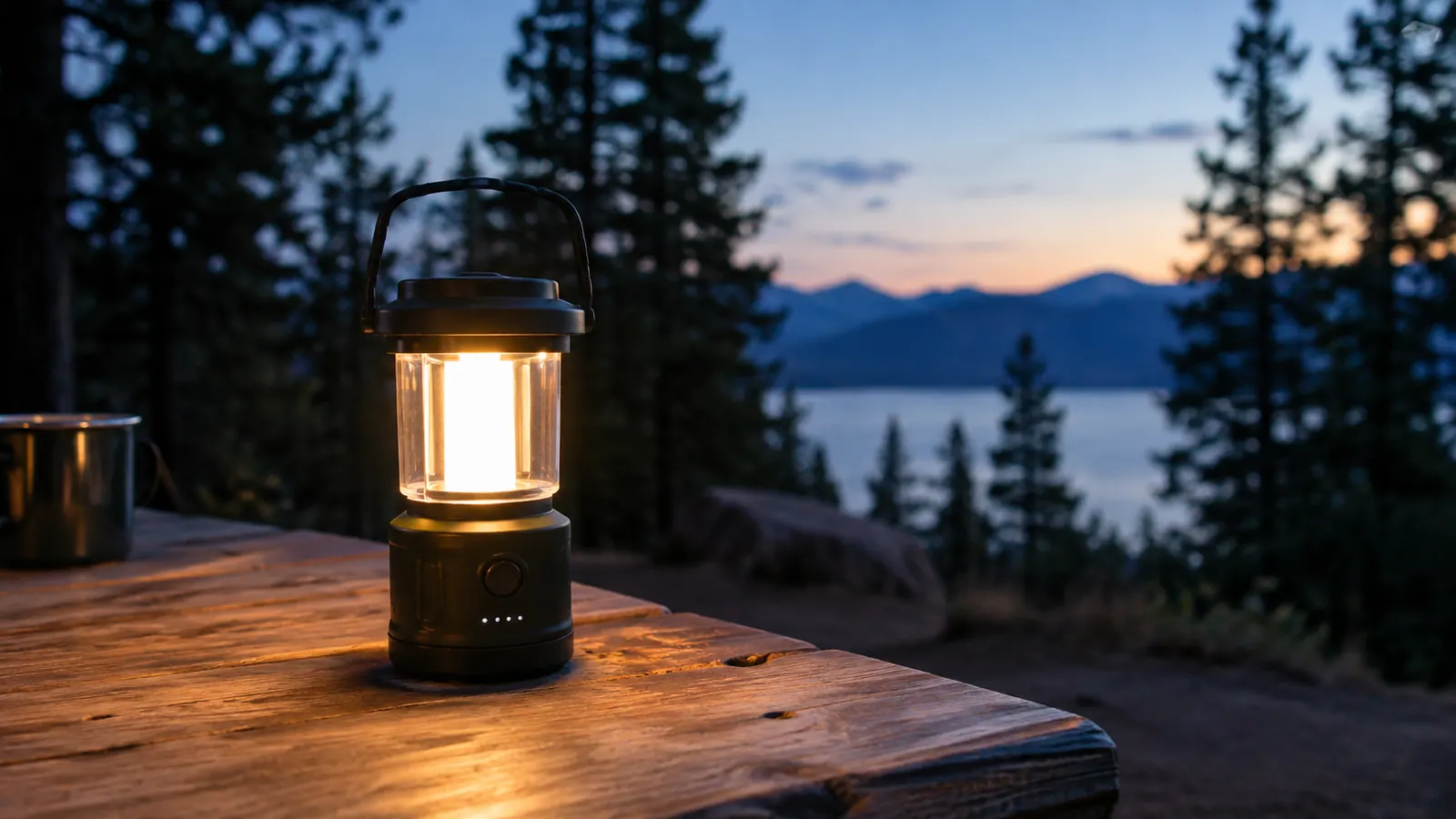
The first thing I do when we pull into a campsite is put the lantern on the picnic table before I even open the tent bag. That habit started about a year ago, when I bought the Lepro 1000LM LED camping lantern for a September trip to the North Rim of the Grand Canyon. I had been through two cheap battery lanterns that went dim before midnight, and I was tired of digging through the bin to find a flashlight with any charge left. The Lepro has now spent roughly forty nights outside with us, and it has changed how I pack for every trip since.
Ray was skeptical when I unpacked it. He asked why we needed another lantern when we already had two that sort of worked. My answer was simple: the two that sort of worked were the reason we needed another one. I wanted something that would last a full weekend, charge from a USB port in the car, and not require me to remember which drawer in the kitchen held the spare batteries.
The Quick Verdict
A dependable rechargeable lantern that has survived a year of weekend trips, four seasons, and one dropped fall onto granite. It is not the brightest lantern I have used, but it is the one I reach for first.
Amazon Check Today's Price →The Lantern That Earned a Permanent Spot in the Bin
After forty nights of use, this is the lantern I pack first. It recharges from the same USB cable I use for my phone, hangs from a tent loop, and still holds a charge through a three-day weekend. Check today's price on Amazon and see if it fits your setup.
Amazon Check Today's Price on Amazon →How I've Used It
We car camp out of plastic storage bins in the back of our 2016 4Runner, so gear has to earn its space. The Lepro lives in a small bin with the stove and the coffee kit, and it has been on every trip since I bought it. That includes eleven weekends in northern Arizona, three trips to southern Utah, and our annual fall week in the eastern Sierra. I would guess it has been turned on for about forty nights total, and I have recharged it maybe eight times.
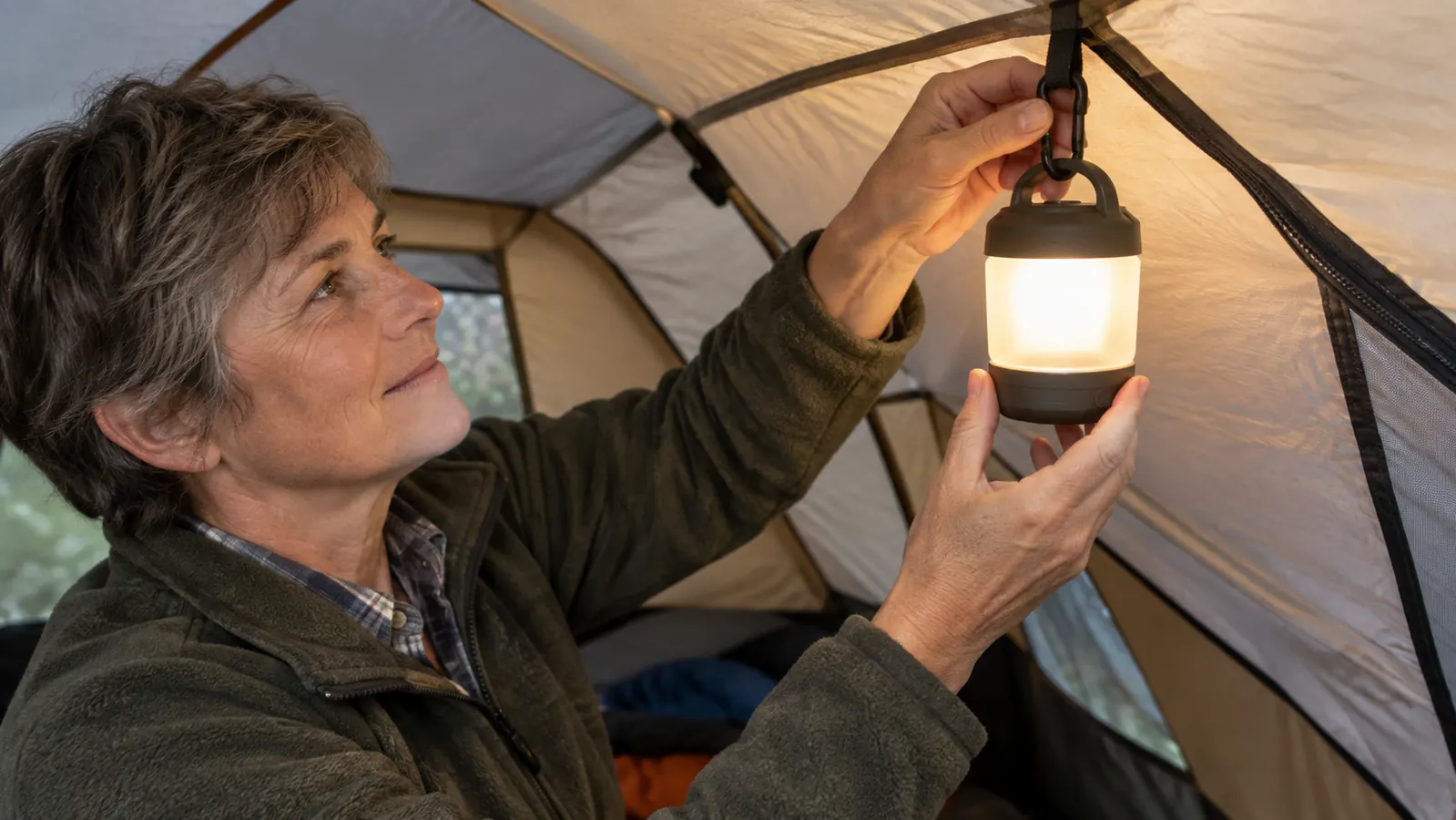
Most nights the lantern sits on the picnic table while we cook and eat. When the wind picks up, I hang it from the tent loop or the awning pole. The hook on top is wide enough to fit over a pole without balancing, and the rubber ring on the bottom keeps it from sliding off a damp table. It is not a feature I thought I would use, but the hanging option is the one that gets used most.
I charge it with the same USB-C cable I use for my phone. We have a small power bank that lives in the car, and one full charge of the lantern lasts us a three-day weekend even when we leave it on the medium setting until we go to bed. I have never needed to recharge it mid-trip, and I have never had it die on a night when I needed light.
I remember the first trip clearly because it was the weekend after Labor Day and the forecast called for rain. We set up the six-person dome tent in a light drizzle, and I hung the lantern from the center loop while we unpacked. It threw enough light that Ray could find the stakes without stepping on them, and it stayed on for the whole evening. That was the moment I stopped reaching for the old battery lantern.
Brightness and Beam Pattern
The Lepro is rated at 1000 lumens, which sounds like a lot until you turn it on. The high setting is genuinely bright, bright enough to light up the whole picnic area and read a map from a few feet away. But the reason I keep coming back to it is the beam pattern. It spreads light evenly in a wide circle instead of throwing a harsh spot, which means nobody at the table is squinting and nobody is sitting in a shadow. That even spread is what makes it feel like a camp light rather than a work light.
I tested it once against a friend's older lantern that had a similar lumen rating. The other lantern was brighter in the center but left the edges of the table dark. The Lepro lit the whole table evenly, and the difference was obvious as soon as both were on. For cooking, eating, and playing cards, an even spread matters more than a high number.
On the high setting, I can see well enough to walk the path to the vault toilet without a flashlight, which is my standard test for whether a camp light is actually useful. On the low setting, it is soft enough to leave on all night in the tent without waking either of us. I have not needed a separate nightlight since.
One night in southern Utah, I used the high setting to read a trail map while Ray cooked. The map was spread on the table, and every contour line was visible without me holding the lantern close. With the old lantern, I would have had to lean over the page and block the light. That single evening convinced me that even, shadow-free light is worth more than a higher lumen number.
Battery Life Over a Year
The battery is the reason I bought this lantern, and it is the reason I would buy it again. The first cheap lantern I owned took six AA batteries and ran out of power around ten o'clock on the first night. The Lepro, on the medium setting, has never once run out before the end of a weekend. I recharge it when we get home, usually after three nights of use, and the charging time is short enough that I just plug it in while we unpack the car.
I keep a rough count of charges because I wanted to know whether the battery would fade after a year. I have recharged it eight times in twelve months, always after a full trip, and I have not noticed any drop in runtime. The first time I charged it, I left it plugged in overnight and worried I had damaged the battery. It was fine. The charging indicator light turns off when it is done, which is a small thing that keeps me from guessing.
One night in October, we lost power at home during a windstorm, and the lantern spent six hours on the kitchen counter while Ray read and I sorted laundry by flashlight. It was still showing a full charge the next morning. That is not why I bought it, but it is why it now lives in the hall closet between trips.
The coldest test came in late October at a campsite near Lee's Ferry, where the temperature dropped below freezing overnight. I expected the battery to fade, because that is what every rechargeable device I own does in the cold. The lantern stayed on medium for four hours that evening and was still bright enough to light the table the next morning. I have not worried about cold weather since.
Forty nights, eight recharges, and not one dead battery at the end of a weekend.
The Four Modes and What I Actually Use
The lantern has four light modes: high, medium, low, and a flashing mode I have never needed. I use medium most of the time because it is bright enough for dinner and soft enough to look at without squinting. High gets used when we are setting up camp in the dark or when Ray drops something in the gravel and we both go looking for it. Low is the mode I use in the tent, where it hangs from the loop and gives just enough light to find a water bottle without waking anyone up.
The flashing mode exists, and I will admit I have not used it once. If I needed a distress signal, I would use the flashlight on my phone, which is always in my pocket anyway. I do not count the flashing mode as a selling point, but it does not hurt anything either. Four modes is not a feature I asked for, and it has not made the lantern complicated to use. There is a single button on the top, and one press turns it on, another press cycles the modes, and holding it down turns it off. That is the whole learning curve.
The button is easy to find in the dark because it sits slightly above the body. I can operate it with gloves on, which is something I did not expect from a lantern in this price range.
Build and Durability After a Year
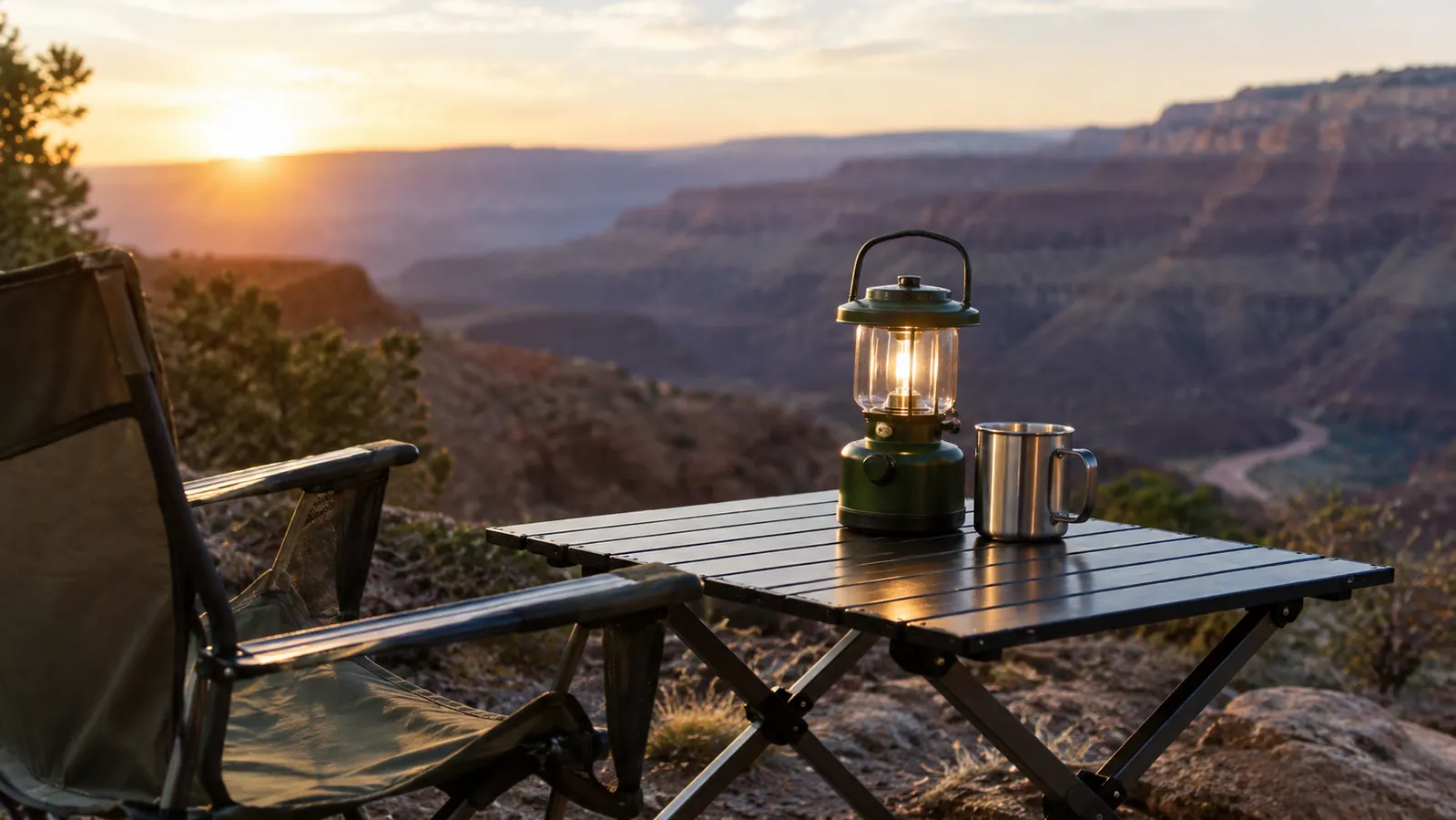
I have dropped this lantern onto granite, kicked it across a gravel pad, and left it out in a light rain while we ate inside the tent. It has a few scuffs on the base and one small dent near the hook, but the light itself has never flickered and the button has never stuck. The body is a matte plastic that does not feel cheap, and the lens is recessed enough that it has not scratched despite riding loose in a bin with a stove and a cast iron pan.
The rubber ring around the bottom is the detail I did not expect to care about. It keeps the lantern from sliding off a sloped picnic table, and it makes it feel solid when you set it down. The hook on top folds flat when not in use, which means the lantern stacks easily in the bin. After a year, the hook still snaps into place and holds the weight of the lantern without slipping. That is the kind of small thing that tells me the design was actually tested.
The only wear I can point to is cosmetic. The finish has dulled where it rubs against the stove, and there is a faint scratch on the lens that is only visible when the light is off. None of that affects how it works. I would rather have a lantern with scuffs and a full battery than a pristine one that needs new batteries every trip.
Last spring, a sudden storm caught us at a site near the Mogollon Rim. We grabbed the food bin and the camp chairs, and the lantern stayed on the table through twenty minutes of rain. When the rain stopped, I dried it with a towel and turned it on. It lit up immediately, and the rubber ring had kept it from sliding off the wet table. That is the kind of abuse a camp light is going to see eventually.
What I Liked
- Even, wide beam that lights a whole table without hot spots
- USB-C charging means one cable for the lantern and the phone
- Battery lasts a full three-day weekend on medium
- Hook and rubber ring make it easy to hang or set anywhere
- Survived a year of drops, dust, and one rainstorm
Where It Falls Short
- High setting drains the battery noticeably faster
- No battery percentage indicator, just a low light warning
- Flashing mode is not useful for most campers
- Not the brightest lantern in its class
Who This Is For
The Lepro is for the person who camps the way we do: out of bins, at a picnic table, for three or four nights at a time. It is for someone who wants one dependable light that charges from the same cable as their phone and does not need a separate bag of batteries. If you are tired of lanterns that go dim after dinner, or tired of remembering which flashlight still has charge, this is the lantern that fixes that.
The lantern also matters to me because of my right knee. I had a fall on the Kachina Trail a few years ago, and carrying gear from the car is harder than it used to be. The Lepro weighs about a pound, so it is easy to carry in one hand while I use the other for the chair. It is one less trip back to the 4Runner, and that matters more to me now than it did ten years ago.
Who Should Skip It
Skip it if you need a lantern that will light up a whole group site for a week without recharging, or if you want a battery indicator you can read at a glance. It is also not the right choice if you are a backpacker counting every ounce, because there are lighter options that run on a single AA battery. For our kind of camping, it is exactly right. For those specific needs, it is not.
Still the First Thing I Pack
After a year and forty nights, the Lepro lantern is still the first thing I put in the bin. It recharges in the car, hangs in the tent, and has never left us in the dark. If you are shopping for a dependable camp light, check today's price on Amazon.
Amazon Check Today's Price on Amazon →