
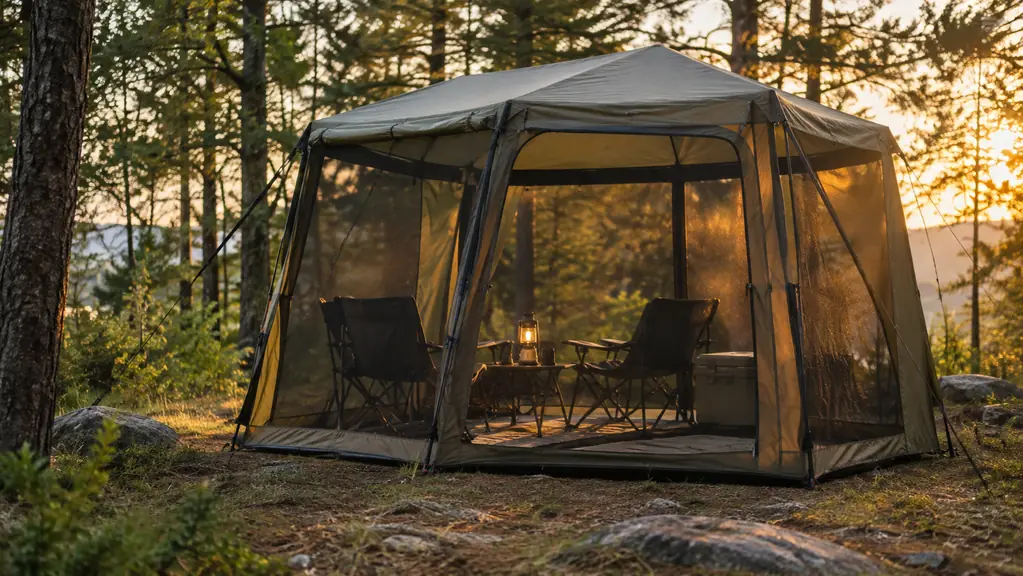
The worst part of a summer evening in the Arizona high country isn't the heat. It's the mosquitoes. They show up right as you're settling into your camp chair, and within five minutes you're slapping your arms and regretting every decision that led you to this moment. Last June, Ray and I were camped near the Mogollon Rim, and the mosquitoes were so thick we had to eat dinner inside the tent, with the vestibule zipped shut. That's when I finally ordered the Alvantor pop up screen house. I'd been putting it off for a season, telling myself we could just use bug spray. But the spray only works until you sweat it off, and by nine o'clock we were back inside the tent.
The Alvantor changes the whole evening. It's a screen house that pops up in about two minutes, gives you a bug-free zone with a floor, and folds back down into a flat carry bag that fits in the back of the 4Runner. I've now used it for three seasons, and it's become the first thing I pack. The setup looks intimidating the first time because there are eight legs and a center hub, but once you learn the sequence, it's genuinely easy. In this guide I'll walk you through the exact steps I use, including the mistakes I made so you don't have to.
Skip the mosquito dance tonight
The Alvantor screen house sets up in minutes and keeps the bugs out. Check today's price on Amazon.
Amazon Check Today's Price on Amazon →Step 1: Pick the spot before you open the box
The biggest mistake I used to make was unzipping the carry bag first thing. The Alvantor screen house takes about two minutes to open once you know the trick, but if you've picked a bad spot, you'll be moving it and starting over. So we walk the campsite before we even pull the tent out of the 4Runner. We look for level ground with at least a ten-foot circle of clear space. That's about the footprint of the screen house, and you want a few feet of extra room so the edges don't brush against a bush or a rock.
Last September at a site near the Grand Canyon, we set up in a hurry because a storm was rolling in. I picked a patch that looked flat but had a gentle slope, and the screen house ended up tilted enough that the door wouldn't close properly. Ray had to help me dig a small trench and level the legs with a couple of flat rocks. That cost us fifteen minutes and a fair amount of swearing. Now we take the extra thirty seconds to check with a level app on my phone.
The other thing we look for is shade. The Alvantor has a UPF 50+ roof, which blocks sun, but if you can set up under a pine or a juniper, you'll stay ten degrees cooler. We also try to face the door away from the prevailing wind. In northern Arizona that usually means the door faces east. It sounds like overthinking, but it means the screen house doesn't act like a sail when the afternoon breeze kicks up.
One more thing about spot selection: I always leave a clear path to the door. The Alvantor has a single zippered door, and if you set up too close to a table or a fire ring, you'll have to squeeze sideways to get in. I like to have at least three feet of open ground in front of the door so we can carry chairs and coolers in and out without tripping. That little bit of planning makes the whole evening feel less cramped.
Step 2: Unfold it on the ground, not in the air
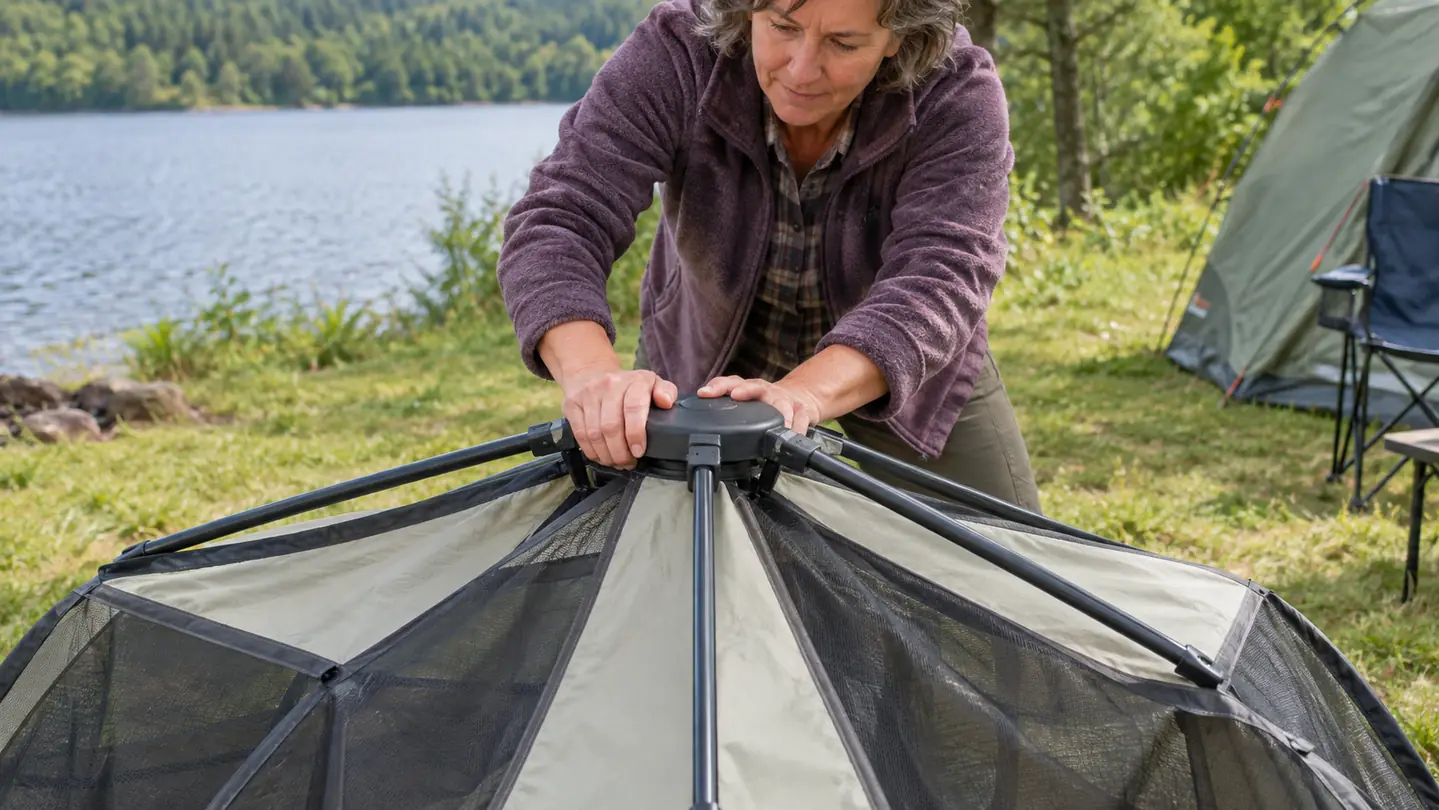
When I first got the Alvantor, I tried to open it the way you'd open a beach umbrella: I held the center hub and pulled the legs apart. That's a great way to fight the frame and pop a spring. The way that works is to lay the whole thing flat on the ground first. Unzip the carry bag, slide the screen house out, and spread it out like a big pancake. Make sure the side with the zippered door is facing up, and the roof panel is on top.
Once it's flat, find the center hub. On this model, it's a round plastic piece where the roof struts meet. You'll see a locking collar near the top of each leg. The trick is to push the collar up, which unlocks the leg, then let the leg extend on its own. I learned the hard way that if you force the leg, you can bend the hinge. Now I just push the collar and let the spring do the work. It's honestly easier than setting up my dome tent.
We also check that the ground cloth (the floor) is spread out flat. The Alvantor has a built-in floor, and if it's bunched up, the whole thing will be off balance. We smooth it with our feet before we start popping the frame. That ten seconds of prep saves us from having to fix a sagging corner later.
Folding it back down is the reverse of the setup, and it's where most people get stuck. The trick is to lift the center hub slightly while you pull the legs in. If you try to fold it like a card table, you'll fight the springs. I learned to do it in a specific order: first collapse each leg by pushing the collar down, then bring the hub down slowly. With practice, I can get it back in the bag in under five minutes. The first time I tried, it took me twenty and I ended up with the floor sticking out of the bag.
Step 3: Pop the frame open from the center
Here's the part that feels like magic the first time. Standing at the center hub, you push down gently while the legs start to extend outward. The whole thing opens like an accordion. I remember the first time Ray and I did this, we both laughed because it was so quick. From flat to fully open, it took maybe twenty seconds. The key is to keep the base centered while the legs slide out. If you let one side get ahead of the other, you'll twist the frame.
Once the legs are fully extended, you lock each one by snapping the collar back down. I go around the perimeter and do all four corners, then check the middle two if it's a six-sided model. The Alvantor has eight legs, so there are eight collars to lock. It sounds like a lot, but it's a quick walk around. I usually do it in under a minute while Ray is already bringing over the camp chairs.
If you're setting up alone, like I sometimes am when Ray is off getting firewood, the center-push method works fine. You just need to keep the base weighted down. I'll put a camp chair or a heavy bin on the floor while I push. That stops the whole structure from sliding across the ground. It's a small trick that saves a lot of frustration.
If you're setting up in wind, the center-push method is even more important. I've seen people try to open the screen house by grabbing two opposite legs and pulling, which makes it twist. Instead, keep one hand on the hub and use your body weight to push down. That keeps the frame balanced. In a stiff breeze, I'll have Ray hold one side while I push the other. It's a two-person job for a minute, but it beats having the whole thing blow over halfway through.
Step 4: Stake every corner before you trust it
The screen house is not a permanent structure, but it will hold up in a surprising amount of wind if you stake it properly. The Alvantor comes with metal stakes and loops at the base of each leg. I use all of them, even when it looks calm. Last June we had a gust come through the canyon that would have picked up an unstaked screen house and turned it into a tumbleweed. Ours held because we'd taken the two minutes to stake every loop.
The stakes are short, so I angle them outward, about 45 degrees from the leg, and push them into the ground with my heel. In rocky soil, I use a rubber mallet from the back of the 4Runner. If the ground is too hard to get a stake in, I'll put a heavy bin or a cooler on the corner instead. It's not as secure, but it works for an afternoon.
After staking, I check that the screen walls are taut. There are straps at the bottom corners that you can cinch. Pull them tight, and the walls stop sagging. That also keeps bugs from finding a gap where the netting meets the ground. I've seen mosquitoes crawl through a one-inch opening, so I'm careful about this step.
Step 5: Give it the once-over and claim your chairs
The last step is a quick inspection. I walk around the outside, checking that the zippers on the door are fully closed and that there are no tears in the netting. If I spot a hole, I patch it with a piece of duct tape, the same way I patch the tent. The Alvantor has a mesh that's fine enough to keep out no-see-ums, but a tear is a tear.
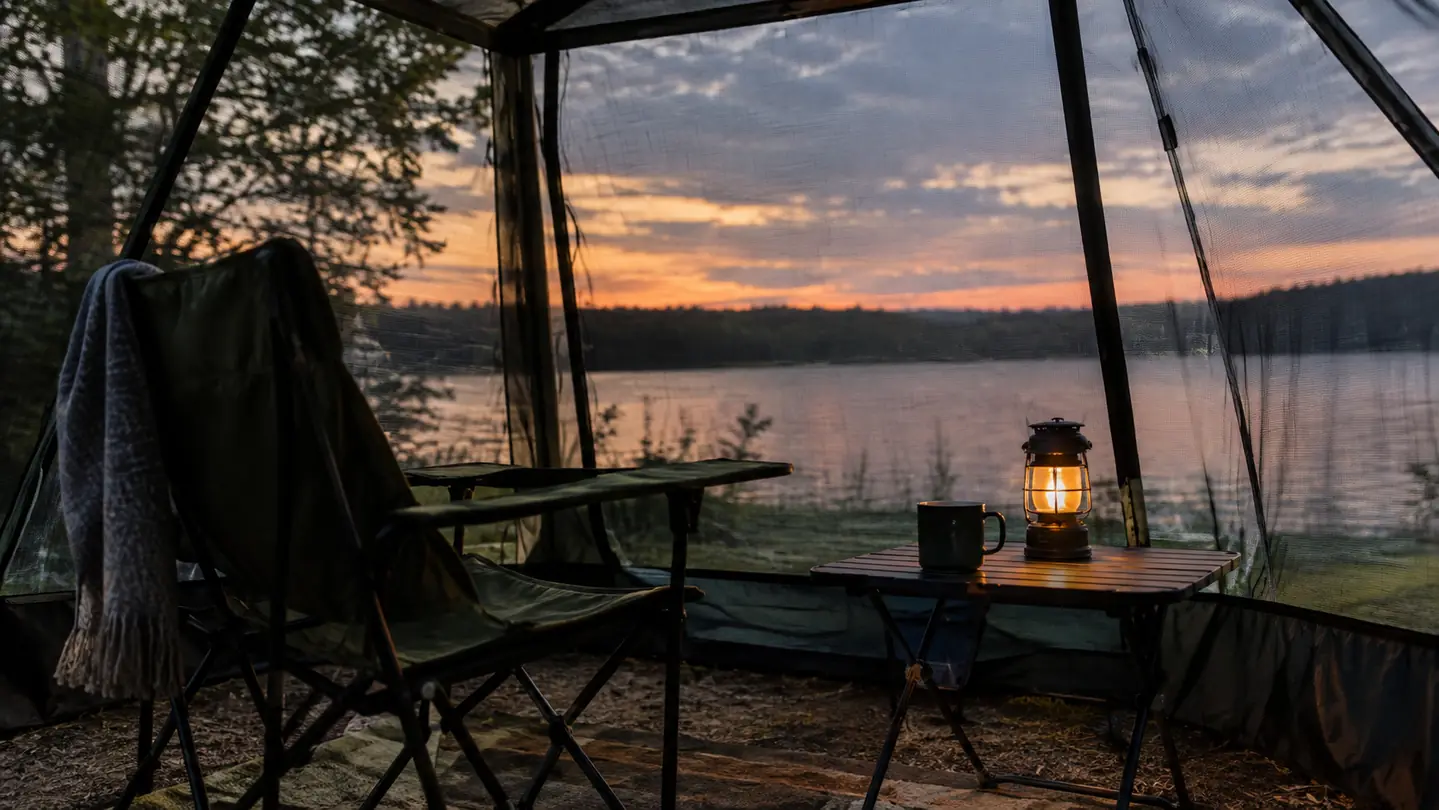
Then I set up the inside: two camp chairs, a small table for the lantern and the coffee, and a bin with the snacks. Because the screen house has a floor, I don't have to worry about dirt getting on everything. It's like a little outdoor living room. We'll leave the door open during the day and just close the netting at dusk.
The whole setup, from opening the carry bag to having the chairs in place, takes me about seven minutes now. The first time it took closer to fifteen because I was reading the instructions. After two or three uses, you'll have the routine down. My record is under five minutes, but I don't try to beat it every time.
What Else Helps
A screen house works best when you pair it with a few other habits. I keep a small bottle of permethrin spray in the gear bin and treat the netting once a season. That adds an extra layer of protection, especially for the evenings when the mosquitoes are thick. I also bring a headlamp rather than a lantern, because light attracts bugs and a headlamp keeps the light out of their eyes, or at least out of the screen house. And I always check the forecast. If there's a chance of a thunderstorm, we skip the screen house and use the tent vestibule instead.
I also keep a small repair kit in the same bin: a length of paracord, a few zip ties, and a tube of seam sealer. The Alvantor's stitching is solid, but after a season of sun and wind, the corners can show wear. A zip tie through a stress point adds years of life. And if a zipper starts to catch, a little silicone spray on the teeth fixes it in seconds. These are the little things that separate a screen house that lasts three seasons from one that ends up in the donation bin.
The Alvantor screen house goes from flat to fully open in about twenty seconds. Once you learn the collar trick, it's the easiest piece of gear in the back of the 4Runner.
Get the bug-free evenings back
The Alvantor screen house is the quickest way to reclaim your camp evenings. Check today's price on Amazon.
Amazon Check Today's Price on Amazon →