
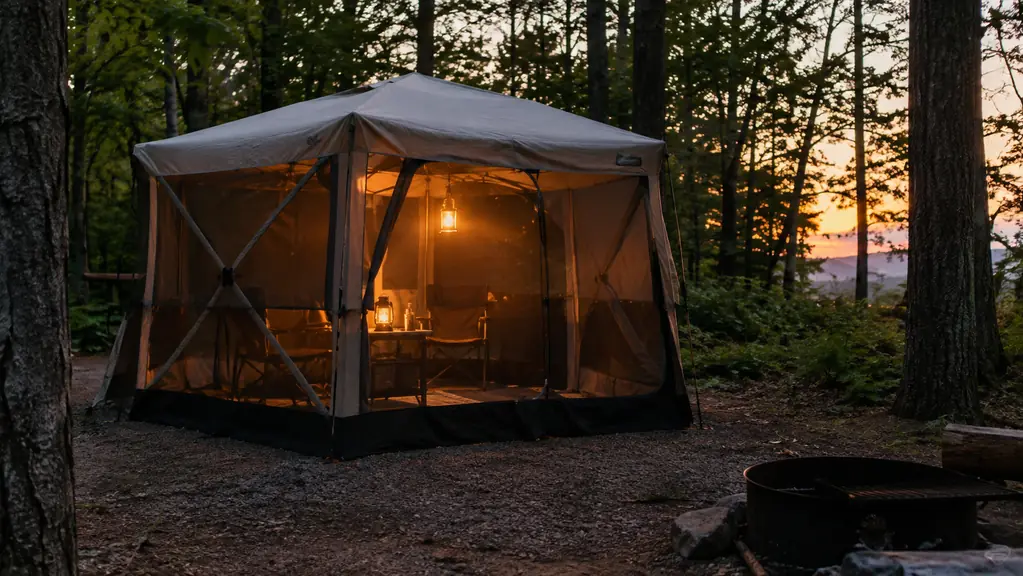
I have packed a screen house and a canopy on the same trip more than once, and they are not the same thing. The Alvantor screen house is a fully enclosed mesh room you can stand up in. The Coleman canopy is an open shade roof on legs. One keeps bugs out, the other keeps sun off. Which one belongs in your 4Runner depends on what you are doing at the campsite. For the way my husband Ray and I camp, the Alvantor has earned its spot every time, and the Coleman has stayed in the garage. But that is not because the Coleman is a bad product. It is because it answers a different question.
After four seasons of using both in northern Arizona and southern Utah, here is the short version: if you want a place to sit at dusk without mosquitoes eating you alive, get the Alvantor. If you want a wide-open shade spot for a tailgate or a beach day, the Coleman is fine. For car camping in bug country, the screen house wins. This comparison is about when each makes sense, and what you give up with the other.
| Alvantor Screen House | Coleman Canopy | |
|---|---|---|
| Bug protection | Full mesh walls keep out mosquitoes and flies | Open sides, no bug barrier at all |
| Sun shade | UPF 50+ mesh filters harsh sun, still bright inside | Solid roof blocks direct sunlight completely |
| Setup time | Pops up in about 10 minutes with two people | Folds out in under 5 minutes by yourself |
| Packed size | Rolls into a bulky bag, takes up a bin | Long flat case fits on a roof rack or behind seats |
| Wind behavior | Holds up in light wind once staked | With proper staking, handles gusts better |
| Interior room | 6-foot peak, fits two camp chairs and a small table | Open floor, no walls, but no enclosed space |
How I Have Used Both Over Four Seasons
The first season we owned the Alvantor, we used it on a three-week road trip through Utah and Arizona. We set it up at every camp, usually over the picnic table, and it became our outdoor living room. The Coleman canopy stayed in the garage that whole trip. I remember one evening at a Bureau of Land Management site near Moab, the mosquitoes were so thick you could hear them bouncing off the mesh. We sat inside, ate our chili, and never got one bite. That is the moment I stopped questioning whether the screen house was worth the extra setup time.
The Coleman canopy got its time in the sun on day trips. We brought it to a high school baseball game, to a beach day at Lake Powell, and to a tailgate before a concert. It goes up in under five minutes, and when you are parking a quarter mile from the field, you want something that does not require a two-person dance. The canopy is also easier to put away. The Alvantor folds into a large circle that takes up half a plastic bin; the Coleman slides into a flat case that fits behind the back seat of the 4Runner without displacing the tent.
Setup, Packing, and the Knee Factor
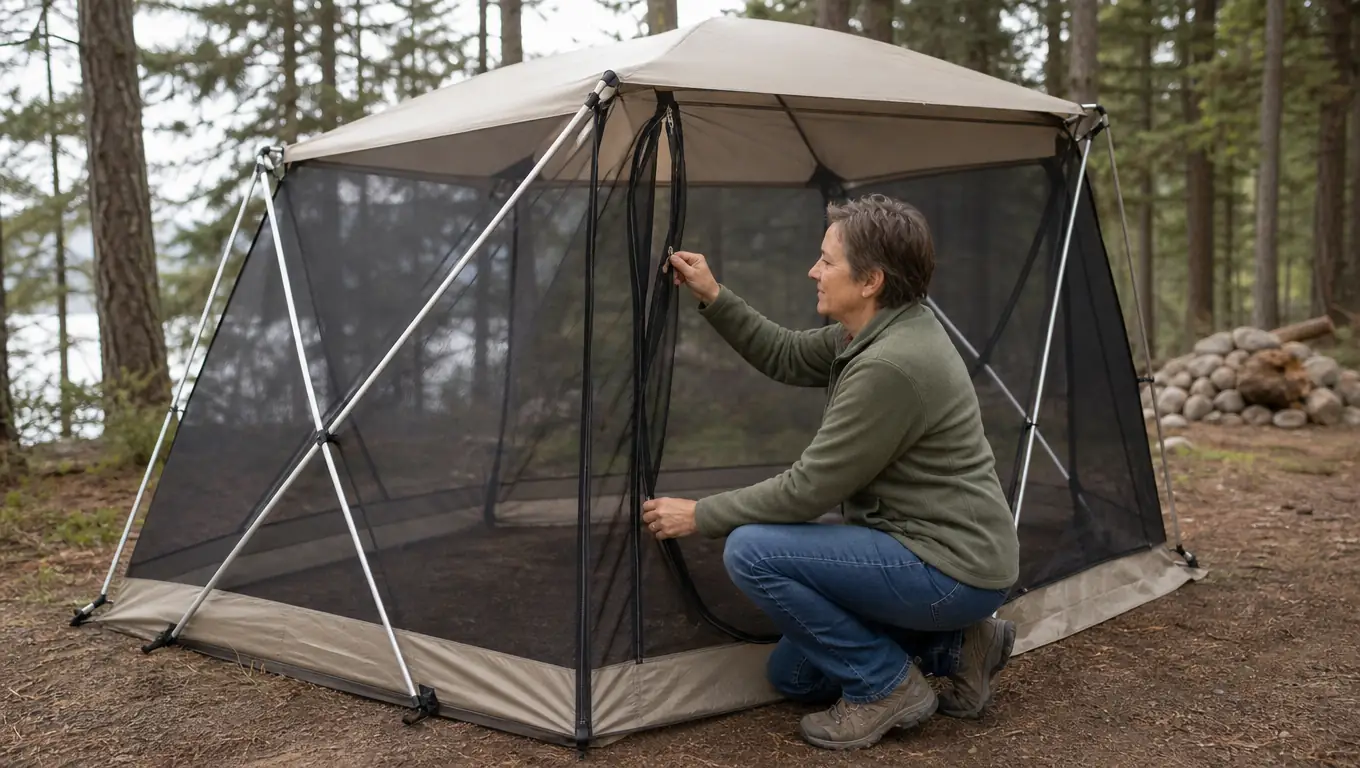
My right knee has been sore since a fall on the Kachina Trail three years ago, so how much bending and lifting a shelter requires matters to me. The Alvantor pops up by pulling the center hub upward, but it still needs two people to get it fully open and then to fold it back down. That fold is the tricky part; you have to collapse it just right or it fights you. Ray and I have a system now, and it takes about ten minutes from bag to fully staked. The Coleman, by contrast, is a one-person job. You pull the legs out, lift the frame, and lock the corners. I can do it without bending much, which is a big deal when my knee is acting up.
Packed size is where the two diverge even more. The Alvantor, in its carry bag, looks like a giant flat tire, about 27 inches across and 6 inches thick. It rides in one of our plastic bins and takes up a lot of the space that would otherwise hold camp chairs. The Coleman canopy comes in a long rectangular bag that you can slide behind the rear seat or even strap to the roof rack if you have one. For a weekend trip with the 4Runner fully loaded, that difference is real. We have had to leave the Alvantor behind on shorter trips just because of the space it eats.
What About Wind and Rain
Both shelters have limits. The Alvantor is not a storm shelter. In a steady 20 mile per hour wind, the mesh walls billow and the whole thing needs to be taken down. The Coleman, once properly staked with the included stakes and a couple of extra ones, can handle a gusty afternoon better because the open frame does not catch wind. For rain, the Alvantor has a roof that sheds light rain, but the mesh walls are not waterproof, so you will get damp if a heavy storm hits. The Coleman has no sides at all, so rain blows straight through. Neither is a replacement for your tent, but for keeping bugs off at dinner, the Alvantor is the clear winner. I have also learned to check the weather forecast before setting it up, because taking it down in a gust is not fun.
Durability and What I Would Change
After two full seasons of regular use, the Alvantor is still in good shape. The zippers on the door have held up, the mesh has no tears, and the fiberglass poles have not cracked. The Coleman canopy has also survived, but the fabric on the top has faded noticeably and the frame has a slight wobble after a few uses. I have replaced the stakes on both, because the ones they come with bend easily in hard ground. The Alvantor's floor is not included, so you are standing on bare ground or a tarp. That is fine for a screen house, but it means you have to think about dirt and rocks when you are setting up.
What I would change about the Alvantor is the carrying bag. It is a thin duffel with a single shoulder strap, and it digs into your shoulder when you carry it any distance. The Coleman's bag is better designed, with a handle on the side. I also wish the Alvantor had a way to roll up the walls when you want more airflow, like a window flap. As it is, you are either fully enclosed or fully open, and there is no in between. Those are small complaints, and they do not stop me from using it, but they are worth knowing before you buy. I have already ordered a spare carry bag from the manufacturer, though I have not needed it yet.
Where the Alvantor Wins
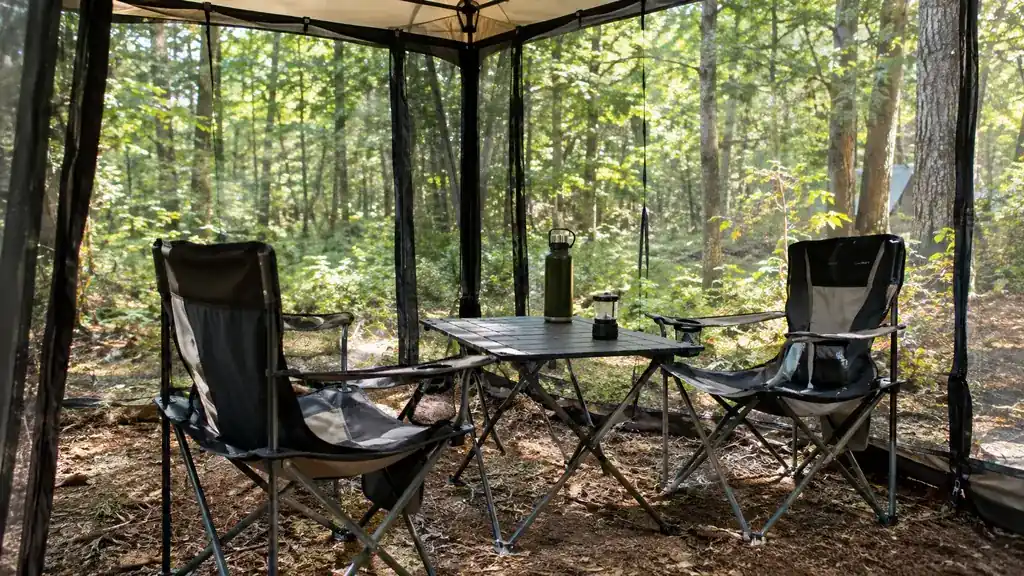
The Alvantor earns its place the moment the sun drops and the mosquitoes come out. Last August at a campsite near the North Rim, we sat inside the screen house until past ten because the mesh kept the swarm off us while we played cards. The Coleman canopy would have left us swatting the whole time. The walls also give you a place to change out of wet clothes without the whole campsite watching, and they keep curious critters away from your food when you are eating. That is a real advantage when you are car camping in bear country, even if it is not a hard sided shell.
The Alvantor is also a better home base for a long day. We set it up over the picnic table at our site in the Coconino National Forest, and it became the place where we ate breakfast, sorted our packs, and played a board game when an afternoon storm rolled in. The mesh keeps the biting flies out while you are cooking, and the UPF 50+ fabric cuts the glare without turning the inside into a dark cave. For the way we camp, which is fifteen weekends a year out of plastic bins in the back of the 4Runner, the Alvantor is the difference between a pleasant evening and one spent retreating to the tent early.
Where the Coleman Canopy Wins
The Coleman canopy wins when you want a wide open shaded area and you do not need walls. At a tailgate before a hike, or a beach day with friends, the canopy sets up in minutes and gives you a big umbrella over a folding table and chairs. I have used it for a backyard party and for a picnic at the lake, and it does exactly what it promises: keeps the sun off a group of people. It is also easier to carry. The long flat case slides into the space behind the back seat of the 4Runner without eating up a whole bin, and I can set it up alone even with my bad right knee.
Where the Coleman really shines is in hot, dry weather with no bugs. In the high desert around Flagstaff, evenings often have no mosquitoes at all, and a screen house just traps the heat. The open sides let every breeze through, which matters when the temperature is still in the 90s at dinner. The canopy also handles wind better once you stake it down properly. On a gusty afternoon near the Mogollon Rim, the Coleman stayed solid while the Alvantor had to be taken down because the mesh was flapping so hard. That is not a criticism of the Alvantor; it is just the nature of a walled shelter.
For bug-proof evenings, get the Alvantor screen house
If you are tired of eating dinner with one hand and swatting with the other, the Alvantor gives you a screened room that sets up in ten minutes. Check today's price on Amazon and see why it has become a staple in our camp kit.
Amazon Check Today's Price on Amazon →Who Should Buy Which
If you camp in places where bugs are a real nuisance, which is most of the western mountains in the summer, buy the Alvantor. It gives you an enclosed room that turns a buggy campsite into a livable one. If your trips are mostly day trips to the lake or the ball field, and you want something that goes up fast and packs flat, the Coleman canopy is the better choice. For the way Ray and I camp, which is almost always in forest or meadow country with mosquitoes at dusk, the Alvantor is the one I reach for. It has been in the back of the 4Runner for two seasons now and I have never once regretted pulling it out.
In the end, the decision comes down to what you are trying to do at your campsite. If you want a place to sit and talk without slapping at bugs, the Alvantor screen house is the shelter that delivers. If you want a quick shade solution for a sunny afternoon and you are not dealing with mosquitoes, the Coleman canopy does that job well. For our fifteen weekends a year, the Alvantor has earned its spot in the back of the 4Runner, and I do not see that changing. The canopy is a fine product, but it does not solve the problem that sent me to the screen house in the first place.
One more thing: the Alvantor is not a replacement for a tent. It is a bug screen, not a shelter for sleeping. If you need a place to sleep, the tent goes up next to it. But for the hours between dinner and bedtime, the screen house is where we live. That is the niche it fills, and it fills it better than any canopy I have tried.
Still weighing it? Here is my advice
For most car campers, the Alvantor screen house is the more useful shelter. It adds a bug-free living space that the canopy simply cannot. Click through to check today's price and see what fits your campsite.
Amazon Check Today's Price on Amazon →