
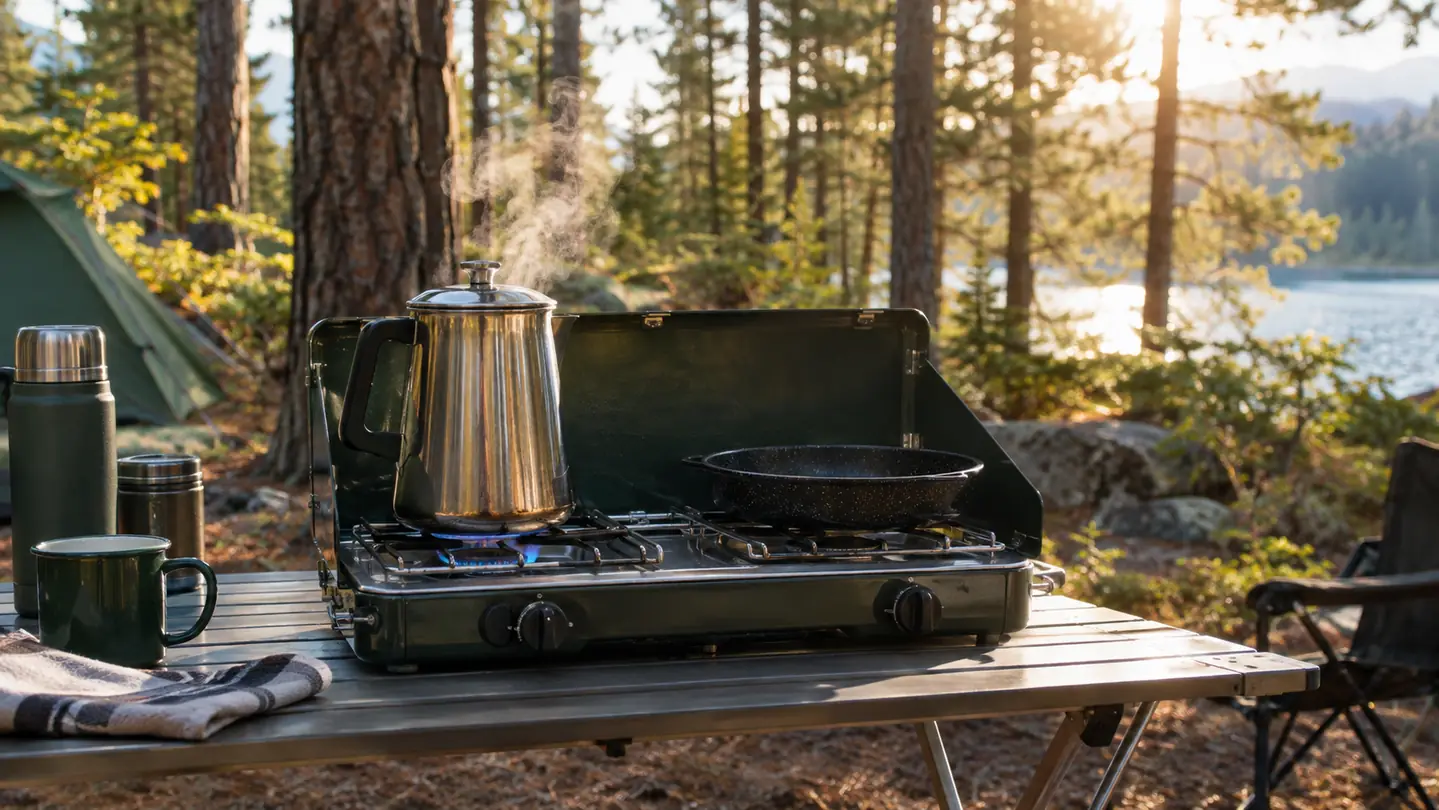
The first time I lit both burners on the Camp Chef Explorer, I made the same mistake everyone makes. I turned the dials past where I thought full was, because the flame on high is loud enough that you assume something is wrong. It is not wrong. That is just what sixty thousand BTUs sound like when they are all in one place.
I bought this stove for the same reason most car campers do. I was tired of a stove that took ten minutes to boil water and died in any breeze. Ray and I camp about fifteen weekends a year out of the back of our 2016 4Runner, mostly in northern Arizona, southern Utah, and the eastern Sierra. After two full seasons with the Explorer, I have an honest picture of what it does well and what it does not.
This is not a gear-reviewer summary from a spec sheet. It is what happened when a stove that claims 60,000 BTUs met a real camp table, real wind, real bacon grease, and a person with a bad knee who does the lifting. Some of it flatters the Explorer. Some of it does not.
The Quick Verdict
The Camp Chef Explorer is the stove you want when you cook real food at camp and can live with the weight and the cleanup. It is not for backpackers, and it is not for anyone who wants to carry the kitchen more than a few feet from the car.
Amazon Check Today's Price →The honest version, two seasons in
The Explorer is heavy, loud, and worth it for the right camper. I cover the real BTU output, the wind problem, and the cleanup below, so you can decide with your eyes open instead of trusting the marketing photos.
Amazon Check Today's Price on Amazon →How I've Used It
The Explorer has been on maybe thirty-five nights of camping over two seasons. It lives in a plastic bin in the back of the 4Runner between trips, and it has been rained on, dusted over, and bounced down washboard roads without the lid latch ever giving up. For a piece of gear that lives most of its life in a vehicle, that durability matters.
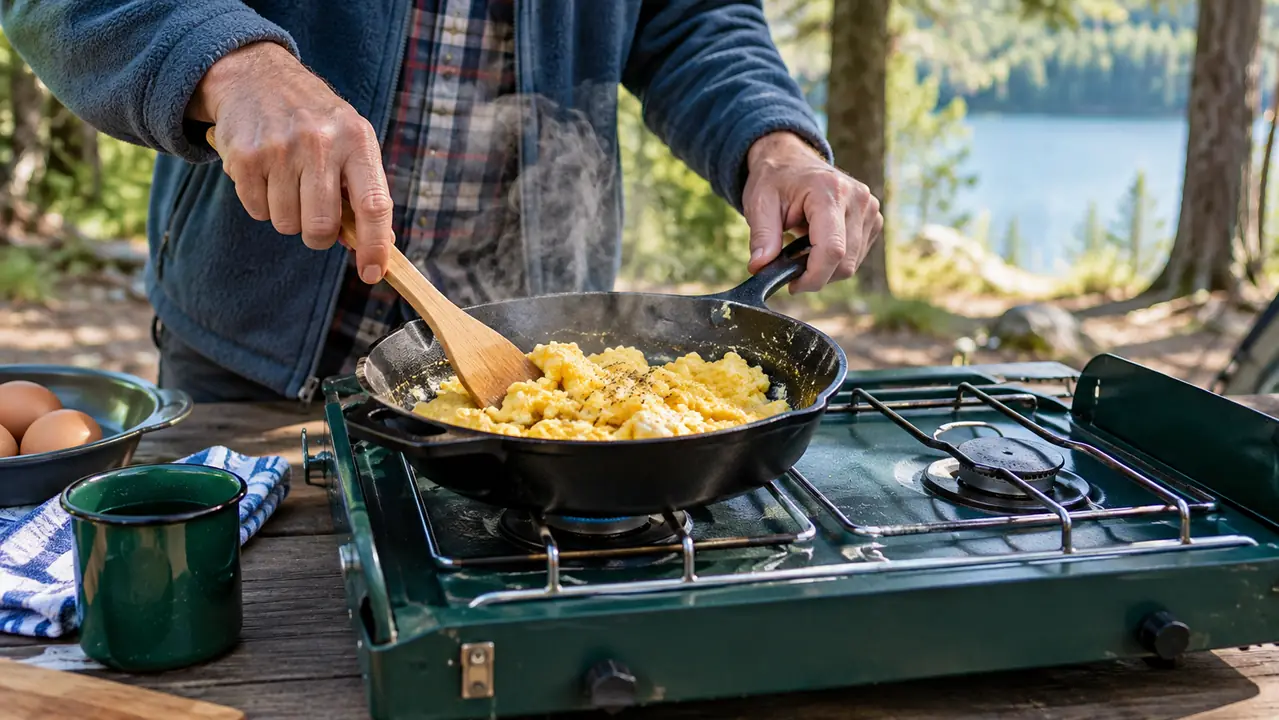
On a typical weekend I cook two or three meals a day on it. Pour-over coffee at first light, eggs and bacon once Ray has found his camp chair, and then whatever we are having for dinner, which is often a one-pot chili or a foil packet of trout. It has also seared steaks without smoking out the whole campsite, which is more than I can say for the little stove it replaced.
The two burners are wide enough that I can run a ten-inch skillet and a two-quart pot side by side without them fighting for space. That sounds like a small thing until you have spent years shuffling a pan on and off a single burner to keep dinner warm while the water boils.
I want to be clear about the kind of cooking this is. This is car camping cooking, done at a folding table near the tailgate. I am not hoisting this stove anywhere. It goes from the bin to the table, and that is the entire journey. If your trip involves carrying your kitchen any distance, stop reading this review now, because the Explorer is not your stove.
The First Thing Nobody Tells You: The BTU Rating Is Real
Camp Chef rates the Explorer at 60,000 total BTUs, which is a number that means nothing until you stand in front of it with both burners on high. The catch is the same one you will read in a dozen reviews and still not believe until you try it yourself: on high, this stove is genuinely loud. The burners roar. If you are used to the polite hiss of a backpacking stove, the first light-up is startling.
The honest part of that rating is that it really does boil water fast. A two-quart pot of cold tap water is rolling in about four minutes on a calm morning. That one number changed how our mornings worked, because coffee was ready before I had finished fumbling with the pour-over cone. I have timed it twice, and it is not marketing hype; it is just a lot of heat in one place.
The catch is fuel. Sixty thousand BTUs means the Explorer goes through a standard twenty-pound propane tank noticeably faster than the stove it replaced. We get maybe six solid weekends out of a tank, and I did not expect that. Nobody mentions it in the marketing copy, and it is worth planning around if you camp somewhere without a propane exchange nearby.
Here is the honest summary of the BTU question. The number is real, the boil time is real, and the fuel bill is real. All three of those things are true at once, and the reviews that only tell you the first two are not doing you any favors.
Wind Performance: The Honest Numbers
This is the part I wish someone had written down before I bought it. The Explorer has a built-in wind screen that wraps around three sides of the burners, and it does real work. On a calm day you can cook without thinking about the wind at all, which is more than I could say for my old stove.
But I will not pretend it handles a real breeze the way the marketing photos suggest. The wind screen is not a full enclosure. A stiff gust coming over the top still reaches the flame, and on two separate trips in the eastern Sierra we had to set up the stove with its back to the wind and wedge a camp chair behind it to keep dinner moving.
That is the honest middle ground. It is better than any single-burner stove I have used and worse than a full expedition windscreen. If you camp mostly in sheltered spots, you will rarely notice the difference. If you cook on exposed ridgelines, you will be propping things up behind it more often than you expect.
What It's Like to Clean (and What Nobody Says About Grease)
Here is the part every review skips. The Explorer has cast iron grates that sit over the burners, and they do exactly what cast iron does: they hold heat, and they are heavy. Each grate is a solid chunk that you lift off, soak, and scrub. I will not pretend I enjoy that at the end of a long day, and my right knee makes me careful about how I handle the heavy pieces.
The grease tray underneath slides out and catches most of the mess, which I appreciate. But the grates themselves need a real scrubbing after a bacon-heavy weekend, and if you let the grease sit, the next trip starts with a sticky, smoky mess. That is not a defect in the stove; it is just what happens when you cook real food.
My honest advice is to budget ten minutes after the last meal to scrape the grates while they are still warm. Do that, and the Explorer is easy to maintain. Skip it, and you will eventually stop wanting to cook on it, which is how good gear ends up living in a corner of the garage.
The Bulk Problem: Weight, Size, and a Bad Knee
Now the thing that almost made me send it back. The Explorer is heavy. It is not backpackable, it is not even friendly to carry around a campsite, and it is the single heaviest thing I lift out of the back of the 4Runner. I do not grab it by the handles with one hand. I use two hands, brace it against the tailgate, and set it down before I walk anywhere.
That is fine for car camping, which is what this stove is for. It lives in a bin, goes from tailgate to table, and never has to travel farther than that. My knee is the reason I am blunt about this: if your setup involves carrying your kitchen any real distance from the vehicle, this is the wrong stove, and no amount of heat makes up for the lifting.
I will also say the size is worth planning for. The Explorer is wide, and it takes up a good portion of a standard folding camp table, leaving less room for cutting boards and platters. We adjusted by using a second small table for prep. That is a manageable trade, but it is a real one that nobody mentions.
The Tradeoffs That Never Make the Product Page
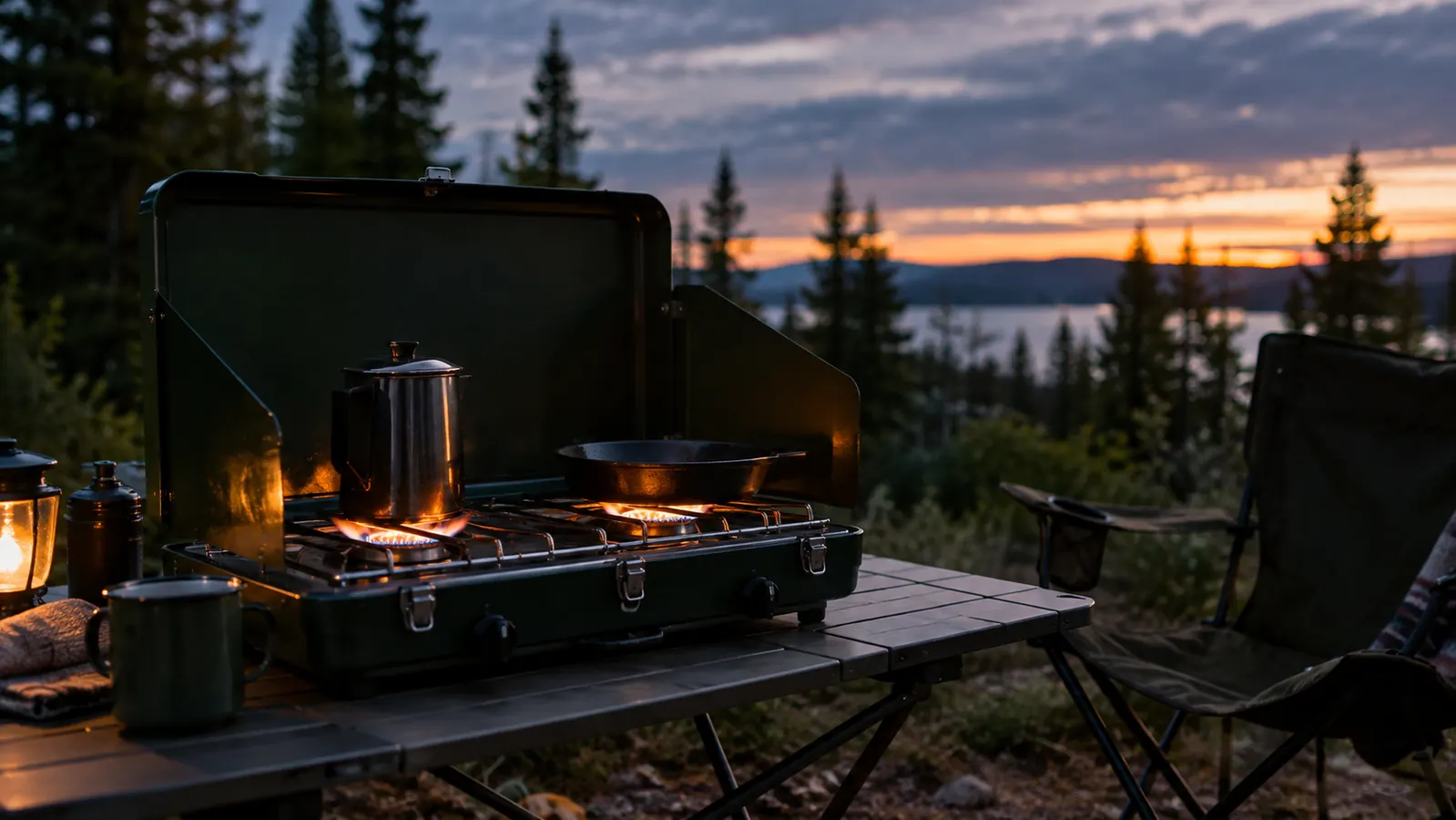
The regulator on the Explorer is straightforward, which I value. There is no fiddly low-pressure conversion, it connects to a standard twenty-pound tank, and it lights with a match or a lighter because there is no piezo igniter. That last point is worth saying plainly: bring a lighter, and bring a spare.
The legs fold out and lock, and the whole stove sits solidly on a flat table. I have not had a wobble issue on the surfaces we use. The lid doubles as a wind screen when it is open, which is a nice design touch, though it means you want the stove positioned so the open lid faces away from the wind.
One more honest note. The Explorer is loud enough that conversation near the stove happens at a slightly raised voice. That is a small thing, but it is the kind of detail the product page does not warn you about, and it matters if people are sitting around the camp table while you cook.
And the heat distribution deserves a mention. On low, the Explorer simmers well, which surprised me for a stove this powerful. I have kept a pot of chili at a gentle bubble for over an hour without scorching the bottom. That control is part of why I kept it, because raw power without control is just a bonfire.
Alternatives I Considered
Before I settled on the Explorer, I seriously considered the Coleman Triton, which is the stove every car camper compares this one to. The Triton is lighter and easier to lift out of a vehicle, and I still think it is the right call for someone who cooks simpler meals and wants less cleanup.
What pushed me to the Explorer was the burner width and the heat. The Triton's burners are good but narrower, and when I run two pans at once, the Explorer does not make me choose between a hot pan and a simmering pot. If your camp cooking is mostly boiling water for coffee and heating cans of soup, the Triton will save you hassle. If you cook real food, the extra heat and width earn their keep.
I have also owned a small single-burner stove that I would not compare fairly to the Explorer. It boiled water eventually, died in any breeze, and taught me exactly why I wanted something with real output. The Explorer is the answer to that frustration, and I say that as someone who has paid the tuition of a bad stove first.
What Holds Up After Two Seasons
After thirty-five nights, the honest picture is mostly good. The flame control still feels as crisp as the first trip, the legs lock solidly, and the lid latch has not loosened. The cast iron grates have developed the dark seasoning you expect, which is fine, but they also show the scrapes of a hard life in a bin.
The only real wear I have noticed is cosmetic. The body has picked up a few scuffs from riding in the bin next to the propane tank and the cast iron skillet, and the paint on one corner has worn down to bare metal. None of it affects how it cooks, but if you are the kind of person who wants gear to stay pretty, this stove will disappoint you.
What has not worn out is the thing that matters: the burners still light clean, the regulator has never stuck, and the output has not faded. Two seasons in, I would trust it for a longer trip without hesitation. That is the honest durability report.
The one thing I would change, if I could, is the lack of a built-in igniter. It is a small convenience that nearly every competing stove includes, and on a damp morning in the eastern Sierra, fumbling for a lighter that has rolled under the camp chair is the kind of annoyance that ages you. Camp Chef leaves it off, presumably to save weight and a failure point, and I understand the logic, but I still wish it was there.
What I Liked
- Real heat, boils a two-quart pot in about four minutes
- Two burners wide enough for a skillet and a pot at the same time
- Built-in wind screen handles calm and moderate conditions
- Simmers low without scorching, which is rare at this power level
- Slide-out grease tray catches most of the mess
- Solid on a flat table, no wobble
Where It Falls Short
- Heavy and awkward to lift out of a vehicle
- Loud on high, hard to hold a conversation nearby
- No automatic igniter, so you need a lighter and a spare
- Cast iron grates are heavy and need a real scrub after greasy meals
- Goes through a twenty-pound propane tank faster than you expect
It really does boil a two-quart pot in about four minutes, but it also goes through a twenty-pound tank in roughly six weekends. Both of those things are true, and nobody tells you the second one.
Who This Is For
This stove is for car campers who cook real food and do not mind a heavier piece of gear in exchange for heat and width. If you camp out of the back of a vehicle, set up on a table, and want to make bacon and eggs and a proper dinner without juggling a single burner, the Explorer is the honest answer. It is also for anyone who has owned a smaller stove and gotten tired of ten-minute boil times and wind-killed flames.
Who Should Skip It
Skip the Explorer if you backpack or if your camp kitchen has to travel any real distance from the car. Skip it if you are happiest with a one-pound canister and a small stove, or if the idea of scrubbing cast iron grates after a weekend makes you want a different hobby. And if you cook mostly simple meals, the lighter, narrower Triton will probably serve you just as well with less lifting.
The bottom line after two seasons
The Explorer is heavy, loud, and worth it for anyone who cooks real food at camp out of the back of a vehicle. If that sounds like your trips, check today's price on Amazon, and if you want the full picture, read the long-term review and the comparison against the Coleman Triton before you decide.
Amazon Check Today's Price on Amazon →