
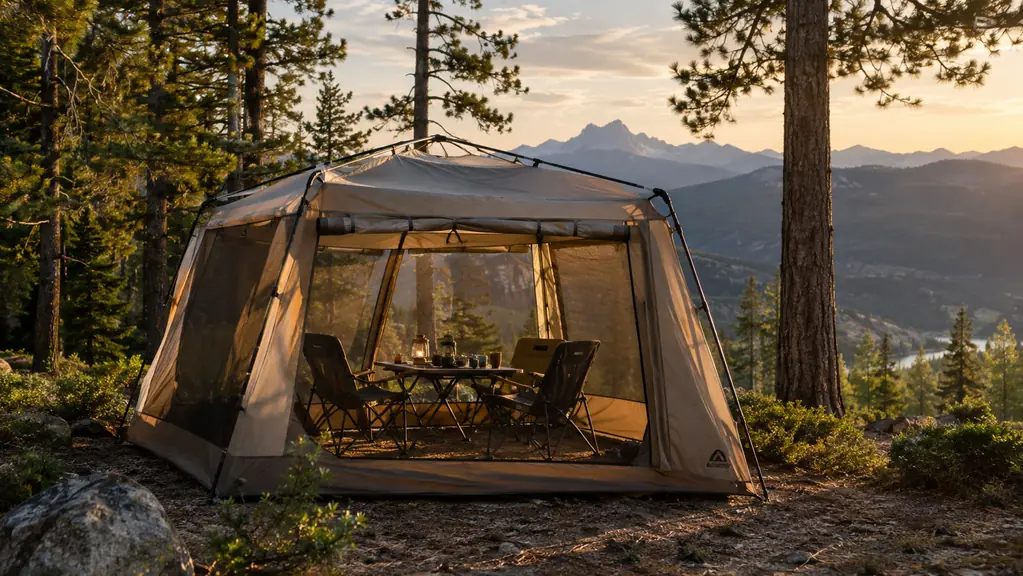
We bought the Alvantor pop up screen house in late spring, mostly because I was tired of eating dinner with a hat on and a plate balanced on my lap. We are a car camping family, two of us plus a six person dome tent that has seen four seasons, and everything we own for a trip rides in plastic storage bins in the back of a 2016 Toyota 4Runner. The selling point was simple: a screened room that pops open in under a minute, keeps the bugs off the food, and gives us somewhere to sit when the sun gets low. That is the part that works. What nobody tells you is everything after that, and there is plenty.
Over the past year we have taken it out on eleven trips, from a long weekend at the North Rim to a week in the eastern Sierra in the fall. I am fifty-four, I have a right knee that complains on downhill stretches after a fall on the Kachina Trail, and I am the one who packs the bins and sets up camp. So I care about two things above all: whether I can put this thing up and take it down without help, and whether it still works after a season of being shoved in the back of the truck. This review is about those two things, because the photos on the listing will not tell you the truth about either one.
The Quick Verdict
The Alvantor does the job it claims where it works best: calm evenings, buggy meadows, and strong afternoon sun. Just be ready for the fold down dance and know its limits in wind before you stake your trip on it.
Amazon Check Today's Price →An honest score for the Alvantor pop up screen house
I have used it eleven times in a year and I still pack it every trip. That is the review in one line. If you camp where the bugs bite and the sun is strong, this is the shelter I would buy again.
Amazon Check Today's Price on Amazon →How I've Used It
We set it up the same way every trip, and I timed it the third time out because I did not believe the box. The whole thing comes out of a flat carry bag, and if you have ever fought a pop up tent that refuses to snap into place, you will appreciate this one. It takes two people about ninety seconds to open the frame, and about forty-five seconds for one person once you learn the trick of pulling the opposite corners. Ray and I have a system now where he holds the center hub and I walk the legs out one at a time, and we are set up before the coffee water boils.
We used it as a kitchen and dining room, not a bedroom. The dome tent sleeps us, and the screen house sits maybe twenty feet away on a flat spot near the table. That is the arrangement that worked best for us: the tent for sleeping, the screen house for eating, cards, reading when the mosquitoes came out, and the one afternoon when a thunderstorm rolled through and we sat dry under the netting while the rain hammered the roof. I have never once been tempted to sleep in it, and I do not think it is meant for that.
The footprint is generous. We fit the camp table, two camp chairs, a folding kitchen stand, and a cooler inside with room to walk around. That matters more than you would think when you are cooking in a buggy meadow in southern Utah and the gnats are thick enough to get in your mouth. The UPF 50+ rating on the canopy is real in the way that matters: the fabric is dense enough that you do not feel the sun cooking your arms at midday, and the shade inside is genuinely cooler than the open air.
What Nobody Tells You About Setting It Up
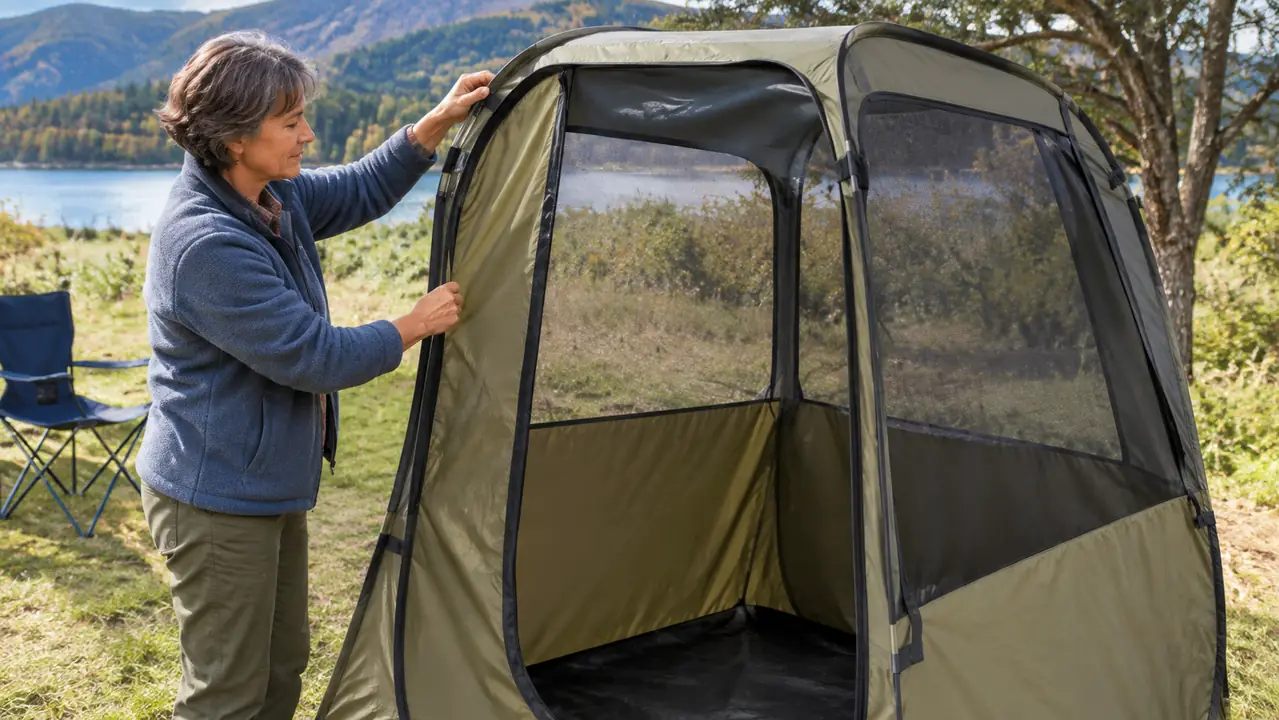
Here is the honest part. The pop open is easy. The fold down is a different story, and I am convinced the reason the reviews are split on this product is that half of them are about taking it down, not putting it up. The frame is a hub and spoke design, and getting it back flat requires a specific sequence of folding the panels in the right order while the poles collapse. The first three times, I stood there with the instructions in my teeth while Ray held the thing open and laughed at me.
The trick, once you learn it, is that you do not fight the poles. You let the canopy fold in thirds like a fan, then you collapse the hub, and the whole thing drops flat on the ground. The first time it took us close to fifteen minutes and a fair amount of swearing. By the sixth trip I could do it alone in under four minutes. But I will tell you straight: if you are someone who gets frustrated when a mechanism will not cooperate, budget extra time the first few times, and do not try to take it down in wind by yourself.
The stakes are also made to pin the thing to the ground, and they are not optional. The frame is light enough that a good gust will lift a corner if you leave it unpegged, and the last thing you want is your shelter cartwheeling across a campsite. I carry extra stakes, the long metal kind, because the ones that come with it are fine in soft dirt but useless in the rocky ground you find at most of our regular spots in northern Arizona. That is a small fix that saves your afternoon.
The Mosquito Netting Does More Than You Think
The netting is the reason I bought this, and it is the feature that has earned its keep more than any other. We camp in places where the mosquitoes come out at dusk in a way that would send you into the tent at six in the evening, and the screen house gave us two more hours of usable evening every single night. The mesh is fine enough to keep out the small biting gnats we get at higher elevations, which is not something I can say about every screen house I have used.
The zippers are the weak point you should know about. The doors zip closed with two zippers, one on each side, and after a season of use the main door zipper started catching on the mesh about a third of the way down. It is not broken, it just catches, and you learn to pull it at an angle. That is the kind of thing that would not show up in a first week review but shows up after ten trips, and I want you to know it before you buy, not after.
The mesh also holds up to being bumped and brushed by people walking through, which surprised me. Camp chairs scrape against it, elbows push through it, and the netting has not torn. I expected the first hole within a month and we have gone a full season without one. The floor is a separate piece, and we never bother with it. We set it up on grass and gravel and leave the floor at home, which keeps the inside easier to sweep and means the ground is the ground, same as the tent.
Wind, Rain, and the Stuff They Don't Show in Photos
Here is the thing the product photos never show you: this is a fair weather shelter, and you need to know its limits. On the calm evenings it is perfect. On a night when the wind came up in the Sierra, we watched the panels bow inward and the whole structure flex, and I will not pretend it was comfortable. It held, because we had every stake in and the straps tied down, but I would not want to be in it in anything stronger than a steady fifteen mile an hour wind, and I would take it down before a storm front moved in.
Rain is a mixed story. The roof sheds water fine, and we sat dry through a thirty minute downpour that would have soaked the table and the food under an open canopy. But the walls are mesh with no solid panels, and the rain that blows sideways comes through the netting. You are dry from the top and damp from the side. For a dining shelter that is usually fine, because you are not sleeping in it. Just do not expect a dry room in a sideways storm.
The other thing nobody tells you is the sun thing. The canopy gives real shade, and the UPF rating is genuine, but at the very end of the day, when the sun is low, the shade moves. We ended up repositioning the shelter twice in one afternoon on a trip in Utah because the shade walked off and left the table in full sun. It is physics, not a flaw, but it is the kind of detail you only learn by sitting in it all day.
How It Travels and Lives in the Truck
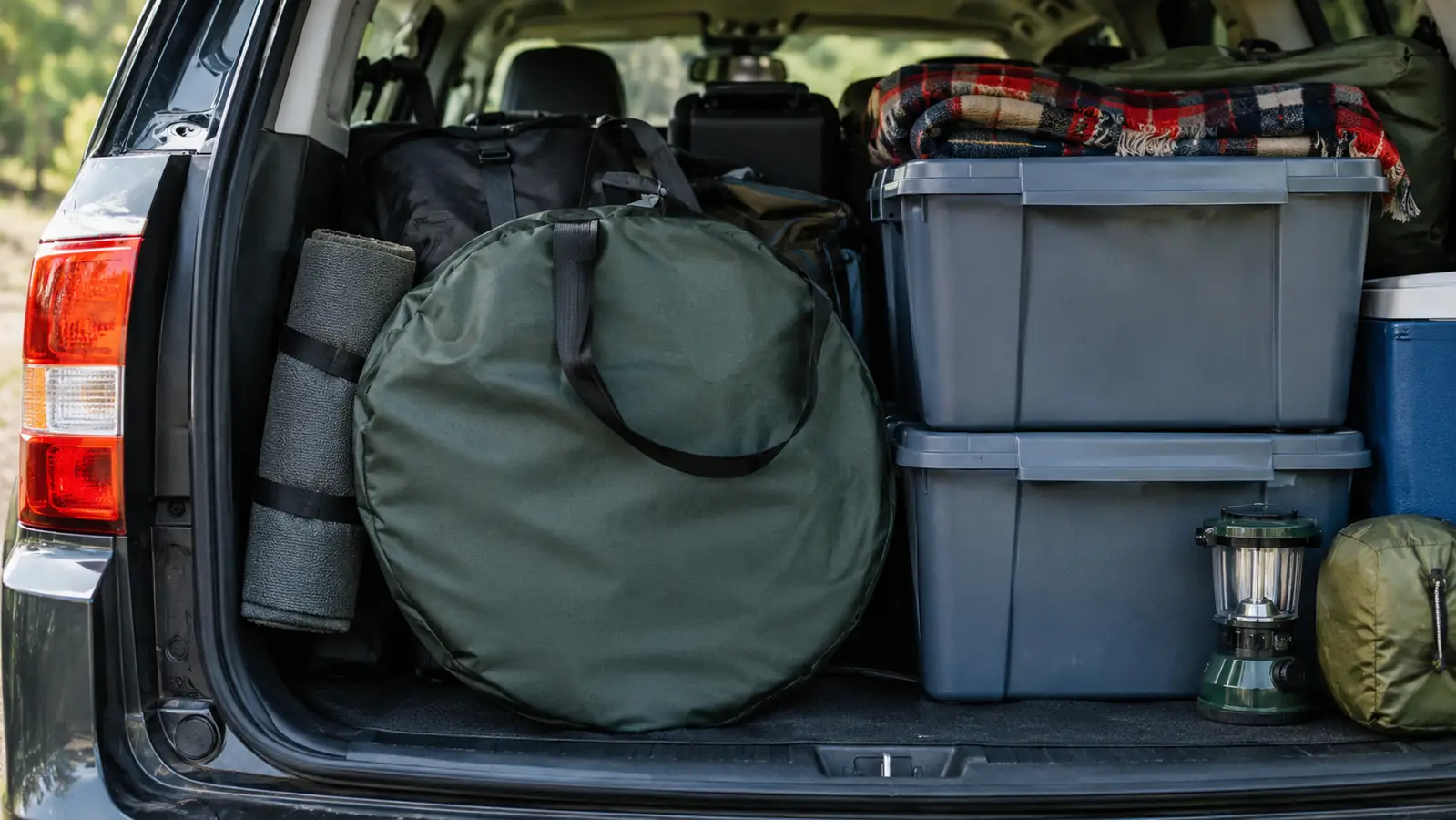
It comes with a carry bag that is round and about the size of a large wheel of cheese, and it is the one piece of this product I have no complaints about. The whole shelter, frame and canopy together, is light enough that I can carry it from the back of the 4Runner to the campsite by myself, and my knee complains about almost everything heavier than a full cooler. That is the highest praise I can give it. It is also flat enough to slide under the top of the bin stack, which matters when you pack a truck the way we do.
It has been rained on, covered in pine needles, and shoved into the back of the truck with firewood and camp chairs on top of it, and the fabric has held up. There is a small scuff on one panel from a branch, and one of the corner straps shows wear, but there are no tears and the frame still snaps open cleanly every time. After eleven trips in one year, that is a better report than I would give most of the gear we own.
The one thing I would change is the bag. It is fine for what it is, but the zipper is not the strongest, and I have started packing the shelter in the bag with the stakes in a separate pouch because I do not trust the stakes not to punch through. It is a small thing, but it is the sort of small thing that turns a three season piece of gear into a one season one if you are not careful.
What I Liked
- Pops open in about ninety seconds with two people, under a minute once you learn the corner trick
- Genuinely keeps out mosquitoes, gnats, and the small biting flies at higher elevations
- Real shade from a dense canopy, not the thin kind that lets the sun straight through
- Holds the camp table, chairs, cooler, and cooking stand with room to walk around
- Light enough that I haul it solo from the truck despite a bad right knee
Where It Falls Short
- Folding it back down takes practice and patience the first several times
- The main door zipper started catching on the mesh after about ten trips
- Not a wind shelter; it flexes in a steady breeze and needs every stake in
- Sideways rain comes through the mesh walls
The fold down is the part the photos never show, and it is the part that decides whether you will actually use this thing.
Who This Is For
This is for car campers who want a bug free room for meals and evenings, full stop. If you camp out of a vehicle the way we do, and you are tired of eating dinner with a hat on, this is a genuinely useful piece of gear. It is also for anyone who camps at higher elevation in the West, where the sun is strong and the mosquitoes come out at dusk, because the combination of real shade and real netting is what it does best. If you set up camp and stay for a few days rather than moving every night, the setup time pays for itself on the first evening.
Who Should Skip It
Skip it if you camp in wide open places where wind is the rule rather than the exception, because this will never be a shelter you trust in a blow. Skip it if you need a room you can sleep in, because it is a dining and living shelter, not a bedroom. And skip it if you are the kind of person who will get genuinely angry at a fold down mechanism that takes a few tries to learn. That is not a judgment, it is a warning, because I watched the first few attempts test my own patience, and I am a patient person with gear.
Alternatives I Considered
I looked at the cheap pop up canopies you see at every campsite, the ones with a roof and no walls. They are cheaper and they go up fast, but they do nothing about bugs, and a meal under one in a buggy meadow is still a meal eaten with one hand waving. I also looked at the full screen tents with a sewn in floor and a door you can close completely, and they are more weather tight, but they are heavier and slower to set up, and we never needed a floor because we never slept in it.
The Alvantor sits in between, and for our use that is exactly the right place. It is more shelter than a bare canopy and less fuss than a full tent. The tradeoff I made was accepting that it is not a storm shelter in exchange for something I can have standing in ninety seconds. On eleven trips in a year, that trade has been the right one every single time.
The Bottom Line
I have used the Alvantor eleven times in twelve months, and I will use it again this weekend. That is the honest review. It is not the toughest shelter I have ever owned, and the fold down will test you, and the zipper has started to catch. But it does the one job I bought it for, keeping the bugs off the food and the sun off the table, and it does it well enough that it has earned a permanent place in the bin stack. For a car camping family that eats outside, that is exactly what I needed.
Still the shelter I pack every trip
Eleven trips in a year and it has not been left behind once. If you camp where the bugs bite, this is the screened room I would buy again.
Amazon Check Today's Price on Amazon →