
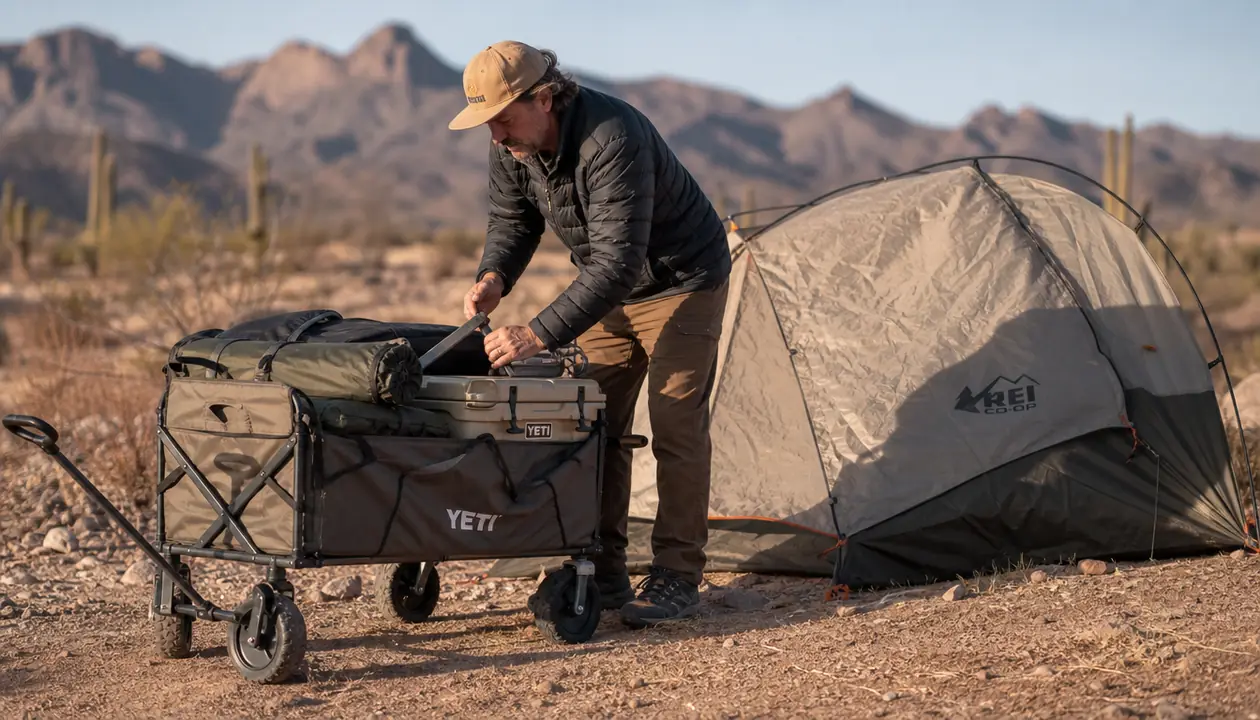
The parking lot at the Wire Pass trailhead is not far from the actual trail. The problem is never the distance. It is the stuff. Cooler, camp chairs, the bag with the stove and the pans, the duffel that Ray insists on packing like we are going to be gone for a month. By the time I had carried the second load across the gravel with my right knee complaining about every step, I had made up my mind. The 4Runner needed a wagon. I read listings for a week, landed on the ROSONG wagon, and a year later I can tell you exactly what the photos leave out. That year meant roughly fifteen weekends of car camping across northern Arizona, southern Utah, and the eastern Sierra, plus our usual longer trip in the fall.
Here is the short version. The ROSONG wagon has earned its spot in the back of my 4Runner, and I would buy it again tomorrow. It is also not the effortless, glides-over-everything cart the marketing images suggest. It is a sturdy, useful piece of gear with real limits. Knowing those limits before you buy is the difference between being happy with it and being annoyed every single time you unfold it. This review is the honest version. I am not going to tell you the wagon is perfect, because it is not. I am going to tell you what it did well over a year of real use, where it struggled, and exactly the kind of camper who should buy one. If you are shopping for a folding wagon the way I was, that is the information you actually need.
The Quick Verdict
A solid folding wagon for car campers who are tired of the three-trip shuffle from the vehicle to the tent. Just do not expect it to roll through soft sand or deep gravel, because it will not.
Amazon Check Today's Price →The wagon that finally ended the three-trip shuffle
If you are tired of carrying coolers and chairs one at a time from the car to the tent, the ROSONG wagon is a legitimate fix. Check today's price on Amazon to see if it fits your setup.
Amazon Check Today's Price on Amazon →How I've Used It
The ROSONG wagon has lived in the back of the 4Runner since last spring. That is the real test, honestly. Gear that lives in the vehicle gets used. Gear that has to be fetched from the garage does not. This one stays loaded in with the camp bins, so it comes on every trip whether I planned to use it or not. It has been on every camping weekend since, which is the only reason I can write about a year of use instead of a single trip.
The routine is the same almost every time. We pull into camp, I unfold the wagon, and the trip from the 4Runner to the tent site takes one pass instead of three. The six-person dome tent, two camp chairs, the cooler, and a duffel of clothes all fit in the bed at once. That single change, going from multiple trips to one, is the whole reason this wagon is worth the space it takes up in the cargo area.
I also use it for the smaller jobs nobody thinks about when they buy one of these. Hauling firewood from the 4Runner to the fire ring. Moving the camp kitchen from the car to the picnic table and back. Carrying the wet tent to the car on packing-up morning so it does not drip all over me. The wagon does not care if the load is glamorous. It just rolls.
The trip that convinced me it was worth keeping was our fall week in the eastern Sierra. We camped in the same spot for five nights, which meant the walk from the 4Runner to the tent happened over and over, with firewood, with water, with food for every meal. By the end of that week the wagon had made dozens of trips and never once gave me a reason to wish I had left it at home. That is when it stopped being a new purchase and started being part of the regular camp kit.
What Nobody Tells You About the Wheels
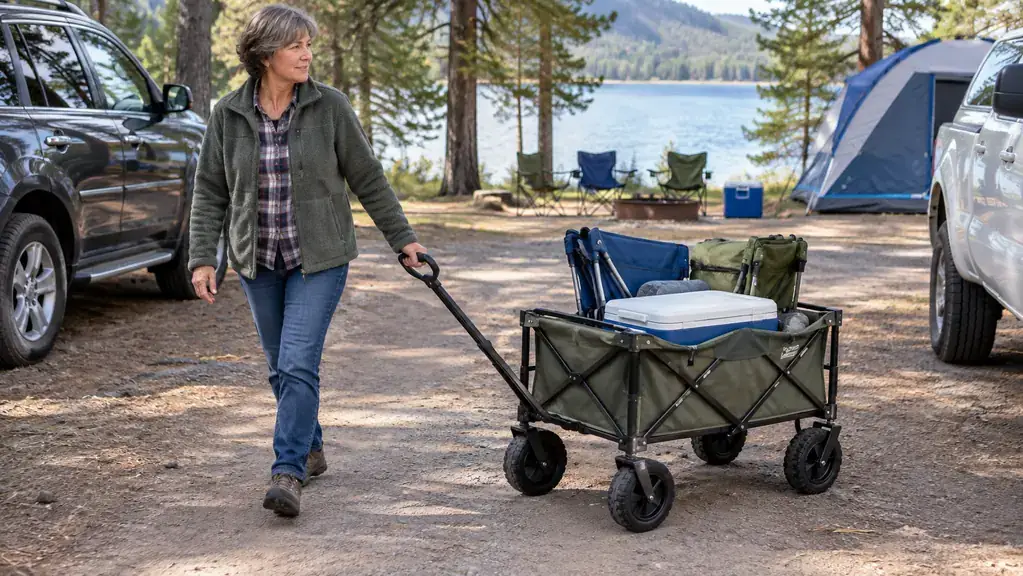
Here is the honest part, and it is the part I wish someone had told me before I bought it. The ROSONG wagon rolls beautifully on pavement, packed dirt, and the kind of hard gravel you find at most developed campgrounds. On those surfaces it is genuinely easy to pull, even one-handed while I carry something in the other hand. That is the wagon at its best, and it is very good at it.
On soft ground it is a different story. The first time we camped at a sandy spot near the river, I learned that the wheels dig in rather than roll. You can keep it moving, but it takes real effort, and if you stop on a soft patch you will be pulling hard to get it going again. I remember standing there in the sand, with the wagon half-buried and Ray offering helpful suggestions from the other side of the campsite, thinking that the listing photos had definitely not shown me this part.
The same thing happens in deep loose gravel. We camped one weekend at a spot where the path from the parking area to the tent sites was nothing but loose rock, and I gave up on the wagon halfway and carried the last load by hand. On the hard-packed paths that most car campgrounds have, the wagon is excellent. It is not a beach wagon, and the sooner you accept that, the happier you will be with it.
The other thing I noticed is that the front wheels do the steering, which means the wagon wants to follow the path you point it down. That is fine on a straight path and slightly annoying when you are threading it between picnic tables and trees. You learn to angle the handle and give it a little extra pull around tight corners. It is not a problem. It is just something the photos do not show you, and it is worth knowing before your first trip.
The Fold Is Easy, the Lift Is Not
The folding mechanism is genuinely good. It collapses with one motion, the frame clicks into place when you open it, and it stands on its own when folded, which is more than I can say for some of the other wagons we looked at. Unfolding takes me about thirty seconds. Folding takes about the same. I have done it in the dark at the end of a long day and it did not fight me.
What nobody tells you is that the folded wagon is still a substantial object. It is not light, and lifting it into the back of the 4Runner is a two-hand job. My right knee, which has been unreliable since I came down wrong on the Kachina Trail a couple of years ago, does not love it when I hold the folded wagon at arm's length to settle it into the cargo area. I have learned to lift with my legs and set it down on the tailgate first. It is manageable. It is also worth knowing before you buy that you are not getting a featherweight cart.
The folded size is also real. It takes up a meaningful slice of the cargo area, which is why it lives in the back of the 4Runner next to the camp bins and not in the garage with the fair-weather gear. If you are tight on space in your vehicle, measure before you buy. It is not huge. It is not small either.
There was a small learning curve with the latch. The first few times I folded it, I had to fiddle with the release to get the frame to collapse cleanly. By the third trip I could do it without looking, and now it is just part of the packing-up routine. If you buy one, give yourself one practice fold at home before you take it into the field. That is the kind of advice I wish someone had given me, and it takes about two minutes.
What It Carried, and What It Refused
Over the year I have loaded the ROSONG wagon with just about everything a car camper carries. The biggest single load was the six-person tent, two camp chairs, a fully loaded cooler, and a tote of kitchen gear, and it handled that without any sign of strain. The frame feels solid. The fabric bed has held up to sharp-edged firewood and the corners of plastic bins. Nothing has ripped, bent, or come loose, and the wagon has been through a full year of loading and unloading.
The handle height is right for me, and I am 5 foot 6. Ray is taller, and he does not have to hunch either, which surprised me given how compact the wagon looks when it is folded. The wheels have rolled over tree roots and rock edges without complaint, and the tires have not gone flat or needed any attention in a year of use. For a piece of gear that lives in the back of a vehicle and gets bounced around on forest roads, that is a solid record.
What it refused to do is roll through soft sand, climb a steep loose gravel slope, or handle anything that requires it to go uphill on a soft surface. Every wagon of this type has the same limit, and the ROSONG is no exception. I mention it because the listing photos make it look like it will glide over a beach. It will not. On the surfaces where it works, it works well. On the surfaces where it does not, you will know immediately, and you will learn to pick a better line.
The firewood test was the one that surprised me. I loaded the wagon with an armful of split wood, the kind with sharp edges and bark that flakes off everywhere, and I expected the fabric to show wear by the end of the season. It does not. A quick brush-out at home and it looks the same as the day I bought it. That kind of durability is hard to judge from a listing, and it is the reason I trust this wagon with the heavy loads.
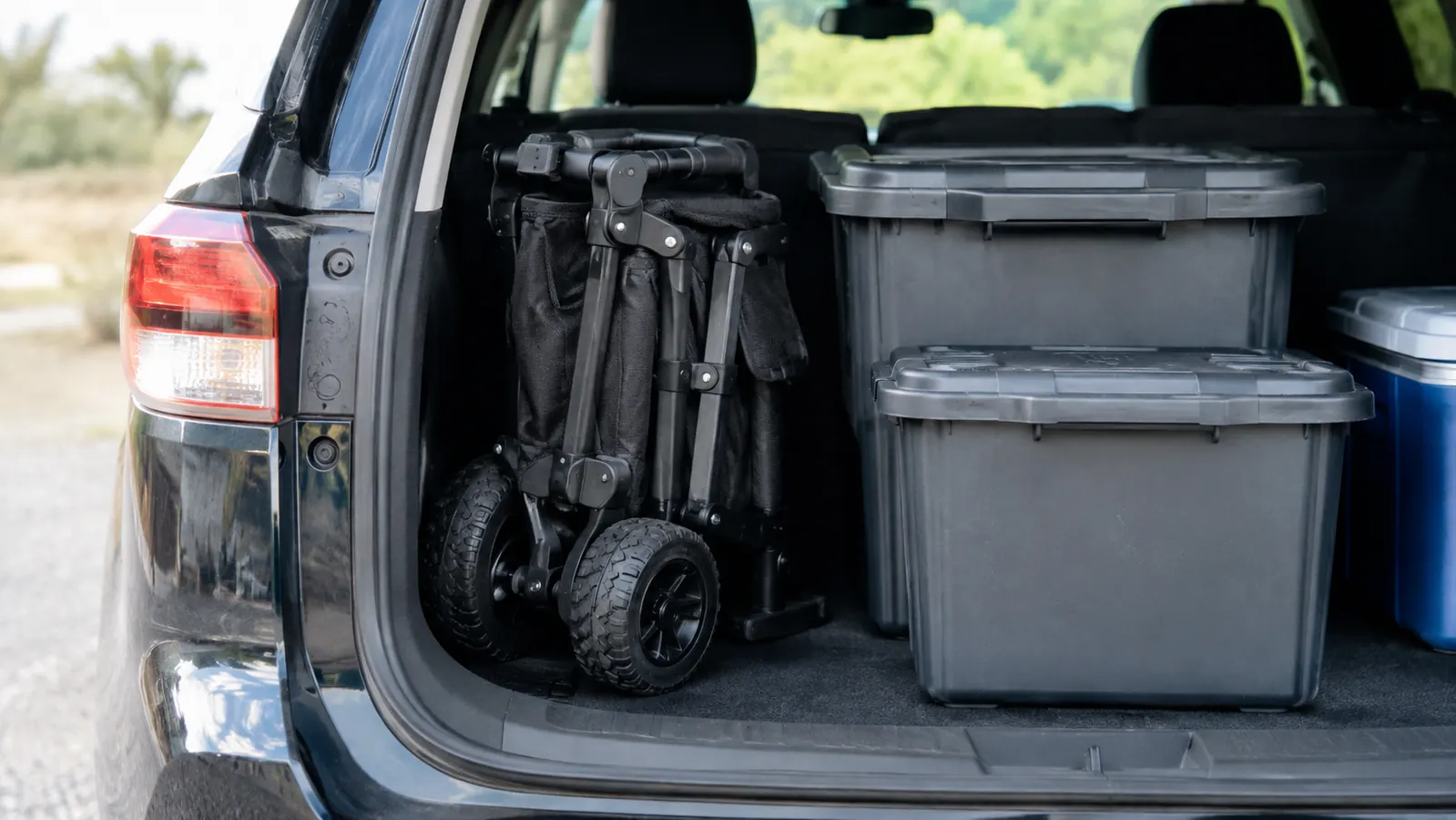
Where It Earned Its Spot in the 4Runner
The ROSONG wagon earns its keep in the most boring possible way. It makes the walk from the car to the tent easier. For someone with a cranky knee, that is not a small thing. Carrying a cooler in each hand across a gravel lot is exactly the kind of load that makes my knee ache for the rest of the day. Loading everything into the wagon and pulling it means I arrive at the tent site ready to set up camp instead of already tired.
It has also saved us on packing-up mornings, which used to be the part of camping I dreaded. Everything that walked out to the site walks back in one trip, including the wet tent. The wagon has paid for itself in saved trips more times than I can count, and it has never once been the thing that made a trip harder. That is the highest praise I can give any piece of camp gear.
The one thing I would change, if I could, is the way the wagon handles on loose surfaces. A wider wheel or a different tread would make the difference between good and great. As it is, I know its limits and I work around them. I pick the packed path instead of the sandy one. I take the extra minute to find the hard route. That is a fair trade for everything else the wagon does.
The bigger change is that the wagon has altered how we pack. I no longer sort the camp gear into what I can carry in one trip. I load the bins knowing the wagon will move them, which means the 4Runner is easier to organize and nothing gets left behind because it was too awkward to carry. For a piece of gear that costs a fraction of what a good tent costs, that is a lot of value.
What I Liked
- Folds and unfolds in about thirty seconds with no fuss
- Carried the six-person tent, two chairs, and a full cooler in one load
- Sturdy frame and fabric bed that have held up to a year of hard use
- Rolls smoothly on pavement and packed dirt
- Lives in the back of the 4Runner and comes on every trip
Where It Falls Short
- Wheels dig into soft sand and deep gravel
- Folded wagon is heavy enough that lifting it into an SUV is a two-hand job
- Takes up a real slice of cargo space even when folded
- Front wheels need a firm hand around tight corners
The listing photos make it look like it will glide over a beach. It will not. On the surfaces where it works, it works well, and that has been enough to earn its spot in the back of the 4Runner.
Who This Is For
Buy the ROSONG wagon if you car camp out of a vehicle the way we do, if you are tired of making three trips from the car to the tent, and if you camp at places with hard-packed paths and developed sites. It is ideal for the person who wants to carry the camp kitchen, the chairs, and the tent in one pass and does not need it to roll through soft sand.
If you are past the age where carrying a cooler across a gravel lot sounds like a good time, this wagon is for you. It is also a good fit if you camp with kids or grandkids, because it turns the walk from the car to the site into something they can help with instead of a chore they avoid. And if your knee complains the way mine does, the wagon is the difference between a good weekend and a painful one.
Who Should Skip It
Skip it if your camping is mostly soft sand, deep snow, or steep loose trails, because you will spend more time wrestling the wheels than enjoying the trip. Skip it if you are a backpacker, because this is not a piece of gear you want to carry on your back. And skip it if you have a small vehicle with no room to spare, because the folded wagon needs a real chunk of cargo space.
I would also tell someone to skip it if they expect a wagon to replace a wheelbarrow on a worksite or to haul truly heavy loads every day. This is a camp wagon, not a utility cart. It does its job well, but the job is moving camp gear across a campground. If that is what you need, you will be happy with it. If you need something tougher, keep looking.
Ready to stop making three trips from the car?
The ROSONG wagon has made every camping trip easier for a full year. If that sounds like your kind of fix, check today's price on Amazon and see if it fits your setup.
Amazon Check Today's Price on Amazon →